Origanum vulgare subsp. hirtum
Origanum vulgare subsp. hirtum · Accepted scientific name
Scientific literature: Very Sparse (18 studies) · ★☆☆☆☆
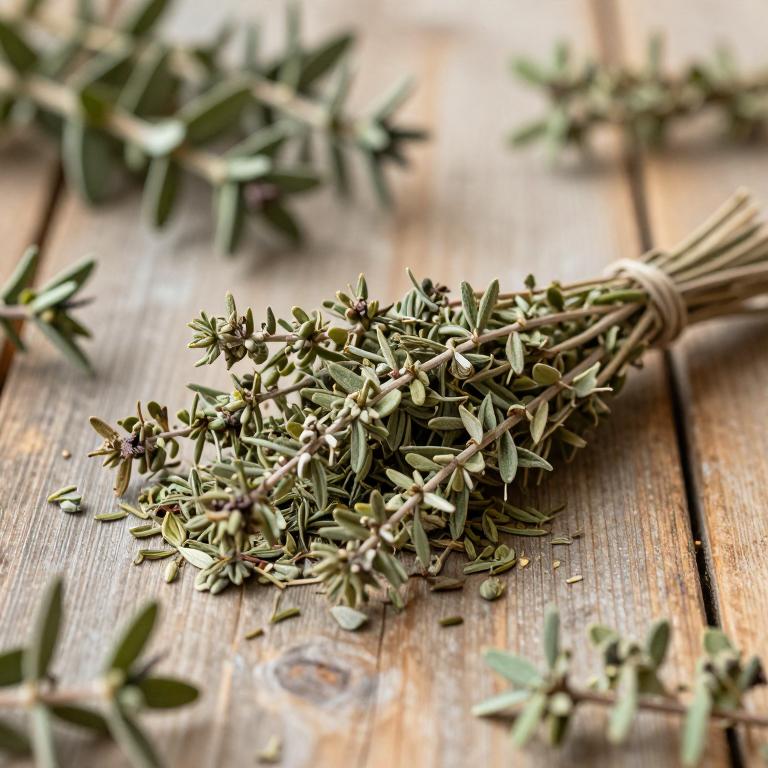
, scientifically known as Origanum vulgare subsp. hirtum, is a versatile medicinal herb renowned for its potent therapeutic properties. Often called hairy oregano, this plant is rich in essential oils and antioxidants. It is traditionally utilized in herbal medicine to support digestive health, reduce inflammation, and combat respiratory ailments.
- Family
- Lamiaceae
- Native range
- Europe
- Parts used
- Not available
- Common names
- Not available
- Scientific synonyms
- Majorana Neglecta · Origanum Hirtum Var. Neglectum · 6 more
Names and Synonyms
Scientific Names
Accepted name
Origanum vulgare subsp. hirtumSynonyms
- Majorana neglecta
- Origanum hirtum var. neglectum
- Origanum hirtum var. illyricum
- Origanum hirtum var. latifolium
- Origanum illyricum
- Origanum hirtum
- Origanum neglectum
- Origanum megastachyum
Regional and Traditional Names
German:
- Griechischer Oregano
Sources: Wikidata
Taxonomical Classification
This plant belongs to the kingdom Plantae within the phylum Streptophyta and the class Equisetopsida. It is further classified under the subclass Magnoliidae and the order Lamiales, falling into the family Lamiaceae. Finally, its specific taxonomic identity is established within the genus Origanum as the subspecies hirtum.
| Rank | Classification |
|---|---|
| Kingdom | Plantae |
| Phylum | Streptophyta |
| Class | Equisetopsida |
| Subclass | Magnoliidae |
| Order | Lamiales |
| Family | Lamiaceae |
| Genus | Origanum |
Sources: The World Checklist of Vascular Plants (WCVP)
Distribution
This plant exhibits a specific geographical distribution spanning across several regions of Europe. In Middle Europe, its presence is recorded within the borders of Germany. The species is also widely distributed throughout Southeastern Europe, where it can be found in Albania and Bulgaria. Furthermore, its range extends into Greece, covering much of the Balkan Peninsula. Finally, the plant is documented to grow in the specific locality of Kriti.
| Region | Area |
|---|---|
| Middle Europe | Germany |
| Southeastern Europe | Albania |
| Southeastern Europe | Bulgaria |
| Southeastern Europe | Greece |
| Southeastern Europe | Kriti |
| Southeastern Europe | Türkiye-in-Europe |
| Southeastern Europe | NW. Balkan Pen. |
| Western Asia | Cyprus |
| Western Asia | East Aegean Is. |
| Western Asia | Türkiye |
Sources: The World Checklist of Vascular Plants (WCVP)
Chemicals
Origanum vulgare subsp. hirtum has 3 reported phytochemicals identified across 0 scientific publications and several other databases. The most consistently reported chemicals include CARVACROL, P-CYMENE, THYMOL.
| Chemical | Supporting sources | Consensus |
|---|---|---|
| CARVACROL | 5 supporting sources | ★★★☆☆ |
| P-CYMENE | 2 supporting sources | ★☆☆☆☆ |
| THYMOL | 2 supporting sources | ★☆☆☆☆ |
CARVACROL
- Molecules (Basel, Switzerland)
- Natural product communications
- Zeitschrift fur Naturforschung. C, Journal of biosciences
- Frontiers in plant science
- Frontiers in nutrition
P-CYMENE
- Molecules (Basel, Switzerland)
- Frontiers in nutrition
THYMOL
- Frontiers in plant science
- Frontiers in nutrition
Activities
Origanum vulgare subsp. hirtum has 1 reported activities identified across 0 scientific publications and several other databases. The most consistently reported activities include Antioxidant.
| Activity | Supporting sources | Consensus |
|---|---|---|
| Antioxidant | 1 supporting sources | ★☆☆☆☆ |
Antioxidant
- Molecules (Basel, Switzerland)
Conditions
Origanum vulgare subsp. hirtum has 3 reported investigations on conditions identified across 0 scientific publications and several other databases. The most consistently reported conditions include bacterial diseases, high-density lipoprotein cholesterol, oxidative stress.
| Condition | Supporting sources | Consensus |
|---|---|---|
| Bacterial diseases | 1 supporting sources | ★☆☆☆☆ |
| High-density lipoprotein cholesterol | 1 supporting sources | ★☆☆☆☆ |
| Oxidative stress | 1 supporting sources | ★☆☆☆☆ |
Bacterial diseases
- Molecules (Basel, Switzerland)
High-density lipoprotein cholesterol
- Zeitschrift fur Naturforschung. C, Journal of biosciences
Oxidative stress
- Molecules (Basel, Switzerland)
Preparations
Origanum vulgare subsp. hirtum has 5 reported preparations identified across 0 scientific publications and several other databases. The most consistently reported preparations include essential oils, EO, essential oils (EOs), hydroalcoholic extracts, volatile oils.
| Preparation | Supporting sources | Consensus |
|---|---|---|
| Essential oils | 2 supporting sources | ★☆☆☆☆ |
| Eo | 1 supporting sources | ★☆☆☆☆ |
| Essential oils (eos) | 1 supporting sources | ★☆☆☆☆ |
| Hydroalcoholic extracts | 1 supporting sources | ★☆☆☆☆ |
| Volatile oils | 1 supporting sources | ★☆☆☆☆ |
Essential oils
- Zeitschrift fur Naturforschung. C, Journal of biosciences
- Microorganisms
Eo
- Molecules (Basel, Switzerland)
Essential oils (eos)
- Frontiers in nutrition
Hydroalcoholic extracts
- Frontiers in nutrition
Volatile oils
- Natural product communications