Greek Oregano
Origanum scabrum · Accepted scientific name
Scientific literature: Very Sparse (4 studies) · ★☆☆☆☆
Greek Oregano, scientifically known as Origanum scabrum, is a perennial herb native to the Mediterranean region. Renowned for its intense aroma and culinary versatility, this plant also possesses significant medicinal properties. Rich in antioxidants and essential oils, it is traditionally utilized for its antimicrobial, anti-inflammatory, and digestive-supporting benefits.
- Family
- Lamiaceae
- Native range
- Europe
- Parts used
- Not available
- Common names
- Greek Oregano
- Scientific synonyms
- Origanum Scabrum Subsp. Pulchrum · Amaracus Scaber · 2 more
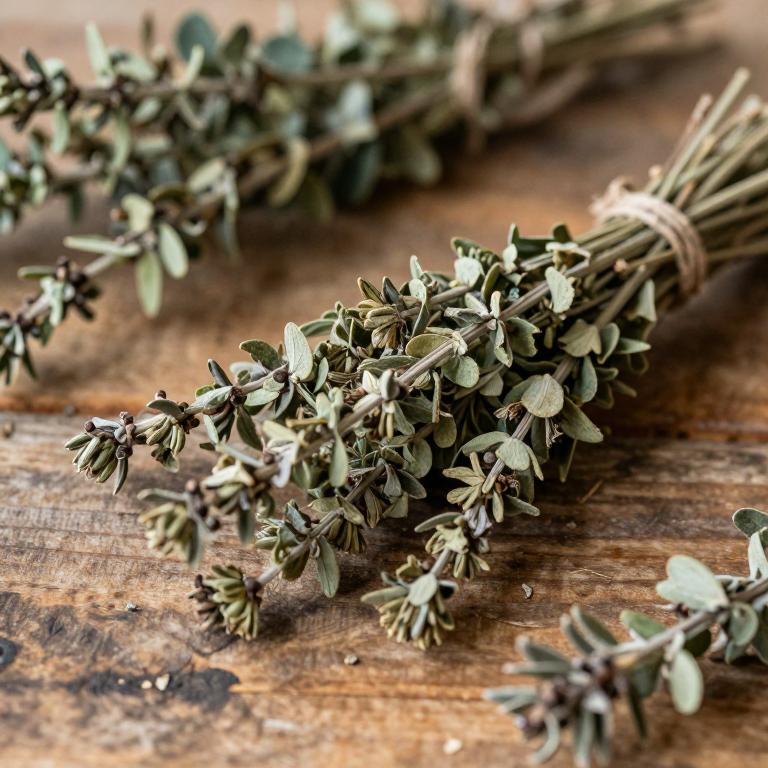
Names and Synonyms
Common Names
- Greek Oregano
Scientific Names
Accepted name
Origanum scabrumSynonyms
- Origanum scabrum subsp. pulchrum
- Amaracus scaber
- Amaracus pulcher
- Origanum pulchrum
Regional and Traditional Names
German:
- Griechischer Dost
Sources: Wikidata, Catalogue of Life
Taxonomical Classification
This plant belongs to the kingdom Plantae and the phylum Streptophyta, falling under the class Equisetopsida and subclass Magnoliidae. Within the order Lamiales and the family Lamiaceae, it is classified under the genus Origanum. Specifically, Origanum scabrum represents a unique medicinal species within this established taxonomic hierarchy.
| Rank | Classification |
|---|---|
| Kingdom | Plantae |
| Phylum | Streptophyta |
| Class | Equisetopsida |
| Subclass | Magnoliidae |
| Order | Lamiales |
| Family | Lamiaceae |
| Genus | Origanum |
Sources: The World Checklist of Vascular Plants (WCVP)
Distribution
This plant, known scientifically as Origanum scabrum, possesses a very specific and limited natural range. Its primary geographical distribution is concentrated within the region of Southeastern Europe. Specifically, the species is most notably found growing in the landscapes of Greece. Because of this localized occurrence, it is considered a characteristic element of that particular Mediterranean territory. Consequently, its presence is a defining botanical feature of the Greek environment.
| Region | Area |
|---|---|
| Southeastern Europe | Greece |
Sources: The World Checklist of Vascular Plants (WCVP)
Botanical Identification
Life history
The life history of Origanum scabrum is characterized by its classification as a chamaephyte, a life form strategy that enables it to thrive in specific ecological niches. Depending on the environmental stability and seasonal fluctuations of its habitat, it can be specifically categorized under both the chamaephyte and nanophanerophyte classifications. As a chamaephyte, the plant maintains its perennating buds close to the soil surface, allowing it to withstand varying climatic conditions by protecting its regenerative tissues just above the substrate. This growth habit facilitates its persistence in rocky or disturbed terrains where it can effectively manage seasonal changes while maintaining a low-growing, resilient structure.
- Life form :
- chamaephyte
Morphology
The morphology of Origanum scabrum is characterized by its growth habit and ecological positioning, functioning primarily as a terrestrial organism. Unlike aquatic or semiaquatic species, it thrives in land-based environments, maintaining a stable presence in its native soil substrates. In terms of structural support, the plant is strictly self-supporting, lacking the specialized climbing mechanisms found in obligatory or facultative climbers. It operates as an independent organism, showing no parasitic tendencies toward host plants, and is strictly terrestrial rather than serving as an epiphyte.
- Aquatic :
- terrestrial
- Climber :
- self-supporting
- Epiphyte :
- terrestrial
- Parasite :
- independent
Sources: Global Inventory of Floras and Traits (GIFT)
Chemicals
Origanum scabrum has 2 reported phytochemicals identified across 0 scientific publications and several other databases. The most consistently reported chemicals include CARVACROL, THYMOL.
| Chemical | Supporting sources | Consensus |
|---|---|---|
| CARVACROL | 1 supporting sources | ★☆☆☆☆ |
| THYMOL | 1 supporting sources | ★☆☆☆☆ |
CARVACROL
- Environmental science and pollution research international
THYMOL
- Environmental science and pollution research international
Activities
Origanum scabrum has 1 reported activities identified across 0 scientific publications and several other databases. The most consistently reported activities include Repellent.
| Activity | Supporting sources | Consensus |
|---|---|---|
| Repellent | 1 supporting sources | ★☆☆☆☆ |
Repellent
- Environmental science and pollution research international
Preparations
Origanum scabrum has 1 reported preparations identified across 0 scientific publications and several other databases. The most consistently reported preparations include essential oil.
| Preparation | Supporting sources | Consensus |
|---|---|---|
| Essential oil | 1 supporting sources | ★☆☆☆☆ |
Essential oil
- Environmental science and pollution research international