Origanum ramonense
Origanum ramonense · Accepted scientific name
Scientific literature: Very Sparse (5 studies) · ★☆☆☆☆
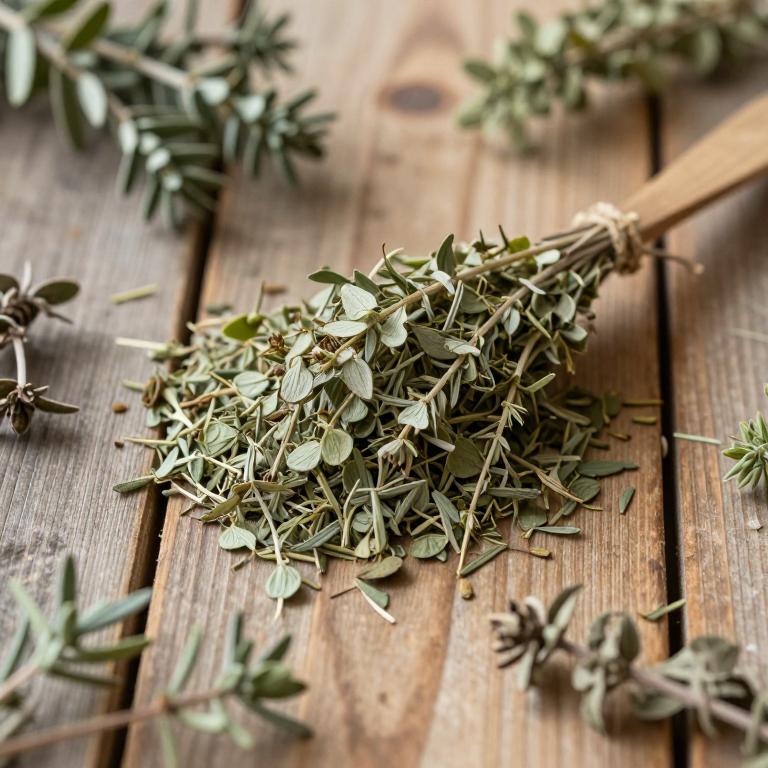
Origanum ramonense, scientifically known as Origanum ramozenese, is a remarkable medicinal herb native to specific Mediterranean ecosystems. Renowned for its potent aromatic properties, this plant contains essential bioactive compounds used in traditional healing. It offers significant therapeutic potential, particularly for its antioxidant, antimicrobial, and anti-inflammatory medicinal qualities.
- Family
- Lamiaceae
- Native range
- Asia-Temperate
- Parts used
- Not available
- Common names
- Not available
- Scientific synonyms
- Not available
Names and Synonyms
Scientific Names
Accepted name
Origanum ramonenseSources: Wikidata, Catalogue of Life
Taxonomical Classification
This plant belongs to the kingdom Plantae within the phylum Streptophyta and the class Equisetopsida. It is further classified under the subclass Magnoliidae, the order Lamiales, and the family Lamiaceae. Finally, it is categorized under the genus Origanum, where its specific species is identified as Origanum ramonense.
| Rank | Classification |
|---|---|
| Kingdom | Plantae |
| Phylum | Streptophyta |
| Class | Equisetopsida |
| Subclass | Magnoliidae |
| Order | Lamiales |
| Family | Lamiaceae |
| Genus | Origanum |
Sources: The World Checklist of Vascular Plants (WCVP)
Distribution
This plant, known scientifically as Origanum ramonense, exhibits a very specific and localized geographical range. Its natural habitat is primarily confined to the region of Western Asia. Within this broader territory, the species is documented to grow specifically in Palestine. This narrow distribution suggests that the plant is endemic to certain environmental conditions found in that area. Consequently, its presence is a unique characteristic of the Palestinian landscape.
| Region | Area |
|---|---|
| Western Asia | Palestine |
Sources: The World Checklist of Vascular Plants (WCVP)
Botanical Identification
Morphology
The morphology of Origanum ramonense is characterized by its diverse ecological adaptability and structural complexity. It exhibits a versatile habitat range, functioning across aquatic, semiaquatic, and terrestrial environments. In terms of its growth form, the plant displays a dual character, manifesting as both a shrub and a subshrub. Structurally, the species is defined by its woody nature, providing a sturdy framework for its development. Furthermore, Origanum ramonense is an independent organism, maintaining its biological processes without reliance on a host, thus functioning as a non-parasitic species.
- Aquatic :
- terrestrial
- Growth form :
- shrub
- Growth form :
- subshrub
- Parasite :
- independent
- Woodiness :
- woody
Sources: Global Inventory of Floras and Traits (GIFT)
Chemicals
Origanum ramonense has 1 reported phytochemicals identified across 0 scientific publications and several other databases. The most consistently reported chemicals include Gallic acid.
| Chemical | Supporting sources | Consensus |
|---|---|---|
| Gallic acid | 1 supporting sources | ★☆☆☆☆ |
Gallic acid
- Scientific reports
Activities
Origanum ramonense has 3 reported activities identified across 0 scientific publications and several other databases. The most consistently reported activities include Antibacterial, Anticancer, Antioxidant.
| Activity | Supporting sources | Consensus |
|---|---|---|
| Antibacterial | 1 supporting sources | ★☆☆☆☆ |
| Anticancer | 1 supporting sources | ★☆☆☆☆ |
| Antioxidant | 1 supporting sources | ★☆☆☆☆ |
Antibacterial
- Scientific reports
Anticancer
- Scientific reports
Antioxidant
- Scientific reports
Conditions
Origanum ramonense has 1 reported investigations on conditions identified across 0 scientific publications and several other databases. The most consistently reported conditions include SARS-CoV.
| Condition | Supporting sources | Consensus |
|---|---|---|
| Sars-cov | 1 supporting sources | ★☆☆☆☆ |
Sars-cov
- Scientific reports
Preparations
Origanum ramonense has 5 reported preparations identified across 0 scientific publications and several other databases. The most consistently reported preparations include dichloromethane/methanol extracts, ethyl acetate extracts, hot water extracts, methanol extracts, methanol/water extracts.
| Preparation | Supporting sources | Consensus |
|---|---|---|
| Dichloromethane/methanol extracts | 1 supporting sources | ★☆☆☆☆ |
| Ethyl acetate extracts | 1 supporting sources | ★☆☆☆☆ |
| Hot water extracts | 1 supporting sources | ★☆☆☆☆ |
| Methanol extracts | 1 supporting sources | ★☆☆☆☆ |
| Methanol/water extracts | 1 supporting sources | ★☆☆☆☆ |
Dichloromethane/methanol extracts
- Scientific reports
Ethyl acetate extracts
- Scientific reports
Hot water extracts
- Scientific reports
Methanol extracts
- Scientific reports
Methanol/water extracts
- Scientific reports