Origanum onitis
Origanum onites · Accepted scientific name
Scientific literature: Very Extensive (390 studies) · ★★★★★
Origanum oniites, scientifically known as Origanum oniites, is a remarkable medicinal plant valued for its potent therapeutic properties. Renowned for its antioxidant and antimicrobial qualities, this species plays a significant role in traditional healing practices. Exploring its unique phytochemical profile offers promising insights into developing natural treatments for various ailments.
- Family
- Lamiaceae
- Native range
- Europe
- Parts used
- Leaf
- Common names
- Turkish Oregano · Pot Marjoram
- Scientific synonyms
- Onites Tomentosus · Schizocalyx Smyrnaeus · 7 more
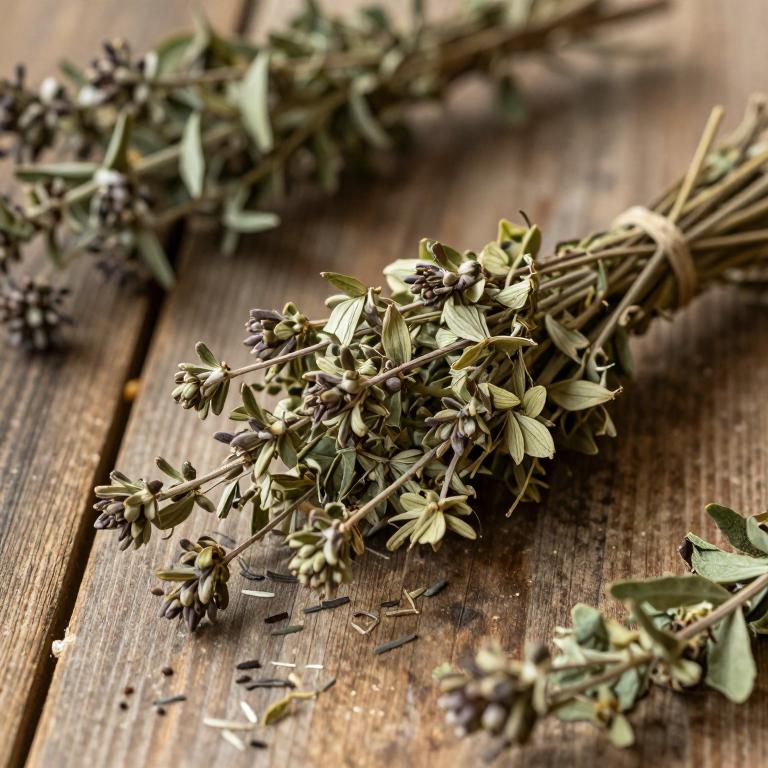
Names and Synonyms
Common Names
- Turkish oregano
- pot marjoram
Scientific Names
Accepted name
Origanum onitesSynonyms
- Onites tomentosus
- Schizocalyx smyrnaeus
- Majorana cretica var. silvestris
- Majorana smyrnaea
- Majorana onites
- Majorana orega
- Origanum orega
- Origanum pallidum
- Origanum smyrnaeum
Regional and Traditional Names
German:
- Türkischer Oregano
- französischer Marjoran
- Griechischer Oregano
French:
- Origan onites
- Origan turc
Sources: Wikidata, Catalogue of Life
Taxonomical Classification
This plant belongs to the kingdom Plantae and the phylum Streptophyta, falling under the class Equisetopsida and subclass Magnoliidae. It is further classified within the order Lamiales and the family Lamiaceae. Finally, it is identified by the genus Origanum, which includes the species Origanum onites.
| Rank | Classification |
|---|---|
| Kingdom | Plantae |
| Phylum | Streptophyta |
| Class | Equisetopsida |
| Subclass | Magnoliidae |
| Order | Lamiales |
| Family | Lamiaceae |
| Genus | Origanum |
Sources: The World Checklist of Vascular Plants (WCVP)
Distribution
This plant exhibits a diverse range of locations across several continents. In Southeastern Europe, it is found growing in Greece and on the island of Kriti. Its distribution extends further within the Mediterranean to include Sicilia. Moving toward Northern Africa, the species is also documented in Tunisia. Finally, the geographical reach of the plant encompasses Western Asia, specifically in Cyprus.
| Region | Area |
|---|---|
| Southeastern Europe | Greece |
| Southeastern Europe | Kriti |
| Southeastern Europe | Sicilia |
| Northern Africa | Tunisia |
| Western Asia | Cyprus |
| Western Asia | East Aegean Is. |
| Western Asia | Türkiye |
Sources: The World Checklist of Vascular Plants (WCVP)
Botanical Identification
Life history
The life history of Origanum onites is characterized by its classification as a chamaephyte, a growth form that dictates its survival strategy in its native Mediterranean habitats. Specifically, its life history follows the trajectories of both a chamaephyte and a nanophanerophyte, meaning that its perennating buds are located close to or just above the soil surface, protected by a low-growing, woody structure. This life form allows the plant to endure seasonal variations and environmental stressors by maintaining a compact stature that minimizes exposure to harsh winds and high evaporation rates while remaining capable of rapid regrowth from its low-level buds. As it progresses through its life cycle, the plant utilizes this specialized architecture to navigate its ecological niche, balancing the energy requirements of perennial survival with the seasonal production of flowering and seed-bearing structures.
- Life form :
- chamaephyte
Morphology
The morphology of Origanum oniites is characterized by its growth habit and ecological positioning, specifically functioning as a terrestrial organism. Unlike aquatic or semiaquatic species, it maintains its structural integrity within land-based substrates. The plant exhibits a self-supporting growth habit, meaning it does not rely on external structures for climbing, such as tendrils or twining stems, thus remaining upright through its own mechanical strength. Furthermore, it is an independent organism, lacking any parasitic relationship with host plants, and it does not function as an epiphyte, staying rooted in the soil rather than growing upon other vegetation.
- Aquatic :
- terrestrial
- Climber :
- self-supporting
- Epiphyte :
- terrestrial
- Parasite :
- independent
Sources: Global Inventory of Floras and Traits (GIFT)
Plant Parts
Origanum onites has 1 reported plant parts identified across 1 scientific publications and several other databases that are studied for medicinal purposes. The most consistently reported plant part include leaf.
| Plant part | Supporting sources | Consensus |
|---|---|---|
| Leaf | 1 supporting sources | ★☆☆☆☆ |
Leaf
- Zeitschrift fur Naturforschung. C, Journal of biosciences
Chemicals
Origanum onites has 92 reported phytochemicals identified across 1 scientific publications and several other databases. The most consistently reported chemicals include 1,8-Cineole, 3-Carene, 4,5-Dimethyl-2-ethylphenol, 4-Terpineol, ALPHA-CARYOPHYLLENE.
| Chemical | Supporting sources | Consensus |
|---|---|---|
| 1,8-Cineole | 1 supporting sources | ★☆☆☆☆ |
| 3-Carene | 1 supporting sources | ★☆☆☆☆ |
| 4,5-Dimethyl-2-ethylphenol | 1 supporting sources | ★☆☆☆☆ |
| 4-Terpineol | 1 supporting sources | ★☆☆☆☆ |
| ALPHA-CARYOPHYLLENE | 1 supporting sources | ★☆☆☆☆ |
| ALPHA-ELEMOL | 1 supporting sources | ★☆☆☆☆ |
| ALPHA-PHELLANDRENE | 1 supporting sources | ★☆☆☆☆ |
| ALPHA-PINENE | 1 supporting sources | ★☆☆☆☆ |
| ALPHA-THUJENE | 1 supporting sources | ★☆☆☆☆ |
| Alpha terpinene | 1 supporting sources | ★☆☆☆☆ |
1,8-Cineole
- Dr. Duke
3-Carene
- Dr. Duke
4,5-Dimethyl-2-ethylphenol
- Dr. Duke
4-Terpineol
- Dr. Duke
ALPHA-CARYOPHYLLENE
- Dr. Duke
ALPHA-ELEMOL
- Dr. Duke
ALPHA-PHELLANDRENE
- Dr. Duke
ALPHA-PINENE
- Dr. Duke
ALPHA-THUJENE
- Dr. Duke
Alpha terpinene
- Dr. Duke
Activities
Origanum onites has 260 reported activities identified across 1 scientific publications and several other databases. The most consistently reported activities include Antioxidant, Analgesic, Antibacterial, Anticancer, Antiviral.
| Activity | Supporting sources | Consensus |
|---|---|---|
| Antioxidant | 3 supporting sources | ★★☆☆☆ |
| Analgesic | 2 supporting sources | ★☆☆☆☆ |
| Antibacterial | 2 supporting sources | ★☆☆☆☆ |
| Anticancer | 2 supporting sources | ★☆☆☆☆ |
| Antiviral | 2 supporting sources | ★☆☆☆☆ |
| Hepatoprotective | 2 supporting sources | ★☆☆☆☆ |
| Tyrosinase-Inhibitor | 2 supporting sources | ★☆☆☆☆ |
| (-)-Chronotropic | 1 supporting sources | ★☆☆☆☆ |
| (-)-Inotropic | 1 supporting sources | ★☆☆☆☆ |
| ACE-Inhibitor | 1 supporting sources | ★☆☆☆☆ |
Antioxidant
- Dr. Duke
- International journal of environmental health research
- Chemistry & biodiversity
Analgesic
- Dr. Duke
- Chemistry & biodiversity
Antibacterial
- Dr. Duke
- International journal of environmental health research
Anticancer
- Dr. Duke
- Chemistry & biodiversity
Antiviral
- Dr. Duke
- Chemistry & biodiversity
Hepatoprotective
- Dr. Duke
- Chemistry & biodiversity
Tyrosinase-Inhibitor
- Dr. Duke
- International journal of environmental health research
(-)-Chronotropic
- Dr. Duke
(-)-Inotropic
- Dr. Duke
ACE-Inhibitor
- Dr. Duke
Conditions
Origanum onites has 3 reported investigations on conditions identified across 1 scientific publications and several other databases. The most consistently reported conditions include bronchitis, gastrointestinal disorders, leukemia.
| Condition | Supporting sources | Consensus |
|---|---|---|
| Bronchitis | 1 supporting sources | ★☆☆☆☆ |
| Gastrointestinal disorders | 1 supporting sources | ★☆☆☆☆ |
| Leukemia | 1 supporting sources | ★☆☆☆☆ |
Bronchitis
- Chemistry & biodiversity
Gastrointestinal disorders
- Chemistry & biodiversity
Leukemia
- Chemistry & biodiversity
Preparations
Origanum onites has 4 reported preparations identified across 1 scientific publications and several other databases. The most consistently reported preparations include aqueous extract, methanol and aqueous extracts, methanol and water extracts, methanol extract.
| Preparation | Supporting sources | Consensus |
|---|---|---|
| Aqueous extract | 1 supporting sources | ★☆☆☆☆ |
| Methanol and aqueous extracts | 1 supporting sources | ★☆☆☆☆ |
| Methanol and water extracts | 1 supporting sources | ★☆☆☆☆ |
| Methanol extract | 1 supporting sources | ★☆☆☆☆ |
Aqueous extract
- International journal of environmental health research
Methanol and aqueous extracts
- International journal of environmental health research
Methanol and water extracts
- International journal of environmental health research
Methanol extract
- International journal of environmental health research