Dittany of Crete
Origanum dictamnus · Accepted scientific name
Scientific literature: Sparse (60 studies) · ★★☆☆☆
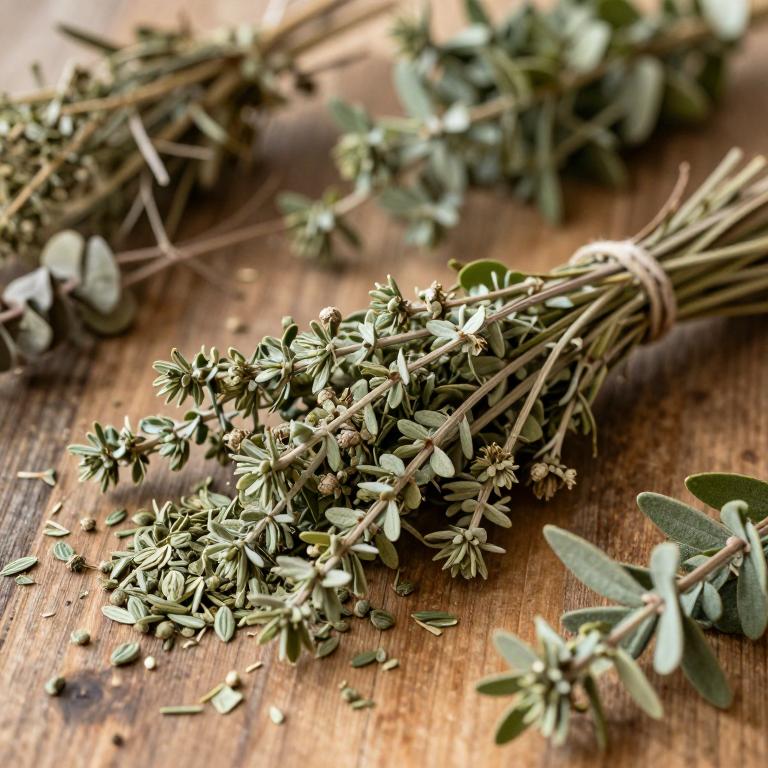
Dittany of Crete, scientifically known as Origanum dictamnuus, is a rare, aromatic herb endemic to the rocky landscapes of Crete. Renowned in ancient folklore for its potent healing properties, this resilient perennial has been historically prized for treating wounds, aiding digestion, and serving as a powerful antioxidant in traditional medicine.
Names and Synonyms
Common Names
- Cretan Dittany
- Cretan Oregano
- Dittany of Crete
- hop marjorum
- wintersweet
Scientific Names
Accepted name
Origanum dictamnusSynonyms
- Amaracus dictamnus
- Amaracus tomentosus
- Majorana dictamnus
Regional and Traditional Names
German:
- Diktam
- Diktamnos
- Diktamon
- Diptam-Dost
- kretischer Diptam
French:
- dictame de Crète
- Dictame de Crète
Sources: Wikidata, Catalogue of Life
Taxonomical Classification
This plant, known scientifically as Origanum dictamnus, belongs to the kingdom Plantae and the phylum Streptophyta. Within the class Equisetopsida and subclass Magnoliidae, it is further classified under the order Lamiales and the family Lamiaceae. Ultimately, it is placed within the genus Origanum.
| Rank | Classification |
|---|---|
| Kingdom | Plantae |
| Phylum | Streptophyta |
| Class | Equisetopsida |
| Subclass | Magnoliidae |
| Order | Lamiales |
| Family | Lamiaceae |
| Genus | Origanum |
Sources: The World Checklist of Vascular Plants (WCVP)
Distribution
This plant, known scientifically as Origanum dictaamnus, possesses a very specific and restricted geographical range. It is primarily found within the unique landscape of Southeastern Europe. More specifically, its natural habitat is centered on the island of Kriti, also known as Crete. This limited distribution makes the species an important element of the local Mediterranean flora. Consequently, the plant is highly characteristic of the unique ecological conditions found in that particular region.
| Region | Area |
|---|---|
| Southeastern Europe | Kriti |
Sources: The World Checklist of Vascular Plants (WCVP)
Botanical Identification
Life history
The life history of Origanum dictamnus is characterized by its classification as a chamaephyte, a life form that defines its survival strategy and growth habit within its ecological niche. As a chamaephyte, the plant maintains its perennating buds close to the soil surface, typically just above the ground level, which allows it to withstand environmental stressors such as frost or drought by utilizing the thermal insulation provided by the substrate. This growth habit ensures that even if the aerial portions of the plant are damaged by seasonal fluctuations, the regenerative capacity remains protected near the soil line. Consequently, its development cycles through distinct seasonal phases, emerging from these low-positioned buds to develop its characteristic foliage and flowering structures, ultimately relying on this low-profile architecture to navigate its specific habitat requirements.
- Life form :
- chamaephyte
Morphology
The morphology of Origanum dictamnus is characterized by a growth habit that is strictly terrestrial, as it does not exhibit aquatic or semiaquatic tendencies. It functions as a self-supporting plant, lacking the structures required to be an obligatory or facultative climber. Furthermore, the species is entirely independent, showing no parasitic behavior, and it maintains a terrestrial existence rather than growing as an epiphyte.
- Aquatic :
- terrestrial
- Climber :
- self-supporting
- Epiphyte :
- terrestrial
- Parasite :
- independent
Sources: Global Inventory of Floras and Traits (GIFT)
Chemicals
Origanum dictamnus has 21 reported phytochemicals identified across 0 scientific publications and several other databases. The most consistently reported chemicals include 2,4-dichlorophenoxy acetic acid (2,4-d), BA, CARVACROL, CU, Clinopodic acid I.
| Chemical | Supporting sources | Consensus |
|---|---|---|
| 2,4-dichlorophenoxy acetic acid (2,4-d) | 1 supporting sources | ★☆☆☆☆ |
| BA | 1 supporting sources | ★☆☆☆☆ |
| CARVACROL | 1 supporting sources | ★☆☆☆☆ |
| CU | 1 supporting sources | ★☆☆☆☆ |
| Clinopodic acid I | 1 supporting sources | ★☆☆☆☆ |
| Clinopodic acid O | 1 supporting sources | ★☆☆☆☆ |
| FE | 1 supporting sources | ★☆☆☆☆ |
| Flavonoids | 1 supporting sources | ★☆☆☆☆ |
| GIBBERELLIC ACID | 1 supporting sources | ★☆☆☆☆ |
| Gibberellic acid (GA3) | 1 supporting sources | ★☆☆☆☆ |
2,4-dichlorophenoxy acetic acid (2,4-d)
- Plants (Basel, Switzerland)
BA
- Plants (Basel, Switzerland)
CARVACROL
- Journal of ethnopharmacology
CU
- Plants (Basel, Switzerland)
Clinopodic acid I
- Archiv der Pharmazie
Clinopodic acid O
- Archiv der Pharmazie
FE
- Plants (Basel, Switzerland)
Flavonoids
- Journal of ethnopharmacology
GIBBERELLIC ACID
- Plants (Basel, Switzerland)
Gibberellic acid (GA3)
- Plants (Basel, Switzerland)
Activities
Origanum dictamnus has 2 reported activities identified across 0 scientific publications and several other databases. The most consistently reported activities include Antimicrobial, Antioxidant.
| Activity | Supporting sources | Consensus |
|---|---|---|
| Antimicrobial | 1 supporting sources | ★☆☆☆☆ |
| Antioxidant | 1 supporting sources | ★☆☆☆☆ |
Antimicrobial
- Journal of ethnopharmacology
Antioxidant
- Journal of ethnopharmacology
Conditions
Origanum dictamnus has 5 reported investigations on conditions identified across 0 scientific publications and several other databases. The most consistently reported conditions include cough, gastric ulcer, prostate cancer, sore throat, upper respiratory tract infection.
| Condition | Supporting sources | Consensus |
|---|---|---|
| Cough | 1 supporting sources | ★☆☆☆☆ |
| Gastric ulcer | 1 supporting sources | ★☆☆☆☆ |
| Prostate cancer | 1 supporting sources | ★☆☆☆☆ |
| Sore throat | 1 supporting sources | ★☆☆☆☆ |
| Upper respiratory tract infection | 1 supporting sources | ★☆☆☆☆ |
Cough
- Journal of ethnopharmacology
Gastric ulcer
- Journal of ethnopharmacology
Prostate cancer
- Food chemistry
Sore throat
- Journal of ethnopharmacology
Upper respiratory tract infection
- Hellenic journal of nuclear medicine
Preparations
Origanum dictamnus has 4 reported preparations identified across 0 scientific publications and several other databases. The most consistently reported preparations include essential oil, essential-oil extract, extracts, tea.
| Preparation | Supporting sources | Consensus |
|---|---|---|
| Essential oil | 1 supporting sources | ★☆☆☆☆ |
| Essential-oil extract | 1 supporting sources | ★☆☆☆☆ |
| Extracts | 1 supporting sources | ★☆☆☆☆ |
| Tea | 1 supporting sources | ★☆☆☆☆ |
Essential oil
- Journal of ethnopharmacology
Essential-oil extract
- Hellenic journal of nuclear medicine
Extracts
- Journal of ethnopharmacology
Tea
- Plants (Basel, Switzerland)