Desert Oregano
Origanum dayi · Accepted scientific name
Scientific literature: Very Sparse (3 studies) · ★☆☆☆☆
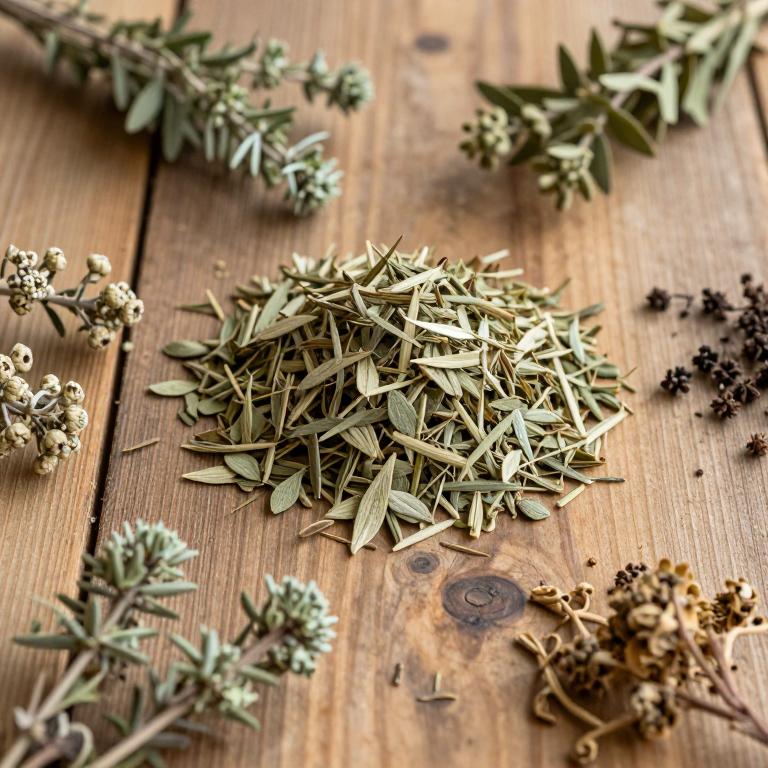
Desert Oregano, scientifically known as Origanum dayi, is a resilient aromatic herb native to arid landscapes. Renowned for its potent essential oils, this medicinal plant offers significant antioxidant and antimicrobial properties. Traditionally used in herbal remedies, it serves as a vital resource for supporting wellness through its unique phytochemical profile.
- Family
- Lamiaceae
- Native range
- Asia-Temperate
- Parts used
- Not available
- Common names
- Desert Oregano
- Scientific synonyms
- Satureja Camphorata
Names and Synonyms
Common Names
- Desert Oregano
Scientific Names
Accepted name
Origanum dayiSynonyms
- Satureja camphorata
Sources: Wikidata, Catalogue of Life
Taxonomical Classification
This plant, Origanum dayi, is a member of the kingdom Plantae and belongs to the phylum Streptophyta within the class Equisetopsida. It is further classified under the subclass Magnoliidae and the order Lamiales, falling into the family Lamiaceae. Ultimately, its taxonomic position is defined by its placement within the genus Origanum.
| Rank | Classification |
|---|---|
| Kingdom | Plantae |
| Phylum | Streptophyta |
| Class | Equisetopsida |
| Subclass | Magnoliidae |
| Order | Lamiales |
| Family | Lamiaceae |
| Genus | Origanum |
Sources: The World Checklist of Vascular Plants (WCVP)
Distribution
This plant, known scientifically as Origanum dayi, possesses a highly specific and restricted geographical range. Its natural occurrence is documented within the region of Western Asia. More specifically, the species is found localized to the territory of Palestine. Because of this limited presence, it is considered to have a very narrow distribution pattern. Consequently, understanding its specific habitat in this single area is essential for its conservation.
| Region | Area |
|---|---|
| Western Asia | Palestine |
Sources: The World Checklist of Vascular Plants (WCVP)
Botanical Identification
Life history
The life history of Origanum dayi is characterized by its specific growth habit and survival strategy within its ecological niche, classified primarily as a chamaephyte. This life form indicates that the plant's perennating buds are located close to the soil surface, typically just above it, allowing the species to withstand varying environmental stresses by maintaining its regenerative structures in a protected, low-lying position. Within the broader botanical classification of life forms, it is strictly identified as a chamaephyte, distinguishing it from taller phanerophytes or ephemeral therophytes. This growth strategy enables Origanum dayi to persist through seasonal changes, utilizing its low-growing structure to optimize resource acquisition and stability in its native habitat.
- Life form :
- chamaephyte
Morphology
The morphology of Origanum dayi is characterized by a growth form that functions as both a shrub and a subshrub, exhibiting a distinct woody structure. It is a self-supporting plant that does not function as a climber, maintaining an upright stature through its woody stems. This species is an independent organism, lacking any parasitic behavior, and it is categorized as terrestrial in its ecological positioning, rather than acting as an epiphyte or an aquatic species. Although its habitat context can range across aquatic, semiaquatic, and terrestrial environments, its primary morphological habit is grounded in terrestrial soil.
- Aquatic :
- terrestrial
- Climber :
- self-supporting
- Epiphyte :
- terrestrial
- Growth form :
- shrub
- Growth form :
- subshrub
- Parasite :
- independent
- Woodiness :
- woody
Sources: Global Inventory of Floras and Traits (GIFT)
Activities
Origanum dayi has 1 reported activities identified across 0 scientific publications and several other databases. The most consistently reported activities include Antiproliferative.
| Activity | Supporting sources | Consensus |
|---|---|---|
| Antiproliferative | 1 supporting sources | ★☆☆☆☆ |
Antiproliferative
- Critical reviews in food science and nutrition
Conditions
Origanum dayi has 2 reported investigations on conditions identified across 0 scientific publications and several other databases. The most consistently reported conditions include breast cancer, obesity.
| Condition | Supporting sources | Consensus |
|---|---|---|
| Breast cancer | 1 supporting sources | ★☆☆☆☆ |
| Obesity | 1 supporting sources | ★☆☆☆☆ |
Breast cancer
- Critical reviews in food science and nutrition
Obesity
- Medicines (Basel, Switzerland)
Preparations
Origanum dayi has 1 reported preparations identified across 0 scientific publications and several other databases. The most consistently reported preparations include organic extract.
| Preparation | Supporting sources | Consensus |
|---|---|---|
| Organic extract | 1 supporting sources | ★☆☆☆☆ |
Organic extract
- Medicines (Basel, Switzerland)