Orchis
Orchis · Accepted scientific name
Scientific literature: Very Sparse (0 studies) · ★☆☆☆☆
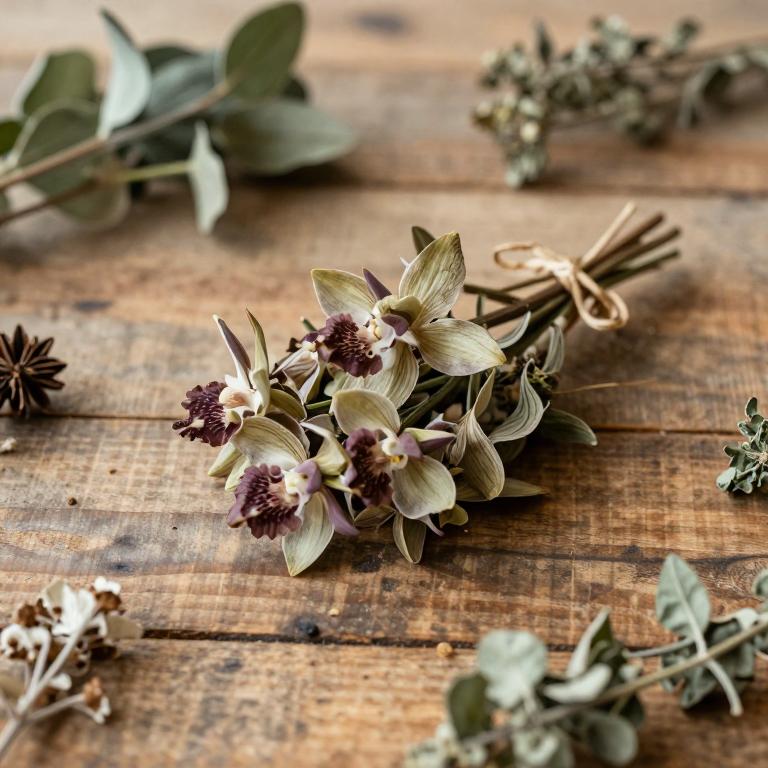
Orchis is a diverse genus of flowering plants that belongs to the Orchidaceae family. These plants are highly valued for their tubers, which serve as the primary source for traditional salep extracts. Historically, these powders have been used in various culinary and medicinal preparations across different cultures. The extraction process involves carefully drying and grinding the root to create a unique, starchy substance. Today, Orchis remains a subject of botanical interest due to its complex growth patterns and historical significance.
- Synonyms
- Aceras · Strateuma · 3 more
- Common names
- Not available
- Family
- Orchidaceae
- Distribution
- Southern America
- Plant Parts
- Not available
Classification
Common Names
Orchis is a diverse genus known by a variety of regional and linguistic names across different cultures. In certain areas, it is referred to by the common name Gegužraibė, while others use the term Gøgeurt to identify the Orchis-slægten. German-speaking regions frequently call these plants Knabenkraut or the plural form, Knabenkräuter. You may even encounter specific botanical references such as Knabenkräuter i. e. S. (Orchis) in older texts. Understanding these various names is essential for anyone studying the widespread botanical history of this fascinating genus.
Sources: Catalogue of Life (COL)
Synonyms
Orchis is a complex genus that has historically been subject to significant taxonomic shifts and reclassifications. Due to these shifting botanical perspectives, it shares synonymy with several other recognized names, including Aceras and Androrchis. Scientific discussions also frequently link the genus to Strateuma and Zoophora depending on the specific classification system in use. Furthermore, the complex nature of these plants is highlighted by the existence of hybrid names such as × Orchiaceras. Understanding these diverse relationships is essential for anyone navigating the intricate world of orchid taxonomy.
Sources: The World Checklist of Vascular Plants (WCVP)
Taxonomy
Orchis is a fascinating member of the kingdom Plantae that showcases the incredible diversity of the natural world. This plant belongs to the class Equisetopsida and is categorized under the order Asparagales. Within this botanical hierarchy, it is classified under the specific genus Orchis. Furthermore, it is a prominent representative of the family Orchidaceae, known for its striking floral structures. Through these distinct classifications, one can better understand the complex evolutionary lineage of this unique organism.
| Rank | Classification |
|---|---|
| Kingdom | Plantae |
| Phylum | Streptophyta |
| Class | Equisetopsida |
| Subclass | Magnoliidae |
| Order | Asparagales |
| Family | Orchidaceae |
| Genus | Orchis |
Sources: The World Checklist of Vascular Plants (WCVP)
Distribution
Geographic Regions
Orchis displays a widespread distribution across the diverse landscapes of Africa and the Macaronesian islands. Within these regions, the genus can be found throughout the Canary Islands and the lush terrain of Madeira. Its presence is particularly notable across Northern Africa, where it thrives in varied ecosystems. Specific populations are well-established in the coastal and inland areas of Algeria and Libya. Furthermore, the plant maintains a significant footprint within the borders of Morocco, completing its extensive regional reach.
Sources: The World Checklist of Vascular Plants (WCVP)
Identification
Biological Activities
Compounds
Conditions
Preparations
Orchis is prepared as salep extracts, which represents a significant part of the plant's enduring utility. This specific preparation serves as a prominent example of the contemporary culinary and medicinal uses of orchids. The extraction process highlights how certain species within the Orchidaceae family are integrated into various traditional practices. By converting Orchis into salep, these plants maintain a functional role that extends from historical materia medica into modern applications. Such uses underscore the multifaceted relationship between botanical species and human consumption.