Provence Orchid
Orchis provincialis · Accepted scientific name
Scientific literature: Very Sparse (1 studies) · ★☆☆☆☆
Provence Orchid, scientifically known as Orchis provincialis, is a resilient perennial herb native to the Mediterranean region. Characterized by its striking, spotted leaves and vibrant, tubular flowers, this species thrives in sunny, calcareous grasslands. It plays a vital role in local ecosystems, supporting diverse pollinator populations through its nectar.
- Family
- Orchidaceae
- Native range
- Europe
- Parts used
- Not available
- Common names
- Provence Orchid
- Scientific synonyms
- Androrchis Provincialis · Orchis Cyrilli · 11 more
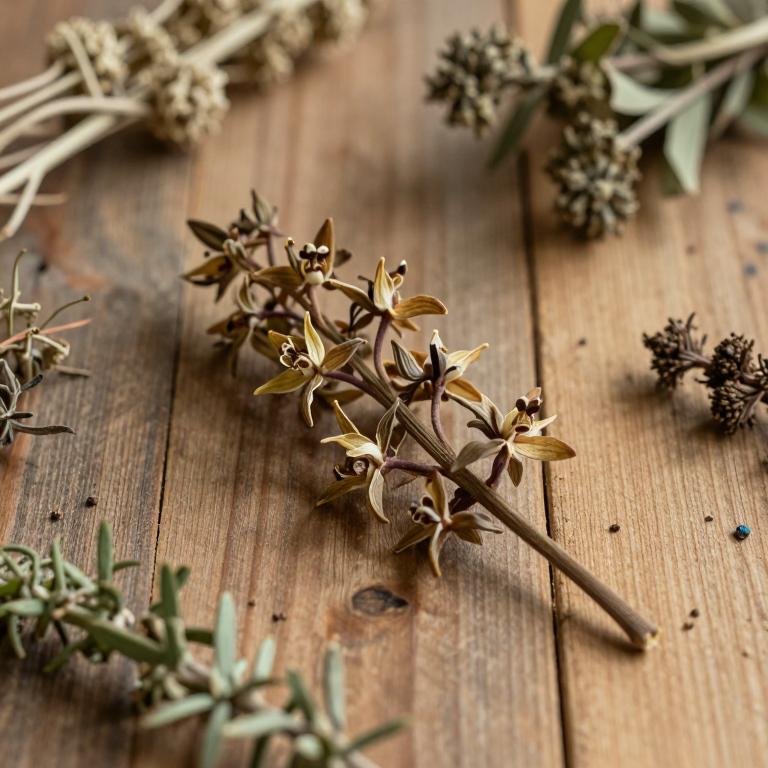
Names and Synonyms
Common Names
- Provence Orchid
Scientific Names
Accepted name
Orchis provincialisSynonyms
- Androrchis provincialis
- Orchis cyrilli
- Orchis provincialis var. leucostachya
- Orchis provincialis subvar. cyrnaea
- Orchis provincialis var. cyrnaea
- Orchis provincialis subvar. yvesii
- Orchis provincialis var. yvesii
- Orchis pallens subsp. provincialis
- Orchis pauciflora var. pseudopallens
- Orchis provincialis var. rubra
- Orchis morio var. provincialis
- Orchis provincialis var. variegata
- Orchis leucostachya
Regional and Traditional Names
Spanish:
- Orchis provincialis var laeta
- Orchis laeta
- Orchis leucostachys
- Orchis provincialis var. laeta
- Orchis cyrilli
- Orquídea de Provenza
German:
- Provence-Knabenkraut
- Provenzalische Orchis
- Provenceknabenkraut
- Französisches Knabenkraut
French:
- Orchis de Provence
- Orchis de Provence
Sources: Wikidata, Catalogue of Life
Taxonomical Classification
This plant belongs to the kingdom Plantae and the phylum Streptophyta, falling under the class Equisetopsida and subclass Magnoliidae. Within the order Asparagales, it is classified under the family Orchidaceae. Finally, it is identified by the genus Orchis.
| Rank | Classification |
|---|---|
| Kingdom | Plantae |
| Phylum | Streptophyta |
| Class | Equisetopsida |
| Subclass | Magnoliidae |
| Order | Asparagales |
| Family | Orchidaceae |
| Genus | Orchis |
Sources: The World Checklist of Vascular Plants (WCVP)
Distribution
This plant exhibits a specific distribution across several distinct regions of Europe. In Middle Europe, its presence can be documented within Switzerland. Moving toward the Mediterranean, it is found in various parts of Southwestern Europe. Specifically, it inhabits the islands of Corse and Sardegna. Furthermore, its range extends across the mainland of France and into Portugal.
| Region | Area |
|---|---|
| Middle Europe | Switzerland |
| Southwestern Europe | Corse |
| Southwestern Europe | France |
| Southwestern Europe | Portugal |
| Southwestern Europe | Sardegna |
| Southwestern Europe | Spain |
| Southeastern Europe | Albania |
| Southeastern Europe | Bulgaria |
| Southeastern Europe | Greece |
| Southeastern Europe | Italy |
Sources: The World Checklist of Vascular Plants (WCVP)
Botanical Identification
Ecology
The ecology of Orchis provincialis is characterized by its preference for diverse and varied landscapes, specifically flourishing within meadows, mountainous regions, and shrubberies. It thrives in these distinct environments, adapting to the varying light availability and soil compositions found in open grasslands, higher altitude terrains, and the transitional zones of woody vegetation. The presence of this species in such varied habitats suggests a resilience to different microclimates, ranging from the sun-exposed stretches of meadowland to the more sheltered, complex structures of shrubby thickets and the rugged conditions of mountain ecosystems.
- Habitat :
- meadows, mountains, shrubberies
Life history
The life history of Orchis provincialis is characterized by a perennial lifecycle, allowing the plant to persist in its habitat over many successive growing seasons. As a member of the orchid family, its survival strategy relies on its classification as a geophyte, meaning it utilizes underground storage organs to endure unfavorable environmental conditions. This life form is further categorized under the broader umbrella of crypto-phytes, as its vital regenerative tissues remain concealed beneath the soil surface, protecting the plant from seasonal stressors and ensuring its long-term establishment within its ecological niche.
- Life form :
- geophyte
- Life form :
- cryptophyte
- Lifecycle :
- perennial
Morphology
The morphology of Orchis provincialis is characterized by its growth form as a non-woody herb that functions as a self-supporting organism. It is an independent species, neither acting as a parasite nor an epiphyte, and maintains a terrestrial habitat. The plant typically exhibits a relatively low stature, with a plant height ranging from a minimum of 0.15 m to a maximum of 0.35 m.
- Aquatic :
- terrestrial
- Climber :
- self-supporting
- Epiphyte :
- terrestrial
- Growth form :
- herb
- Parasite :
- independent
- Plant height max:
- 0.35 m
- Plant height min:
- 0.15 m
- Woodiness :
- non-woody
Reproduction
The reproduction of Orchis provincialis is characterized by a specific seasonal flowering window that is highly dependent on environmental conditions. The flowering period typically begins in April, marking the onset of its reproductive phase, and continues through until May. While the precise timing of these stages can be variable depending on the specific local climate and ecological factors, this spring window is the critical period during which the plant produces its blooms to facilitate pollination and subsequent seed development.
- Flowering time :
- Apr
- Flowering time :
- May
Sources: Global Inventory of Floras and Traits (GIFT)
Activities
Orchis provincialis has 1 reported activities identified across 0 scientific publications and several other databases. The most consistently reported activities include Antihypertensive.
| Activity | Supporting sources | Consensus |
|---|---|---|
| Antihypertensive | 1 supporting sources | ★☆☆☆☆ |
Antihypertensive
- Hypertension research : official journal of the Japanese Society of Hypertension
Preparations
Orchis provincialis has 1 reported preparations identified across 0 scientific publications and several other databases. The most consistently reported preparations include crude extract of OM.
| Preparation | Supporting sources | Consensus |
|---|---|---|
| Crude extract of om | 1 supporting sources | ★☆☆☆☆ |
Crude extract of om
- Hypertension research : official journal of the Japanese Society of Hypertension