Orchis mascula
Orchis mascula · Accepted scientific name
Scientific literature: Very Sparse (1 studies) · ★☆☆☆☆
Orchis mascula is a botanical species that has gained scientific interest for its potential pharmacological properties. Recent studies have focused on the crude extract of this plant to evaluate its therapeutic effects on cardiovascular health. Research indicates that the plant exhibits significant antihypertensive activities, making it a subject of medicinal importance. Specifically, it has shown promise in managing conditions such as hypertension and dyslipidemia. Furthermore, the extract may play a role in regulating low density lipoprotein cholesterol and lowering mean arterial pressure.
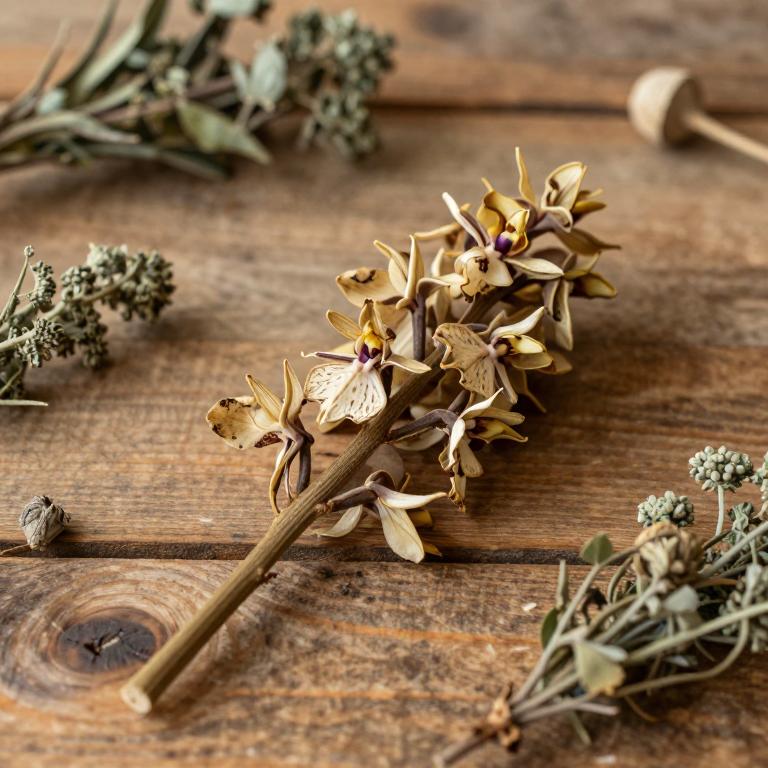
- Synonyms
- Orchis Morio Var. Mascula · Androrchis Mascula
- Common names
- Not available
- Family
- Orchidaceae
- Distribution
- Not available
- Plant Parts
- Not available
Classification
Common Names
Orchis mascula is a fascinating species known by many different regional names across Europe. In various locales, it is commonly referred to as the Early-Purple Orchid, highlighting its distinctive seasonal appearance. Depending on the linguistic tradition, you might encounter it called Caill y Ci or Hosanau'r Gog. German speakers often identify the plant as Maennliche Orchis or Maennliches Knabenkraut. These diverse names reflect the wide cultural and geographic reach of this beautiful orchid.
Sources: Catalogue of Life (COL)
Synonyms
Orchis mascula is a botanical species that is frequently identified through various scientific designations. In many taxonomic records, the plant is recognized by its synonym, Androrchis mascula. Furthermore, researchers may also encounter it listed as Orchis morio var. mascula depending on the classification system used. These varying names reflect the evolving nature of botanical nomenclature and historical shifts in plant grouping. Understanding these relationships is essential for ensuring accuracy when studying or documenting this specific orchid.
Sources: The World Checklist of Vascular Plants (WCVP)
Taxonomy
Orchis mascula is a fascinating botanical specimen that belongs to the kingdom Plantae. Within this vast realm, the plant is classified under the class Equisetopsida. It further occupies a specific niche within the order Asparagales. This species is a distinguished member of the genus Orchis. Ultimately, its unique characteristics define its place within the diverse family Orchidaceae.
| Rank | Classification |
|---|---|
| Kingdom | Plantae |
| Phylum | Streptophyta |
| Class | Equisetopsida |
| Subclass | Magnoliidae |
| Order | Asparagales |
| Family | Orchidaceae |
| Genus | Orchis |
Sources: The World Checklist of Vascular Plants (WCVP)
Distribution
Geographic Regions
Orchis mascula exhibits a diverse geographic range that spans several significant regions across multiple continents. In the African continent, the species is widely distributed, with specific populations found throughout Northern Africa, including Algeria and Morocco. Its presence extends into the Atlantic territories of Macaronesia, encompassing both the Canary Islands and Madeira. Beyond these southern reaches, the plant also thrives within the Asia-Temperate zone. Specifically, it can be identified growing within the unique landscape of the North Caucasus.
Sources: The World Checklist of Vascular Plants (WCVP)
Identification
Morphology
Orchis mascula is a self-supporting herb that thrives in its natural habitat. This plant typically maintains a modest stature, reaching a maximum height of approximately 0.6 m. Depending on environmental conditions, its growth can vary significantly. Individual specimens may be as short as 0.15 m or 0.165 m. Such compact dimensions allow this species to flourish within its ecological niche.
Sources: Global Inventory of Floras and Traits (GIFT)
Biological Activities
Orchis mascula has demonstrated significant antihypertensive activity, offering a potential natural approach to managing high blood pressure. Research indicates that this plant can effectively reduce systolic blood pressure and attenuate mean arterial pressure in a dose-dependent manner. These benefits are achieved through multiple pathways, including the promotion of direct vasodilation via calcium channel blockade. Additionally, the plant improves endothelial function by enhancing acetylcholine-induced relaxation in blood vessels. Such findings provide a scientific rationale for the medicinal use of this species in treating hypertension and related cardiovascular issues.
Compounds
Conditions
Orchis mascula treats hypertension by reducing systolic blood pressure and attenuating mean arterial pressure. The plant also treats dyslipidemia by significantly decreasing serum triglycerides and low-density lipoprotein-cholesterol levels. Through these lipid-lowering effects, Orchis mascula treats the atherogenic index. It further treats endothelial dysfunction by increasing acetylcholine-induced relaxation in the vasculature. Additionally, Orchis mascula treats gain in body weight by reducing daily diet consumption.
Preparations
Orchis mascula is prepared as a crude extract to facilitate the investigation of its medicinal properties. This specific preparation, referred to as Om.Cr, was utilized in studies involving both spontaneously hypertensive rats and normotensive anesthetized rats. Researchers administered the crude extract at dosages of 10 and 30 mg kg(-1) to observe its physiological effects. By using this crude form, the study demonstrated significant reductions in systolic blood pressure and serum triglyceride levels. Consequently, the preparation of Orchis mascula as a crude extract served as the primary method for evaluating its antihypertensive and dyslipidemic activities.