Gracemere-pear
Opuntia streptacantha · Accepted scientific name
Scientific literature: Very Sparse (16 studies) · ★☆☆☆☆
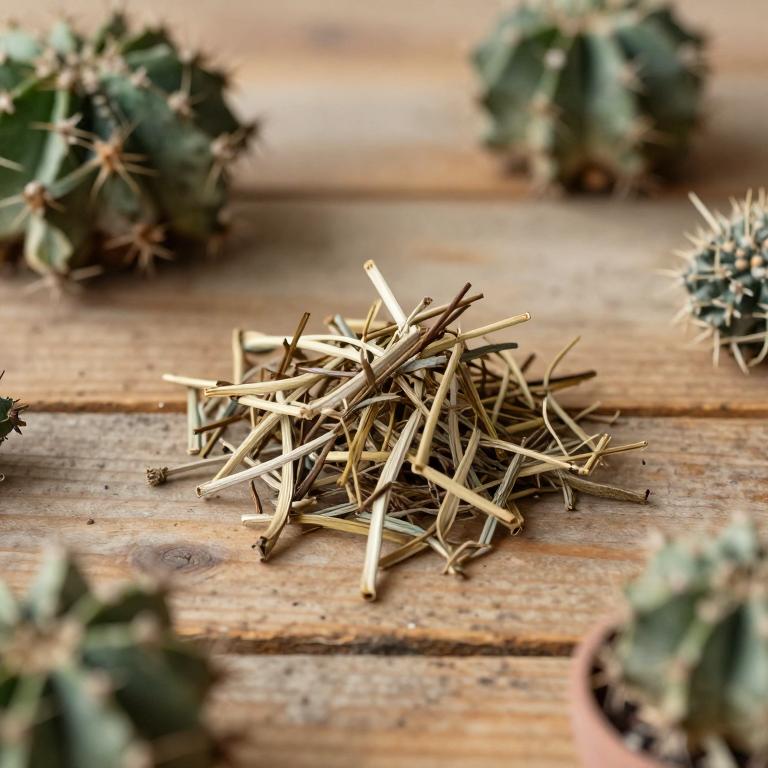
Gracemere-pear, scientifically known as Opuntiia streptacantha, is a remarkable cactus valued for its diverse therapeutic properties. Rich in antioxidants and essential minerals, this plant offers significant medicinal benefits, including anti-inflammatory and digestive support. Its unique bioactive compounds make it a vital resource in traditional and modern herbal medicine.
Names and Synonyms
Common Names
- Gracemere-pear
- Westwood-pear
- cardona-pear
- white-spine prickly-pear
- white-spine-pear
Scientific Names
Accepted name
Opuntia streptacanthaSynonyms
- Opuntia pachona
- Opuntia coindetti
- Opuntia streptacantha subsp. aguirriana
- Opuntia streptacantha var. pachona
- Opuntia cardonae
Regional and Traditional Names
Spanish:
- Nopal Cardón
- cardón
- cenizo
- chaveño
- nopal cardón
- nopal hartón
- tuna cardona
Sources: Wikidata, Catalogue of Life
Taxonomical Classification
This plant belongs to the kingdom Plantae and is classified under the phylum Streptophyta within the class Equisetopsida. As a member of the subclass Magnoliidae and the order Caryophyllales, it is specifically situated in the family Cactaceae. Finally, its taxonomic identity is defined by the genus Opuntia, which includes the species Opuntia streptacantha.
| Rank | Classification |
|---|---|
| Kingdom | Plantae |
| Phylum | Streptophyta |
| Class | Equisetopsida |
| Subclass | Magnoliidae |
| Order | Caryophyllales |
| Family | Cactaceae |
| Genus | Opuntia |
Sources: The World Checklist of Vascular Plants (WCVP)
Distribution
This plant exhibits a diverse geographical distribution spanning multiple continents and regions. In North America, it is widely found throughout Mexico, specifically within the Central, Northeast, and Gulf regions. Its presence extends across the ocean to Southwestern Europe, where it can be located in Spain. Additionally, the species has established itself in Australia, particularly within the state of Queensland. These varied locations demonstrate the plant's ability to thrive in distinct environmental settings worldwide.
| Region | Area |
|---|---|
| Southwestern Europe | Spain |
| Australia | Queensland |
| Mexico | Mexico Central |
| Mexico | Mexico Northeast |
| Mexico | Mexico Gulf |
| Mexico | Mexico Southwest |
| Central America | Guatemala |
Sources: The World Checklist of Vascular Plants (WCVP)
Botanical Identification
Morphology
The morphology of Opuntia streptacantha is characterized by a terrestrial growth habit, existing as a self-supporting shrub rather than an aquatic or semiaquatic species. As a non-climbing plant, it does not function as a liana or vine, maintaining a sturdy, upright structure through its self-supporting architecture. The plant is entirely independent, lacking any parasitic or epiphytic tendencies, and is firmly rooted in terrestrial soil. Its structural integrity is defined by its woody nature, featuring robust, lignified tissues that support its shrubby form and contribute to its overall perennial development.
- Aquatic :
- terrestrial
- Climber :
- self-supporting
- Epiphyte :
- terrestrial
- Growth form :
- shrub
- Parasite :
- independent
- Woodiness :
- woody
Physiology
The physiology of Opuntia streptacantha is characterized by specialized morphological adaptations designed to optimize resource management in arid environments. A key aspect of its physiological structure involves the dimensions of its photosynthetic organs, which exhibit specific variability in size to facilitate efficient gas exchange and water retention. The leaf-like structures, or cladodes, demonstrate a controlled range of dimensions, with leaf lengths fluctuating between a minimum of 7 cm and a maximum of 9 cm. Complementing this longitudinal growth, the width of these structures is physiologically regulated within a range of 7 cm at its minimum to 9 cm at its maximum. This specific dimensional balance between length and width plays a critical role in the plant's surface-area-to-volume ratio, directly influencing its metabolic efficiency and its capacity to manage thermal regulation and transpiration rates.
- Leaf length max:
- 9 cm
- Leaf length min:
- 7 cm
- Leaf width max:
- 9 cm
- Leaf width min:
- 7 cm
Reproduction
Reproduction in Opuntia streptacantha is driven by a complex suite of mechanisms that ensure the distribution of its progeny across varied landscapes. The plant exhibits a diverse range of dispersal strategies, characterized by its status as an unspecialized disperser that can utilize multiple pathways for movement. Primarily, the species relies on zoochorous dispersal, where animals facilitate the movement of seeds through ingestion or attachment, though it also integrates elements of anemochorous, autochorous, and hydrochorous dispersal. This multi-modal approach allows seeds to be spread by wind, self-propulsion, or water currents, ensuring that the plant can colonize new territories effectively regardless of the specific environmental medium available.
- Dispersal syndrome :
- zoochorous
Sources: Global Inventory of Floras and Traits (GIFT)
Plant Parts
Opuntia streptacantha has 1 reported plant parts identified across 1 scientific publications and several other databases that are studied for medicinal purposes. The most consistently reported plant part include stem.
| Plant part | Supporting sources | Consensus |
|---|---|---|
| Stem | 1 supporting sources | ★☆☆☆☆ |
Stem
- Archivos de investigacion medica
Activities
Opuntia streptacantha has 4 reported activities identified across 1 scientific publications and several other databases. The most consistently reported activities include Antibacterial, Antifungal, Antiviral, Hypoglycemic.
| Activity | Supporting sources | Consensus |
|---|---|---|
| Antibacterial | 1 supporting sources | ★☆☆☆☆ |
| Antifungal | 1 supporting sources | ★☆☆☆☆ |
| Antiviral | 1 supporting sources | ★☆☆☆☆ |
| Hypoglycemic | 1 supporting sources | ★☆☆☆☆ |
Antibacterial
- Journal of dietary supplements
Antifungal
- Journal of dietary supplements
Antiviral
- Journal of dietary supplements
Hypoglycemic
- Archivos de investigacion medica
Conditions
Opuntia streptacantha has 6 reported investigations on conditions identified across 1 scientific publications and several other databases. The most consistently reported conditions include diabetes mellitus, Diabetes mellitus, hyperglycemia, hypoglycemic, infectious disease.
| Condition | Supporting sources | Consensus |
|---|---|---|
| Diabetes mellitus | 3 supporting sources | ★★☆☆☆ |
| Diabetes mellitus | 1 supporting sources | ★☆☆☆☆ |
| Hyperglycemia | 1 supporting sources | ★☆☆☆☆ |
| Hypoglycemic | 1 supporting sources | ★☆☆☆☆ |
| Infectious disease | 1 supporting sources | ★☆☆☆☆ |
| Type 2 diabetes | 1 supporting sources | ★☆☆☆☆ |
Diabetes mellitus
- The American journal of Chinese medicine
- Journal of ethnopharmacology
- Archivos de investigacion medica
Diabetes mellitus
- The American journal of Chinese medicine
Hyperglycemia
- Archivos de investigacion medica
Hypoglycemic
- Archivos de investigacion medica
Infectious disease
- Journal of dietary supplements
Type 2 diabetes
- Journal of ethnopharmacology
Preparations
Opuntia streptacantha has 7 reported preparations identified across 1 scientific publications and several other databases. The most consistently reported preparations include "agua de uso", 500 g of O. streptacantha were given orally, Opuntia streptacantha sap, broiled stems, cold infusion.
| Preparation | Supporting sources | Consensus |
|---|---|---|
| "agua de uso" | 1 supporting sources | ★☆☆☆☆ |
| 500 g of o. streptacantha were given orally | 1 supporting sources | ★☆☆☆☆ |
| Opuntia streptacantha sap | 1 supporting sources | ★☆☆☆☆ |
| Broiled stems | 1 supporting sources | ★☆☆☆☆ |
| Cold infusion | 1 supporting sources | ★☆☆☆☆ |
| Filtrate extract (fe) | 1 supporting sources | ★☆☆☆☆ |
| Liquefied extract (le) | 1 supporting sources | ★☆☆☆☆ |
"agua de uso"
- Journal of ethnopharmacology
500 g of o. streptacantha were given orally
- Archivos de investigacion medica
Opuntia streptacantha sap
- The American journal of Chinese medicine
Broiled stems
- Archivos de investigacion medica
Cold infusion
- Journal of ethnopharmacology
Filtrate extract (fe)
- Journal of ethnopharmacology
Liquefied extract (le)
- Journal of ethnopharmacology