wheel cactus
Opuntia robusta · Accepted scientific name
Scientific literature: Very Sparse (9 studies) · ★☆☆☆☆
Wheel cactus, scientifically known as Opuntiia robusta, is a resilient succulent native to Mexico. Valued for its medicinal properties, it is traditionally used to manage blood sugar levels and support digestive health. Its unique, paddle-like structure makes it a fascinating specimen for both herbal studies and ornamental gardening.
- Family
- Cactaceae
- Native range
- Europe
- Parts used
- Not available
- Common names
- Wheel Cactus
- Scientific synonyms
- Opuntia Megalarthra · Opuntia Piccolomini · 14 more
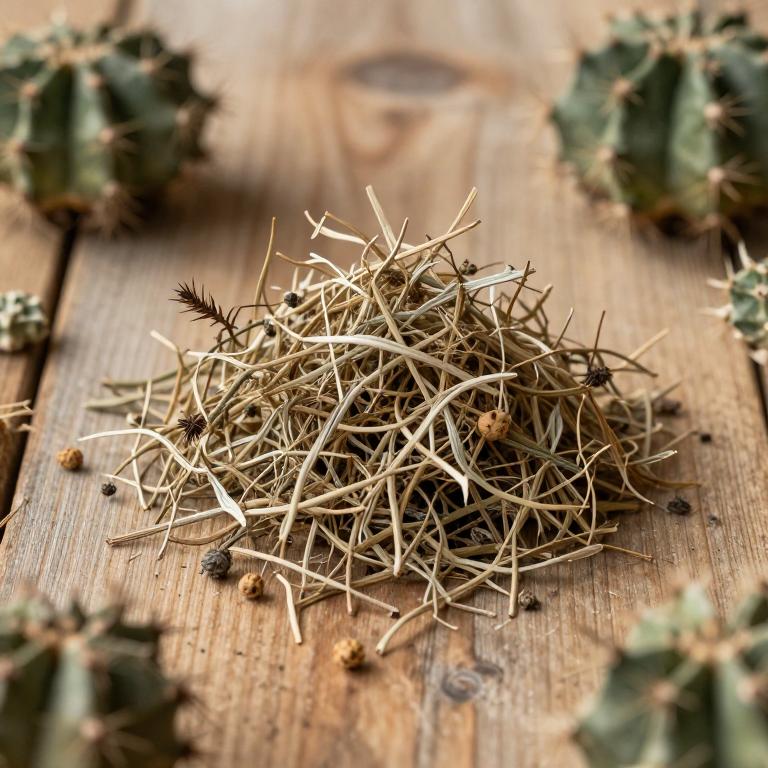
Names and Synonyms
Common Names
- wheel cactus
Scientific Names
Accepted name
Opuntia robustaSynonyms
- Opuntia megalarthra
- Opuntia piccolomini
- Opuntia albicans var. laevior
- Opuntia robusta var. longiglochidiata
- Opuntia robusta var. albicans
- Opuntia larreyi
- Opuntia camuessa
- Opuntia flavicans
- Opuntia gorda
- Opuntia robusta var. megalarthra
- Opuntia robusta var. larreyi
- Opuntia robusta var. guerrana
- Opuntia guerrana
- Opuntia albicans
- Opuntia pruinosa
- Opuntia prate
Regional and Traditional Names
Spanish:
- Opuntia guerrana
- Nopal tapón
- Nopal tapón
- camuesa
- joconoxtle
- nopal camueso
- tuna bartolona
- tuna tapona
- tuna tapón
Sources: Wikidata, Catalogue of Life
Taxonomical Classification
This plant belongs to the kingdom Plantae within the phylum Streptophyta and is classified under the class Equisetopsida. Following the subclass Magnoliidae, it is situated in the order Caryophyllales and the family Cactaceae. Finally, it is categorized under the genus Opuntia as the species Opuntia robusta.
| Rank | Classification |
|---|---|
| Kingdom | Plantae |
| Phylum | Streptophyta |
| Class | Equisetopsida |
| Subclass | Magnoliidae |
| Order | Caryophyllales |
| Family | Cactaceae |
| Genus | Opuntia |
Sources: The World Checklist of Vascular Plants (WCVP)
Distribution
This plant exhibits a specific geographical distribution primarily concentrated within the Mediterranean region. In Southwestern Europe, its presence is documented across several distinct territories, including France and Spain. It can also be found inhabiting the islands of the Baleares and Corse. Furthermore, the species extends its range into Southeastern Europe, specifically within Greece. These diverse locations highlight the plant's preference for the unique climates found along these coastal and island environments.
| Region | Area |
|---|---|
| Southwestern Europe | Baleares |
| Southwestern Europe | Corse |
| Southwestern Europe | France |
| Southwestern Europe | Spain |
| Southeastern Europe | Greece |
| Southeastern Europe | Italy |
| Southeastern Europe | Sicilia |
| Northern Africa | Algeria |
| Northern Africa | Tunisia |
| Macaronesia | Canary Is. |
Sources: The World Checklist of Vascular Plants (WCVP)
Botanical Identification
Ecology
The ecology of Opuntia robusta is characterized by its remarkable adaptability to diverse altitudinal gradients, thriving across a broad elevational range that extends from sea level (0 m AMSL) up to a maximum altitude of 2100 m AMSL. This wide distribution allows the species to inhabit various ecological niches, ranging from lowland arid zones to higher-altitude montane environments. To survive in these often harsh and herbivore-prone habitats, the plant possesses specialized defense mechanisms, making it a defended species capable of protecting its succulent tissues from predation. These traits collectively enable it to maintain a stable presence across varied topographical landscapes and climatic conditions.
- Defense :
- yes
- Elevational range max:
- 2100 m AMSL
- Elevational range min:
- 0 m AMSL
Life history
The life history of Opuntiia robusta is characterized by a perennial lifecycle, allowing the plant to persist through multiple growing seasons and establish a long-term presence in its natural habitat. As a perennial species, it does not complete its life cycle in a single year but rather undergoes continuous growth and development, often forming large, succulent clumps of cladodes over time. This extended lifespan enables the plant to accumulate significant water reserves within its fleshy pads, providing resilience against fluctuating environmental conditions. Its developmental stages involve a robust vegetative growth phase where new segments are produced, followed by reproductive periods where flowering and seed production occur, ensuring the continuation of the species across successive years.
- Lifecycle :
- perennial
Morphology
The morphology of Opuntia robusta is characterized by a woody growth form, specifically categorized as a shrub. It is a terrestrial plant that functions as an independent organism, neither acting as a parasite nor an epiphyte. As a self-supporting species, it does not exhibit climbing habits such as lianas or vines. In terms of stature, the plant reaches a height ranging from a minimum of 1 meter to a maximum of 5 meters.
- Aquatic :
- terrestrial
- Climber :
- self-supporting
- Epiphyte :
- terrestrial
- Growth form :
- shrub
- Parasite :
- independent
- Plant height max:
- 5 m
- Plant height min:
- 1 m
- Woodiness :
- woody
Physiology
The physiology of Opuntia robusta is characterized by specialized adaptations for water conservation and survival in arid environments, most notably through its high degree of succulence. This succulent nature allows the plant to function as a water reservoir, utilizing thickened tissues to store moisture for use during prolonged dry periods. Morphologically, the plant exhibits modified leaf structures where the photosynthetic and storage functions are highly integrated; the leaf dimensions are relatively compact, with a maximum leaf length of 5 cm and a maximum leaf width of 5 cm. These physiological traits, combined with its ability to manage metabolic processes under water stress, enable the species to maintain hydration and structural integrity in harsh climatic conditions.
- Leaf length max:
- 5 cm
- Leaf width max:
- 5 cm
- Succulence :
- yes
Reproduction
The reproduction of Opuntia robusta is characterized by a specific seasonal flowering cycle and specialized fruit development. The flowering period typically commences in May and reaches its conclusion in July, producing blossoms that feature a distinct yellow colour and reach a maximum width of 5 cm. Following pollination, the plant develops fleshy fruits that exhibit a vibrant red colour. These fruits vary in size, with a length ranging from a minimum of 7 cm to a maximum of 9 cm. The dispersal of the seeds follows a zoochorous syndrome, meaning they are primarily dispersed by animals, which plays a crucial role in the plant's reproductive success and spatial distribution.
- Dispersal syndrome :
- zoochorous
- Flower colour :
- yellow
- Flower width max:
- 5 cm
- Flowering time :
- May
- Flowering time :
- Jul
- Fruit colour :
- red
- Fruit length max:
- 9 cm
- Fruit length min:
- 7 cm
Sources: Global Inventory of Floras and Traits (GIFT)
Chemicals
Opuntia robusta has 1 reported phytochemicals identified across 0 scientific publications and several other databases. The most consistently reported chemicals include Flavonoid.
| Chemical | Supporting sources | Consensus |
|---|---|---|
| Flavonoid | 1 supporting sources | ★☆☆☆☆ |
Flavonoid
- Plants (Basel, Switzerland)
Activities
Opuntia robusta has 2 reported activities identified across 0 scientific publications and several other databases. The most consistently reported activities include Antibacterial, Antioxidant.
| Activity | Supporting sources | Consensus |
|---|---|---|
| Antibacterial | 1 supporting sources | ★☆☆☆☆ |
| Antioxidant | 1 supporting sources | ★☆☆☆☆ |
Antibacterial
- Plants (Basel, Switzerland)
Antioxidant
- Plants (Basel, Switzerland)
Conditions
Opuntia robusta has 5 reported investigations on conditions identified across 0 scientific publications and several other databases. The most consistently reported conditions include LDL-cholesterol, antidiabetic, antioxidant, diabetes mellitus, familial hypercholesterolemia.
| Condition | Supporting sources | Consensus |
|---|---|---|
| Ldl-cholesterol | 1 supporting sources | ★☆☆☆☆ |
| Antidiabetic | 1 supporting sources | ★☆☆☆☆ |
| Antioxidant | 1 supporting sources | ★☆☆☆☆ |
| Diabetes mellitus | 1 supporting sources | ★☆☆☆☆ |
| Familial hypercholesterolemia | 1 supporting sources | ★☆☆☆☆ |
Ldl-cholesterol
- Prostaglandins, leukotrienes, and essential fatty acids
Antidiabetic
- Plants (Basel, Switzerland)
Antioxidant
- Plants (Basel, Switzerland)
Diabetes mellitus
- Prostaglandins, leukotrienes, and essential fatty acids
Familial hypercholesterolemia
- Prostaglandins, leukotrienes, and essential fatty acids
Preparations
Opuntia robusta has 1 reported preparations identified across 0 scientific publications and several other databases. The most consistently reported preparations include cladode extracts.
| Preparation | Supporting sources | Consensus |
|---|---|---|
| Cladode extracts | 1 supporting sources | ★☆☆☆☆ |
Cladode extracts
- Plants (Basel, Switzerland)