Bush Restharrow
Ononis ramosissima · Accepted scientific name
Scientific literature: Very Sparse (2 studies) · ★☆☆☆☆
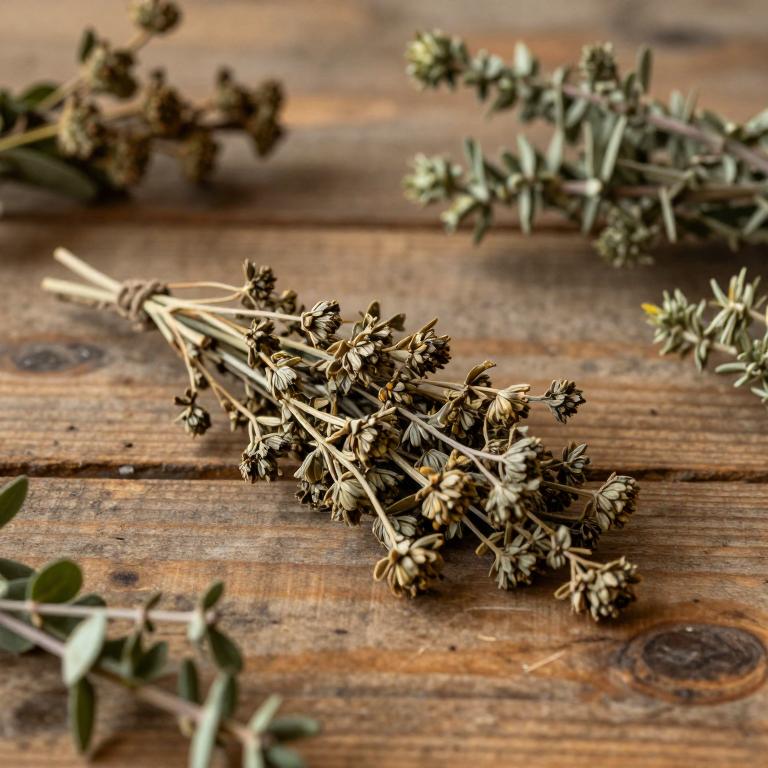
Bush Restharrow, scientifically known as Ononis ramosissima, is a resilient, woody shrub native to arid Australian landscapes. Renowned for its medicinal properties, this plant is traditionally used in indigenous practices to treat skin ailments and digestive issues. Its hardy nature makes it a vital component of desert ecosystems.
- Family
- Fabaceae
- Native range
- Europe
- Parts used
- Not available
- Common names
- Bush Restharrow · Spanish Restharrow
- Scientific synonyms
- Ononis Natrix Subsp. Picta · Ononis Natrix Var. Picta · 28 more
Names and Synonyms
Common Names
- Bush Restharrow
- Spanish Restharrow
Scientific Names
Accepted name
Ononis ramosissimaSynonyms
- Ononis natrix subsp. picta
- Ononis natrix var. picta
- Ononis natrix var. clausoniana
- Ononis adglutinans
- Ononis natrix var. microphylla
- Ononis natrix var. ramosissima
- Ononis natrix f. denticulata
- Ononis natrix subsp. ramosissima
- Ononis natrix subvar. sicula
- Ononis natrix var. mauritanica
- Ononis natrix var. adglutinans
- Ononis natrix subvar. parvifolia
- Ononis ramosissima var. gracilis
- Ononis natrix var. gibraltarica
- Ononis gibraltarica
- Ononis natrix var. boissieri
- Ononis hispanica subsp. ramosissima
- Ononis natrix subsp. microphylla
- Ononis ramosissima var. gibraltarica
- Ononis natrix f. fontanesiana
- Ononis picta
- Ononis ramosissima var. breviaristata
- Ononis natrix subsp. gibraltarica
- Ononis ramosissima subsp. gibraltarica
- Ononis natrix subsp. font-queri
- Ononis hispanica proles ramosissima
- Ononis natrix var. font-queri
- Ononis natrix proles picta
- Ononis natrix var. gracilis
- Ononis natrix proles ramosissima
Regional and Traditional Names
Spanish:
- Beluda
- Bolina
- Carretón de Fuego
- Carretón de Mar
- Garbancera
- Garbanceros
- Gatuña Muy Ramosa
- Hierba culebra
- Melera
- Melosa
- Pegamoscas
- Tárraga
German:
- Spanische Hauhechel
French:
- Bugrane très rameuse
- Bugrane très ramifiée
Sources: Wikidata, Catalogue of Life
Taxonomical Classification
This plant belongs to the kingdom Plantae and is classified under the phylum Streptophyta and class Equisetopsida. Within the subclass Magnoliidae, it falls under the order Fabales and the family Fabaceae. It is specifically identified by the genus Oonis and the species name ramosissima.
| Rank | Classification |
|---|---|
| Kingdom | Plantae |
| Phylum | Streptophyta |
| Class | Equisetopsida |
| Subclass | Magnoliidae |
| Order | Fabales |
| Family | Fabaceae |
| Genus | Ononis |
Sources: The World Checklist of Vascular Plants (WCVP)
Distribution
This plant, Oonis ramosissima, is primarily found across various regions of Southwestern Europe. Its distribution includes specific locations within the Baleares islands and the territory of France. Additionally, it can be located in the coastal and inland areas of Portugal. The species is also documented to grow on the island of Sardegna. Finally, its presence is well-established throughout the mainland of Spain.
| Region | Area |
|---|---|
| Southwestern Europe | Baleares |
| Southwestern Europe | France |
| Southwestern Europe | Portugal |
| Southwestern Europe | Sardegna |
| Southwestern Europe | Spain |
| Southeastern Europe | Italy |
| Southeastern Europe | Kriti |
| Southeastern Europe | Sicilia |
| Northern Africa | Algeria |
| Northern Africa | Libya |
Sources: The World Checklist of Vascular Plants (WCVP)
Botanical Identification
Life history
The life history of Ononis ramosissima is characterized by its status as a perennial plant, allowing it to persist through multiple growing seasons. In terms of its structural growth strategy, it is classified as a chamaephyte, meaning its regenerative buds are located close to or just above the soil surface, which helps the plant withstand various environmental stressors. This life form is consistent across its developmental stages, as it maintains this chamaephyte habit throughout its existence within its natural habitat.
- Life form :
- chamaephyte
- Lifecycle :
- perennial
Morphology
The morphology of Ononis ramosissima is characterized by a growth form that ranges from a subshrub to a shrub, exhibiting a distinctively woody structure. This plant can be found inhabiting diverse environments, spanning across terrestrial, semiaquatic, and aquatic habitats.
- Aquatic :
- terrestrial
- Growth form :
- shrub
- Growth form :
- subshrub
- Woodiness :
- woody
Sources: Global Inventory of Floras and Traits (GIFT)
Chemicals
Ononis ramosissima has 1 reported phytochemicals identified across 0 scientific publications and several other databases. The most consistently reported chemicals include TNF alpha.
| Chemical | Supporting sources | Consensus |
|---|---|---|
| TNF alpha | 1 supporting sources | ★☆☆☆☆ |
TNF alpha
- Journal of ethnopharmacology
Conditions
Ononis ramosissima has 1 reported investigations on conditions identified across 0 scientific publications and several other databases. The most consistently reported conditions include TNF-alpha.
| Condition | Supporting sources | Consensus |
|---|---|---|
| Tnf-alpha | 1 supporting sources | ★☆☆☆☆ |
Tnf-alpha
- Journal of ethnopharmacology