Yellow restharrow
Ononis natrix · Accepted scientific name
Scientific literature: Very Sparse (3 studies) · ★☆☆☆☆
Yellow restharrow, scientifically known as Ononis natrix, is a perennial herb belonging to the Fabaceae family. Characterized by its bright yellow flowers and small leaflets, this plant thrives in dry, calcareous soils. Historically valued in traditional medicine, it possesses diuretic and anti-inflammatory properties used to support urinary health.
- Family
- Fabaceae
- Native range
- Europe
- Parts used
- Leaf
- Common names
- Yellow Restharrow
- Scientific synonyms
- Anonis Natrix
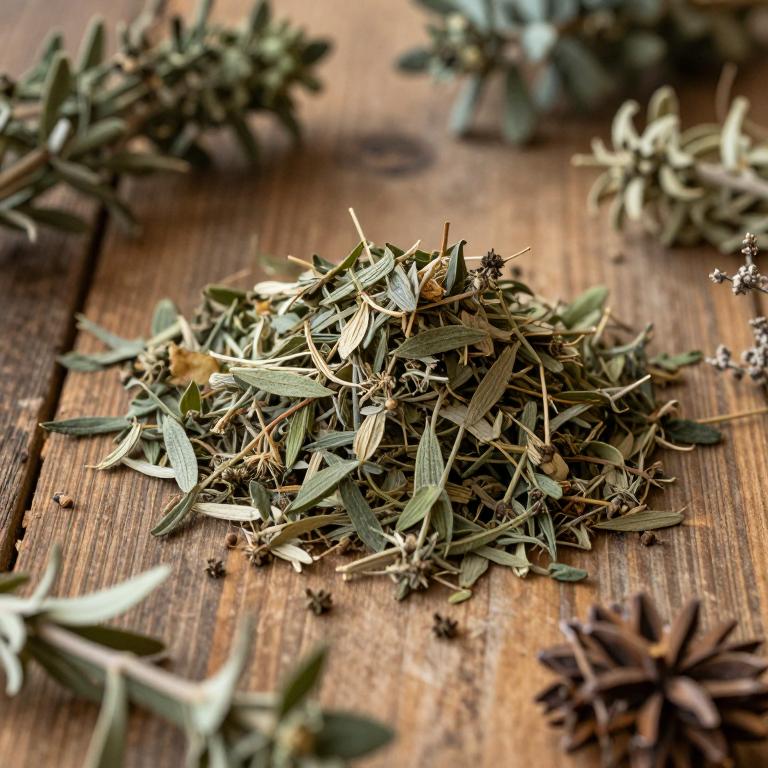
Names and Synonyms
Common Names
- Yellow Restharrow
Scientific Names
Accepted name
Ononis natrixSynonyms
- Anonis natrix
Regional and Traditional Names
Spanish:
- Ononis natrix subvar inaequifolia
- Ononis natrix subsp picta
- Ononis natrix var media
- Ononis natrix subvar. foliosa
- Ononis natrix var cadiana
- Ononis natrix f. barcinensis
- Hierba melera
- Ononis natrix var arachnoidea
- Ononis hispanica
- Ononis natrix L subsp natrix
- Pegamoscas
- Ononis natrix var. cadiana
- Ononis natrix var. picta
- Ononis natrix subvar perusiana
- Tárraga
- Ononis natrix var. arachnoidea
- Tarraga
- Beluda
- Pegamoscas
German:
- Gelbe Hauhechel
- Gelbe Hauhechel
French:
- Bugrane jaune
- Bugrane jaune
- Bugrane fétide
- Bugrane puante
- Coqsigrue
- Coquesigrue
- Ononis jaune
Sources: Wikidata, Catalogue of Life
Taxonomical Classification
This plant belongs to the kingdom Plantae and is classified under the phylum Streptophyta and the class Equisetopsida. Within the subclass Magnoliidae, it is further organized under the order Fabales and the family Fabaceae. Its specific taxonomic placement is within the genus Ononis.
| Rank | Classification |
|---|---|
| Kingdom | Plantae |
| Phylum | Streptophyta |
| Class | Equisetopsida |
| Subclass | Magnoliidae |
| Order | Fabales |
| Family | Fabaceae |
| Genus | Ononis |
Sources: The World Checklist of Vascular Plants (WCVP)
Distribution
This plant exhibits a specific distribution pattern across several regions of the European continent. In Middle Europe, its presence can be documented within the borders of Germany and Switzerland. Moving toward the Mediterranean, it is also found throughout Southwestern Europe. Specifically, its range extends to the islands of the Baleares and Corse. Additionally, the species is well-established within the mainland territory of France.
| Region | Area |
|---|---|
| Middle Europe | Germany |
| Middle Europe | Switzerland |
| Southwestern Europe | Baleares |
| Southwestern Europe | Corse |
| Southwestern Europe | France |
| Southwestern Europe | Portugal |
| Southwestern Europe | Sardegna |
| Southwestern Europe | Spain |
| Southeastern Europe | Italy |
| Southeastern Europe | NW. Balkan Pen. |
Sources: The World Checklist of Vascular Plants (WCVP)
Botanical Identification
Ecology
The ecology of Ononis natrix is characterized by its distribution within low-lying coastal or lowland environments, as it occupies a specific elevational range starting from 0 m AMSL and extending up to a maximum of 100 m AMSL. This narrow altitudinal belt suggests that the species is adapted to maritime or near-sea-level conditions, likely thriving in habitats where humidity is high and the terrain remains relatively flat. By occupying these low elevations, the plant interfaces with ecosystems typically defined by alluvial soils or sandy coastal substrates, where it must contend with specific moisture regimes and salinity levels inherent to such low-altitude zones.
- Elevational range max:
- 100 m AMSL
- Elevational range min:
- 0 m AMSL
Life history
The life history of Oenothera biennis (often associated with the taxonomic context of Ononis natrix in specific ecological studies) is characterized by a perennial lifecycle, exhibiting a variable nature that can manifest as annual, biennial, or perennial depending on environmental conditions. As a hemicryophyte, the plant's perennating buds are located at the soil surface, protected by leaf litter or the upper layers of the substrate, which allows it to persist through unfavorable seasons. This life form is further defined by its hemicryptophytic structure, ensuring survival through various climatic shifts. Additionally, the plant follows a deciduous pattern, shedding its foliage during dormant periods to conserve resources, a strategy central to its survival and seasonal growth cycles.
- Deciduousness :
- deciduous
- Life form :
- hemicryptophyte
- Lifecycle :
- perennial
Morphology
The morphology of Oonis natrix is characterized by a growth form that transitions between a shrub and a subshrub, exhibiting a non-woody structure throughout its development. This plant typically maintains a relatively low stature, with a plant height ranging from a minimum of 0.2 m to a maximum of 0.5 m, resulting in an average height of approximately 0.35 m. As a terrestrial species, it does not exhibit aquatic or epiphytic tendencies, growing instead as an independent organism without parasitic requirements. In terms of its climbing habit, the plant is categorized as self-supporting, meaning it does not rely on other structures as an obligatory or facultative climber.
- Aquatic :
- terrestrial
- Climber :
- self-supporting
- Epiphyte :
- terrestrial
- Growth form :
- shrub
- Growth form :
- subshrub
- Parasite :
- independent
- Plant height max:
- 0.5 m
- Plant height mean:
- 0.35 m
- Plant height min:
- 0.2 m
- Woodiness :
- non-woody
Physiology
The physiology of Oonis natrix is characterized by a C3 photosynthetic pathway, which dictates its carbon fixation processes and metabolic efficiency. The plant's vegetative structure features leaves with a lanceolate form, optimized for its specific environmental niche. These leaves exhibit significant morphological variation in size, with individual leaf lengths ranging from a minimum of 0.2 cm to a maximum of 0.7 cm.
- Leaf form :
- lanceolate
- Leaf length max:
- 0.7 cm
- Leaf length min:
- 0.2 cm
- Photosynthetic pathway :
- C3
Reproduction
The reproduction of Oonis natrix is characterized by a flowering period that typically commences in March and extends through July, though the timing can be variable across different months of the year. During this reproductive phase, the plant produces orange flowers that range in length from a minimum of 1 cm to a maximum of 1.2 cm. Following successful pollination, the plant produces seeds with a relatively small mass; the individual seed weights vary from a minimum of 0.00108 g to a maximum of 0.00939 g, with the mean seed mass recorded at approximately 0.003233 g.
- Flower colour :
- orange
- Flower length max:
- 1.2 cm
- Flower length min:
- 1 cm
- Flowering time :
- Mar
- Flowering time :
- Jul
- Seed mass max:
- 0.00939 g
- Seed mass mean:
- 0.003233 g
- Seed mass min:
- 0.00108 g
Sources: Global Inventory of Floras and Traits (GIFT)
Plant Parts
Ononis natrix has 1 reported plant parts identified across 1 scientific publications and several other databases that are studied for medicinal purposes. The most consistently reported plant part include leaf.
| Plant part | Supporting sources | Consensus |
|---|---|---|
| Leaf | 1 supporting sources | ★☆☆☆☆ |
Leaf
- Natural product research
Activities
Ononis natrix has 2 reported activities identified across 1 scientific publications and several other databases. The most consistently reported activities include Antimicrobial, Antioxidant.
| Activity | Supporting sources | Consensus |
|---|---|---|
| Antimicrobial | 1 supporting sources | ★☆☆☆☆ |
| Antioxidant | 1 supporting sources | ★☆☆☆☆ |
Antimicrobial
- Natural product research
Antioxidant
- Natural product research
Preparations
Ononis natrix has 3 reported preparations identified across 1 scientific publications and several other databases. The most consistently reported preparations include aqueous extract, leaf methanolic extract, plant extracts.
| Preparation | Supporting sources | Consensus |
|---|---|---|
| Aqueous extract | 1 supporting sources | ★☆☆☆☆ |
| Leaf methanolic extract | 1 supporting sources | ★☆☆☆☆ |
| Plant extracts | 1 supporting sources | ★☆☆☆☆ |
Aqueous extract
- Biological trace element research
Leaf methanolic extract
- Natural product research
Plant extracts
- Journal of microbiological methods