Oliveria decumbens
Oliveria decumbens · Accepted scientific name
Scientific literature: Sparse (82 studies) · ★★☆☆☆
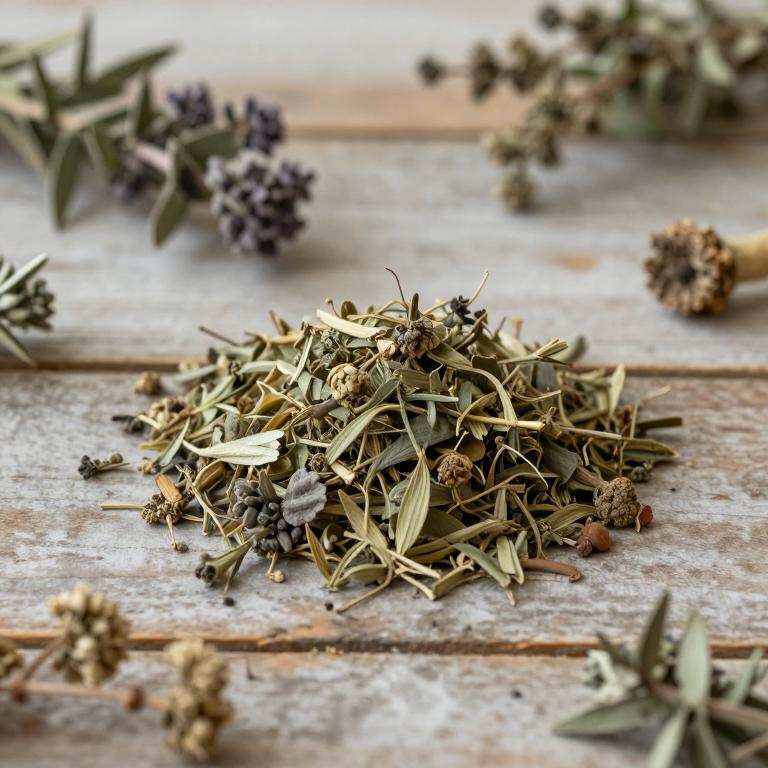
, scientifically known as Oliveria decumbens, is a medicinal shrub native to the arid regions of Africa. Renowned for its potent therapeutic properties, this plant is traditionally used to treat respiratory ailments, skin infections, and digestive issues. Its bioactive compounds offer significant potential for modern pharmacological research and herbal medicine.
- Family
- Apiaceae
- Native range
- Asia-Temperate
- Parts used
- Not available
- Common names
- Not available
- Scientific synonyms
- Callistroma Erubescens · Oliveria Aucheri · 4 more
Names and Synonyms
Scientific Names
Accepted name
Oliveria decumbensSynonyms
- Callistroma erubescens
- Oliveria aucheri
- Carum decumbens
- Oliveria bruguieri
- Carum orientalum
- Oliveria orientalis
Sources: Wikidata
Taxonomical Classification
This plant belongs to the kingdom Plantae and the phylum Streptophyta, falling under the class Equisetopsida and subclass Magnoliidae. Within the order Apiales, it is classified under the family Apiaceae. Specifically, its taxonomic identity is defined by the genus Oliveria, with the species name decumbens.
| Rank | Classification |
|---|---|
| Kingdom | Plantae |
| Phylum | Streptophyta |
| Class | Equisetopsida |
| Subclass | Magnoliidae |
| Order | Apiales |
| Family | Apiaceae |
| Genus | Oliveria |
Sources: The World Checklist of Vascular Plants (WCVP)
Distribution
This plant, known scientifically as Oliveria decumbens, exhibits a specific geographical distribution across the Western Asian region. It can be found growing naturally within the borders of Iran. Additionally, its habitat extends into the territories of Iraq. The species is also documented throughout the Lebanon-Syria border area. Finally, its presence is recorded within the country of Türkiye.
| Region | Area |
|---|---|
| Western Asia | Iran |
| Western Asia | Iraq |
| Western Asia | Lebanon-Syria |
| Western Asia | Türkiye |
Sources: The World Checklist of Vascular Plants (WCVP)
Chemicals
Oliveria decumbens has 21 reported phytochemicals identified across 0 scientific publications and several other databases. The most consistently reported chemicals include THYMOL, CARVACROL, 4-Methoxy-2,3,6-trimethyl-phenol, 6,7-Dimethoxy-Coumarin, Elemicin.
| Chemical | Supporting sources | Consensus |
|---|---|---|
| THYMOL | 9 supporting sources | ★★★★☆ |
| CARVACROL | 7 supporting sources | ★★★★☆ |
| 4-Methoxy-2,3,6-trimethyl-phenol | 1 supporting sources | ★☆☆☆☆ |
| 6,7-Dimethoxy-Coumarin | 1 supporting sources | ★☆☆☆☆ |
| Elemicin | 1 supporting sources | ★☆☆☆☆ |
| FLAVONE | 1 supporting sources | ★☆☆☆☆ |
| GAMMA-TERPINENE | 1 supporting sources | ★☆☆☆☆ |
| Hexadecanoic acid | 1 supporting sources | ★☆☆☆☆ |
| Methoxyeugenol | 1 supporting sources | ★☆☆☆☆ |
| Omega 3 | 1 supporting sources | ★☆☆☆☆ |
THYMOL
- Chemistry & biodiversity
- Plant foods for human nutrition (Dordrecht, Netherlands)
- Journal of ethnopharmacology
- Journal of dietary supplements
- Scientific reports
View 4 additional sources
- Microbial pathogenesis
- Pharmaceuticals (Basel, Switzerland)
- Fitoterapia
- Iranian journal of pharmaceutical research : IJPR
CARVACROL
- Chemistry & biodiversity
- Plant foods for human nutrition (Dordrecht, Netherlands)
- Journal of ethnopharmacology
- Iranian journal of pharmaceutical research : IJPR
- Scientific reports
View 2 additional sources
- Pharmaceuticals (Basel, Switzerland)
- Fitoterapia
4-Methoxy-2,3,6-trimethyl-phenol
- Journal of ethnopharmacology
6,7-Dimethoxy-Coumarin
- Journal of ethnopharmacology
Elemicin
- Journal of ethnopharmacology
FLAVONE
- Microbial pathogenesis
GAMMA-TERPINENE
- Scientific reports
Hexadecanoic acid
- Plant foods for human nutrition (Dordrecht, Netherlands)
Methoxyeugenol
- Journal of ethnopharmacology
Omega 3
- Plant foods for human nutrition (Dordrecht, Netherlands)
Activities
Oliveria decumbens has 8 reported activities identified across 0 scientific publications and several other databases. The most consistently reported activities include Antioxidant, Antibacterial, Anticancer, Antifungal, Antiprotozoal.
| Activity | Supporting sources | Consensus |
|---|---|---|
| Antioxidant | 4 supporting sources | ★★☆☆☆ |
| Antibacterial | 3 supporting sources | ★★☆☆☆ |
| Anticancer | 1 supporting sources | ★☆☆☆☆ |
| Antifungal | 1 supporting sources | ★☆☆☆☆ |
| Antiprotozoal | 1 supporting sources | ★☆☆☆☆ |
| Antiviral | 1 supporting sources | ★☆☆☆☆ |
| Hepatoprotective | 1 supporting sources | ★☆☆☆☆ |
| Immunostimulant | 1 supporting sources | ★☆☆☆☆ |
Antioxidant
- Chemistry & biodiversity
- Plant foods for human nutrition (Dordrecht, Netherlands)
- RSC advances
- Fitoterapia
Antibacterial
- Chemistry & biodiversity
- Microbial pathogenesis
- Iranian journal of pharmaceutical research : IJPR
Anticancer
- Chemistry & biodiversity
Antifungal
- Chemistry & biodiversity
Antiprotozoal
- Chemistry & biodiversity
Antiviral
- Chemistry & biodiversity
Hepatoprotective
- Chemistry & biodiversity
Immunostimulant
- Chemistry & biodiversity
Conditions
Oliveria decumbens has 15 reported investigations on conditions identified across 0 scientific publications and several other databases. The most consistently reported conditions include infections, gastrointestinal diseases, gastrointestinal disorders, inflammation, Escherichia coli.
| Condition | Supporting sources | Consensus |
|---|---|---|
| Infections | 3 supporting sources | ★★☆☆☆ |
| Gastrointestinal diseases | 2 supporting sources | ★☆☆☆☆ |
| Gastrointestinal disorders | 2 supporting sources | ★☆☆☆☆ |
| Inflammation | 2 supporting sources | ★☆☆☆☆ |
| Escherichia coli | 1 supporting sources | ★☆☆☆☆ |
| Helicobacter pylori | 1 supporting sources | ★☆☆☆☆ |
| Staphylococcus epidermidis | 1 supporting sources | ★☆☆☆☆ |
| Streptococcus pyogenes | 1 supporting sources | ★☆☆☆☆ |
| Brucellosis | 1 supporting sources | ★☆☆☆☆ |
| Cancer | 1 supporting sources | ★☆☆☆☆ |
Infections
- Journal of ethnopharmacology
- Pharmaceuticals (Basel, Switzerland)
- Iranian journal of pharmaceutical research : IJPR
Gastrointestinal diseases
- Pharmaceuticals (Basel, Switzerland)
- Iranian journal of pharmaceutical research : IJPR
Gastrointestinal disorders
- Chemistry & biodiversity
- Journal of ethnopharmacology
Inflammation
- Journal of ethnopharmacology
- Pharmaceuticals (Basel, Switzerland)
Escherichia coli
- Microbial pathogenesis
Helicobacter pylori
- Iranian journal of pharmaceutical research : IJPR
Staphylococcus epidermidis
- Microbial pathogenesis
Streptococcus pyogenes
- Microbial pathogenesis
Brucellosis
- Journal of Zhejiang University. Science. B
Cancer
- Pharmaceuticals (Basel, Switzerland)
Preparations
Oliveria decumbens has 9 reported preparations identified across 0 scientific publications and several other databases. The most consistently reported preparations include essential oil, essential oils, Essential Oils, ethanolic and methanolic extracts, ethanolic extract.
| Preparation | Supporting sources | Consensus |
|---|---|---|
| Essential oil | 5 supporting sources | ★★★☆☆ |
| Essential oils | 4 supporting sources | ★★☆☆☆ |
| Essential oils | 1 supporting sources | ★☆☆☆☆ |
| Ethanolic and methanolic extracts | 1 supporting sources | ★☆☆☆☆ |
| Ethanolic extract | 1 supporting sources | ★☆☆☆☆ |
| Methanolic extract | 1 supporting sources | ★☆☆☆☆ |
| N-hexane fraction | 1 supporting sources | ★☆☆☆☆ |
| Plant extract | 1 supporting sources | ★☆☆☆☆ |
| Volatile oil | 1 supporting sources | ★☆☆☆☆ |
Essential oil
- Chemistry & biodiversity
- Frontiers in genetics
- Microbial pathogenesis
- RSC advances
- Iranian journal of pharmaceutical research : IJPR
Essential oils
- Jundishapur journal of microbiology
- Journal of dietary supplements
- World journal of plastic surgery
- GMS hygiene and infection control
Essential oils
- World journal of plastic surgery
Ethanolic and methanolic extracts
- Journal of Zhejiang University. Science. B
Ethanolic extract
- Journal of Zhejiang University. Science. B
Methanolic extract
- Journal of Zhejiang University. Science. B
N-hexane fraction
- Iranian journal of pharmaceutical research : IJPR
Plant extract
- Chemistry & biodiversity
Volatile oil
- Iranian journal of pharmaceutical research : IJPR