European Olive
Olea europaea subsp. europaea · Accepted scientific name
Scientific literature: Very Sparse (9 studies) · ★☆☆☆☆
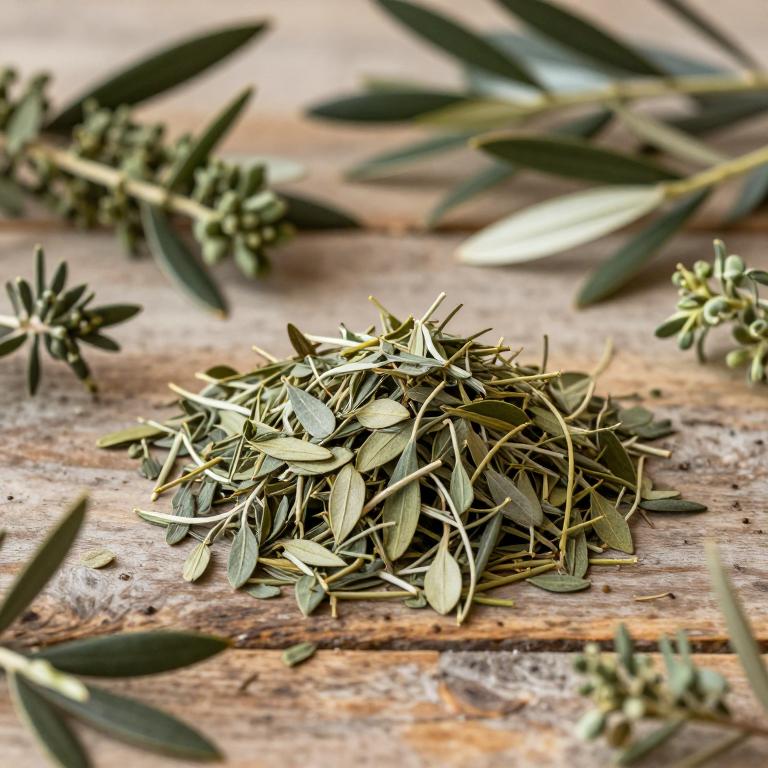
European Olive, scientifically known as Olea europaea subsp. europaea, is a cornerstone of Mediterranean culture and medicine. Renowned for its nutrient-dense fruit, it produces olive oil, a powerhouse of polyphenols and antioxidants. Used traditionally to support cardiovascular health and reduce inflammation, this resilient evergreen remains a vital therapeutic staple.
Names and Synonyms
Common Names
- European Olive
- Olive tree
- Russian Olive
- Wild-olive
Scientific Names
Accepted name
Olea europaea subsp. europaeaSynonyms
- Olea obliqua
- Olea europaea var. sylvestris
- Olea ferruginea
- Olea subrotunda
- Olea europaea var. ferruginea
- Olea europaea var. obliqua
- Olea angulosa
- Olea cayana
- Olea argentata
- Olea europaea proles sativa
- Olea lancifolia
- Olea viridula
- Olea europaea var. oleaster
- Olea sylvestris
- Olea europaea subsp. oleaster
- Olea variegata
- Olea europaea var. communis
- Olea sphaerica
- Olea europaea var. sativa
- Olea gallica
- Olea europaea var. longifolia
- Olea craniomorpha
- Olea europaea subsp. sativa
- Olea europaea var. latifolia
- Olea europaea subsp. sylvestris
- Olea alba
- Olea brevifolia
- Olea europaea var. angustifolia
- Olea bifera
- Olea europaea var. rotundata
- Olea atrorubens
- Olea europaea var. araban
- Olea amygdalina
- Olea europaea var. celina
- Olea cajetana
- Olea europaea var. oblonga
- Olea europaea var. atroviolacea
- Olea oleaster
- Olea europaea var. praecox
- Olea officinarum
- Olea europaea var. saurina
- Olea odorata
- Olea europaea var. minima
- Olea oblonga
- Olea europaea var. racemosa
- Olea hispanica
- Olea europaea var. uvaria
- Olea europaea var. umbraculata
- Olea lorentii
- Olea europaea var. serotina
- Olea longifolia
- Olea europaea var. crispa
- Olea europaea var. macrocarpa
- Olea praecox
- Olea europaea var. polymorpha
- Olea racemosa
- Olea europaea var. pendulina
- Olea regia
- Olea europaea var. rubra
- Olea polymorpha
- Olea europaea var. columballa
- Phillyrea lorentii
- Olea europaea var. rufa
- Olea europaea var. pignola
- Olea europaea proles sylvestris
- Olea europaea var. steudelii
- Olea europaea var. laurifolia
- Olea europaea var. alba
- Olea europaea var. guttata
- Olea europaea var. bifera
- Olea europaea var. curvifolia
- Olea europaea var. hermaphrodita
- Olea europaea var. papillata
- Olea europaea var. atrorubens
- Olea europaea var. regalis
- Olea europaea var. rostrata
- Olea europaea var. corniola
- Olea europaea var. dulcis
- Olea europaea var. conditiva
- Olea europaea var. fragilis
- Olea europaea var. amygdalina
- Olea europaea var. hispanica
- Olea europaea var. nigerrima
Regional and Traditional Names
Spanish:
- aceituno
- olivo
- Acebuche
German:
- Olive
- Olivenbaum
- Ölbaum
French:
- olivier
- Olivier d'Europe
Sources: Wikidata, Catalogue of Life
Taxonomical Classification
This plant belongs to the kingdom Plantae within the phylum Streptophyta and the class Equisetopsida. As a member of the subclass Magnoliidae and the order Lamiales, it is classified under the family Oleaceae. Within this family, it is specifically identified by the genus Olea as the subspecies Olea europaea subsp. europaea.
| Rank | Classification |
|---|---|
| Kingdom | Plantae |
| Phylum | Streptophyta |
| Class | Equisetopsida |
| Subclass | Magnoliidae |
| Order | Lamiales |
| Family | Oleaceae |
| Genus | Olea |
Sources: The World Checklist of Vascular Plants (WCVP)
Distribution
This plant, Olea europaea subsp. europaea, is widely distributed across several regions within Southwestern Europe. It can be found growing in the coastal and inland areas of France and Portugal. The species also thrives within the Mediterranean island territories of Corse and Sardegna. Furthermore, its presence is well-documented throughout the Baleares archipelago. Together, these locations highlight the plant's significant footprint across the southwestern Mediterranean landscape.
| Region | Area |
|---|---|
| Southwestern Europe | Baleares |
| Southwestern Europe | Corse |
| Southwestern Europe | France |
| Southwestern Europe | Portugal |
| Southwestern Europe | Sardegna |
| Southwestern Europe | Spain |
| Southeastern Europe | Albania |
| Southeastern Europe | Greece |
| Southeastern Europe | Italy |
| Southeastern Europe | Kriti |
Sources: The World Checklist of Vascular Plants (WCVP)
Plant Parts
Olea europaea subsp. europaea has 1 reported plant parts identified across 3 scientific publications and several other databases that are studied for medicinal purposes. The most consistently reported plant part include leaf.
| Plant part | Supporting sources | Consensus |
|---|---|---|
| Leaf | 3 supporting sources | ★★☆☆☆ |
Leaf
- International journal of biological macromolecules
- Journal of ethnobiology and ethnomedicine
- Pakistan journal of pharmaceutical sciences
Activities
Olea europaea subsp. europaea has 6 reported activities identified across 3 scientific publications and several other databases. The most consistently reported activities include Anthelmintic, Antibacterial, Antifungal, Antihyperglycemic, Antioxidant.
| Activity | Supporting sources | Consensus |
|---|---|---|
| Anthelmintic | 1 supporting sources | ★☆☆☆☆ |
| Antibacterial | 1 supporting sources | ★☆☆☆☆ |
| Antifungal | 1 supporting sources | ★☆☆☆☆ |
| Antihyperglycemic | 1 supporting sources | ★☆☆☆☆ |
| Antioxidant | 1 supporting sources | ★☆☆☆☆ |
| Hypoglycemic | 1 supporting sources | ★☆☆☆☆ |
Anthelmintic
- Journal of ethnopharmacology
Antibacterial
- Pakistan journal of pharmaceutical sciences
Antifungal
- Pakistan journal of pharmaceutical sciences
Antihyperglycemic
- Annales pharmaceutiques francaises
Antioxidant
- International journal of biological macromolecules
Hypoglycemic
- Annales pharmaceutiques francaises
Preparations
Olea europaea subsp. europaea has 9 reported preparations identified across 3 scientific publications and several other databases. The most consistently reported preparations include Dried ethanol extracts, butanol fraction, chloroform crude fraction, crude leaves extract, crude methanolic extracts.
| Preparation | Supporting sources | Consensus |
|---|---|---|
| Dried ethanol extracts | 1 supporting sources | ★☆☆☆☆ |
| Butanol fraction | 1 supporting sources | ★☆☆☆☆ |
| Chloroform crude fraction | 1 supporting sources | ★☆☆☆☆ |
| Crude leaves extract | 1 supporting sources | ★☆☆☆☆ |
| Crude methanolic extracts | 1 supporting sources | ★☆☆☆☆ |
| Crude n-hexane fraction | 1 supporting sources | ★☆☆☆☆ |
| Ethanolic extracts | 1 supporting sources | ★☆☆☆☆ |
| Ethyl acetate fraction | 1 supporting sources | ★☆☆☆☆ |
| Methanol crude fraction | 1 supporting sources | ★☆☆☆☆ |
Dried ethanol extracts
- Phytotherapy research : PTR
Butanol fraction
- Pakistan journal of pharmaceutical sciences
Chloroform crude fraction
- Pakistan journal of pharmaceutical sciences
Crude leaves extract
- Pakistan journal of pharmaceutical sciences
Crude methanolic extracts
- Pakistan journal of pharmaceutical sciences
Crude n-hexane fraction
- Pakistan journal of pharmaceutical sciences
Ethanolic extracts
- Journal of ethnopharmacology
Ethyl acetate fraction
- International journal of biological macromolecules
Methanol crude fraction
- Pakistan journal of pharmaceutical sciences