Olea europaea subsp. africana
Olea europaea subsp. africana · Accepted scientific name
Scientific literature: Very Sparse (8 studies) · ★☆☆☆☆
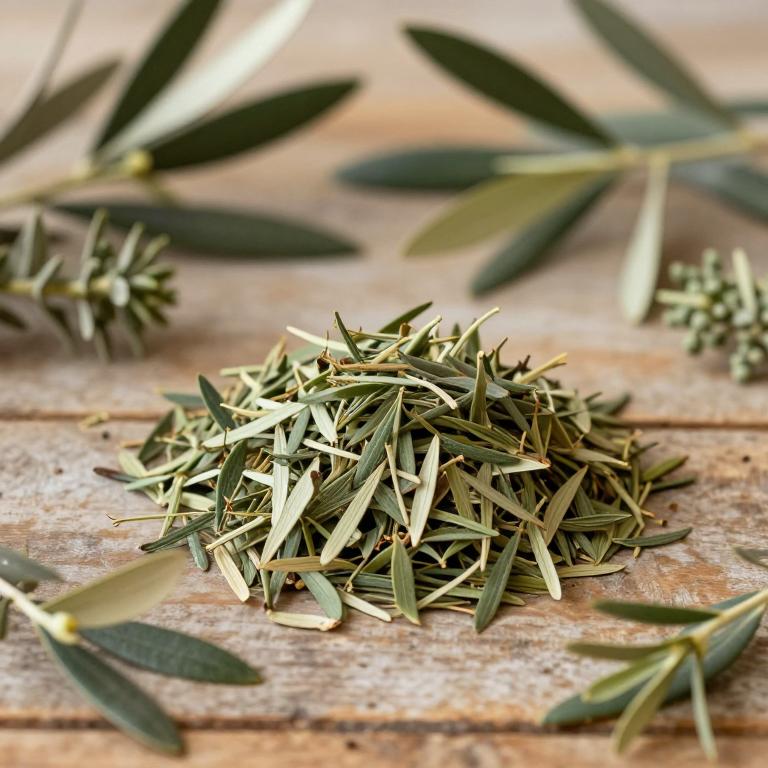
, scientifically known as Olea europaea subsp. africana, is a resilient botanical variety native to African landscapes. Renowned for its potent bioactive compounds, this subspecies offers significant therapeutic potential. Its leaves and fruit are traditionally utilized in medicinal practices to combat inflammation, support cardiovascular health, and provide antioxidant protection.
- Family
- Oleaceae
- Native range
- Africa
- Parts used
- Leaf · Stem
- Common names
- Not available
- Scientific synonyms
- Olea Europaea Var. Verrucosa · Olea Sativa Var. Verrucosa · 14 more
Names and Synonyms
Scientific Names
Accepted name
Olea europaea subsp. africanaSynonyms
- Olea europaea var. verrucosa
- Olea sativa var. verrucosa
- Olea verrucosa var. brachybotrys
- Olea kilimandscharica
- Olea monticola
- Olea africana
- Olea europaea var. nubica
- Olea subtrinervata
- Olea chrysophylla var. subnuda
- Olea verrucosa
- Olea chrysophylla var. somaliensis
- Olea somaliensis
- Olea chrysophylla var. nubica
- Olea chrysophylla var. verrucosa
- Olea schimperi
- Linociera lebrunii
Sources: Wikidata
Taxonomical Classification
This plant belongs to the kingdom Plantae and is classified under the phylum Streptophyta and class Equisetopsida. Within the subclass Magnoliidae, it is categorized under the order Lamiales and the family Oleaceae. Finally, it is identified by the genus Olea, specifically as the subspecies Olea europaea subsp. africana.
| Rank | Classification |
|---|---|
| Kingdom | Plantae |
| Phylum | Streptophyta |
| Class | Equisetopsida |
| Subclass | Magnoliidae |
| Order | Lamiales |
| Family | Oleaceae |
| Genus | Olea |
Sources: The World Checklist of Vascular Plants (WCVP)
Distribution
This plant exhibits a specific geographical distribution across several regions of the African continent. Within West-Central Tropical Africa, it can be found in Burundi and Rwanda. Its range also extends further into the Democratic Republic of the Congo within that same western-central zone. Moving toward Northeast Tropical Africa, the species is present in Djibouti. Finally, its distribution continues through the country of Eritrea.
| Region | Area |
|---|---|
| West-Central Tropical Africa | Burundi |
| West-Central Tropical Africa | Rwanda |
| West-Central Tropical Africa | DR Congo |
| Northeast Tropical Africa | Djibouti |
| Northeast Tropical Africa | Eritrea |
| Northeast Tropical Africa | Ethiopia |
| Northeast Tropical Africa | Somalia |
| Northeast Tropical Africa | Sudan-South Sudan |
| East Tropical Africa | Kenya |
| East Tropical Africa | Tanzania |
Sources: The World Checklist of Vascular Plants (WCVP)
Plant Parts
Olea europaea subsp. africana has 3 reported plant parts identified across 5 scientific publications and several other databases that are studied for medicinal purposes. The most consistently reported plant part include leaf, stem, root.
| Plant part | Supporting sources | Consensus |
|---|---|---|
| Leaf | 2 supporting sources | ★☆☆☆☆ |
| Stem | 2 supporting sources | ★☆☆☆☆ |
| Root | 1 supporting sources | ★☆☆☆☆ |
Leaf
- Journal of ethnopharmacology
- Planta medica
Stem
- African health sciences
- The Central African journal of medicine
Root
- The Central African journal of medicine
Chemicals
Olea europaea subsp. africana has 2 reported phytochemicals identified across 5 scientific publications and several other databases. The most consistently reported chemicals include Oleuropein, acetone.
| Chemical | Supporting sources | Consensus |
|---|---|---|
| Oleuropein | 1 supporting sources | ★☆☆☆☆ |
| acetone | 1 supporting sources | ★☆☆☆☆ |
Oleuropein
- Planta medica
acetone
- Journal of ethnopharmacology
Conditions
Olea europaea subsp. africana has 1 reported investigations on conditions identified across 5 scientific publications and several other databases. The most consistently reported conditions include malaria.
| Condition | Supporting sources | Consensus |
|---|---|---|
| Malaria | 1 supporting sources | ★☆☆☆☆ |
Malaria
- Journal of ethnopharmacology
Preparations
Olea europaea subsp. africana has 2 reported preparations identified across 5 scientific publications and several other databases. The most consistently reported preparations include crude acetone extracts, crude extracts of the root and stem.
| Preparation | Supporting sources | Consensus |
|---|---|---|
| Crude acetone extracts | 1 supporting sources | ★☆☆☆☆ |
| Crude extracts of the root and stem | 1 supporting sources | ★☆☆☆☆ |
Crude acetone extracts
- Journal of ethnopharmacology
Crude extracts of the root and stem
- The Central African journal of medicine