Oldenlandia umbellata
Oldenlandia umbellata · Accepted scientific name
Scientific literature: Very Sparse (3 studies) · ★☆☆☆☆
, scientifically known as Oldenlandia umbellata, is a resilient medicinal plant native to Southern Africa. Valued in traditional healing practices, it possesses unique therapeutic properties often used to treat various ailments. Understanding its botanical characteristics and chemical composition is essential for exploring its potential role in modern natural pharmacology.
- Family
- Rubiaceae
- Native range
- Asia-Temperate
- Parts used
- Not available
- Common names
- Not available
- Scientific synonyms
- Hedyotis Puberula · Hedyotis Wightii · 5 more
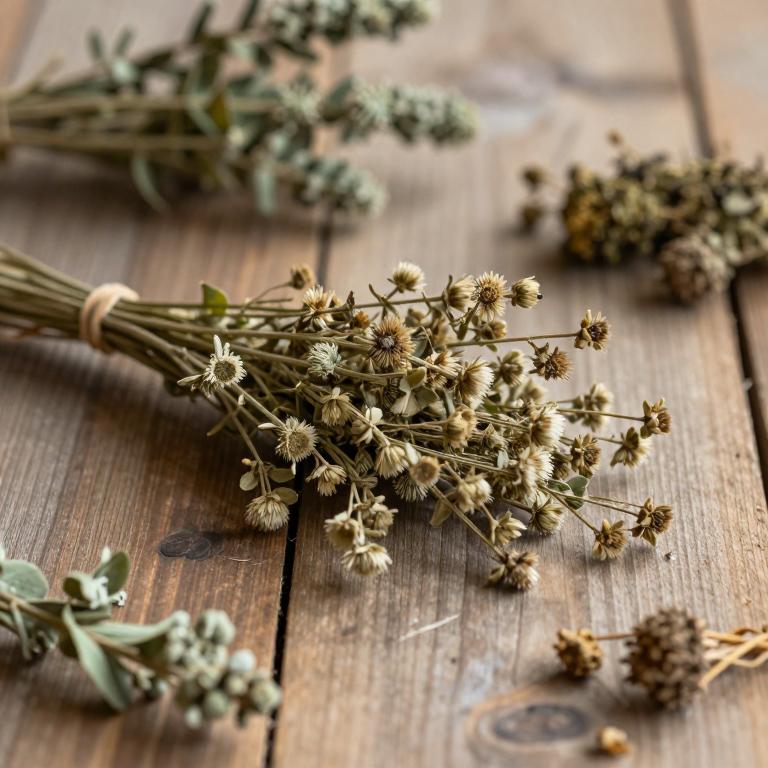
Names and Synonyms
Scientific Names
Accepted name
Oldenlandia umbellataSynonyms
- Hedyotis puberula
- Hedyotis wightii
- Oldenlandia wightii
- Oldenlandia puberula
- Gerontogea umbellata
- Hedyotis indica
- Hedyotis brevicalyx
Sources: Wikidata
Taxonomical Classification
This plant belongs to the kingdom Plantae and is classified within the phylum Streptophyta and the class Equisetopsida. As a member of the subclass Magnoliidae and the order Gentianaales, it falls under the family Rubiaceae. Finally, it is taxonomically identified within the genus Oldenlandia.
| Rank | Classification |
|---|---|
| Kingdom | Plantae |
| Phylum | Streptophyta |
| Class | Equisetopsida |
| Subclass | Magnoliidae |
| Order | Gentianales |
| Family | Rubiaceae |
| Genus | Oldenlandia |
Sources: The World Checklist of Vascular Plants (WCVP)
Distribution
This plant exhibits a broad geographical distribution spanning across parts of East Asia and the Indian Subcontinent. In China, its presence is specifically noted within the tropical island province of Hainan. Moving into the Indian Subcontinent, the species is found throughout various regions of India. It also inhabits the remote islands of the Laccadive archipelago and the Maldives. Finally, its range extends further north into the territory of Pakistan.
| Region | Area |
|---|---|
| China | Hainan |
| Indian Subcontinent | India |
| Indian Subcontinent | Laccadive Is. |
| Indian Subcontinent | Maldives |
| Indian Subcontinent | Pakistan |
| Indian Subcontinent | Sri Lanka |
| Indo-China | Andaman Is. |
| Indo-China | Cambodia |
| Indo-China | Myanmar |
| Indo-China | Vietnam |
Sources: The World Checklist of Vascular Plants (WCVP)
Botanical Identification
Life history
The life history of Oldenlandia umbellata is characterized by its classification as an annual plant, completing its entire developmental cycle from germination to seed production within a single growing season. In terms of its structural growth strategy, the species functions as a chamaephyte, maintaining its perennating buds at or very near the soil surface, which allows it to navigate its specific environmental niche effectively throughout its short lifespan.
- Life form :
- chamaephyte
- Lifecycle :
- annual
Morphology
The morphology of Oldenlandia umbellata is characterized by its specific growth habit and ecological positioning. It functions as a self-supporting climber, meaning it possesses the structural integrity to ascend or spread without being an obligatory or facultative climber that relies entirely on external hosts for verticality. In terms of its nutritional strategy, the plant is an independent organism, exhibiting no parasitic tendencies, whether obligatory or facultative. Furthermore, its life form is strictly terrestrial, as it does not exhibit epiphytic behavior, remaining rooted in the ground rather than growing upon other plants.
- Climber :
- self-supporting
- Epiphyte :
- terrestrial
- Parasite :
- independent
Physiology
The physiology of Oldenlandia umbellata is characterized by its specialized metabolic processes adapted to its specific ecological niche, primarily focusing on nutrient acquisition and water regulation. In terms of its symbiotic capabilities, the plant does not function as a nitrogen fixer; it lacks the specialized root nodules or the biological machinery required to host nitrogen-fixing bacteria for the conversion of atmospheric nitrogen into usable forms. Instead, it relies on the uptake of nitrates and ammonium from the soil through its root system. Its metabolic activity is geared toward efficient photosynthesis and the management of secondary metabolites, which contribute to its medicinal properties. The plant's physiological processes are closely tied to its ability to maintain osmotic balance and respond to environmental stressors, ensuring survival through regulated transpiration and cellular homeostasis.
- Nitrogen fixer :
- no
Sources: Global Inventory of Floras and Traits (GIFT)
Activities
Oldenlandia umbellata has 2 reported activities identified across 0 scientific publications and several other databases. The most consistently reported activities include Antimicrobial, Antioxidant.
| Activity | Supporting sources | Consensus |
|---|---|---|
| Antimicrobial | 1 supporting sources | ★☆☆☆☆ |
| Antioxidant | 1 supporting sources | ★☆☆☆☆ |
Antimicrobial
- Naunyn-Schmiedeberg's archives of pharmacology
Antioxidant
- Naunyn-Schmiedeberg's archives of pharmacology
Conditions
Oldenlandia umbellata has 1 reported investigations on conditions identified across 0 scientific publications and several other databases. The most consistently reported conditions include antioxidant.
| Condition | Supporting sources | Consensus |
|---|---|---|
| Antioxidant | 1 supporting sources | ★☆☆☆☆ |
Antioxidant
- Naunyn-Schmiedeberg's archives of pharmacology