Oldenlandia affinis
Oldenlandia affinis · Accepted scientific name
Scientific literature: Very Sparse (5 studies) · ★☆☆☆☆
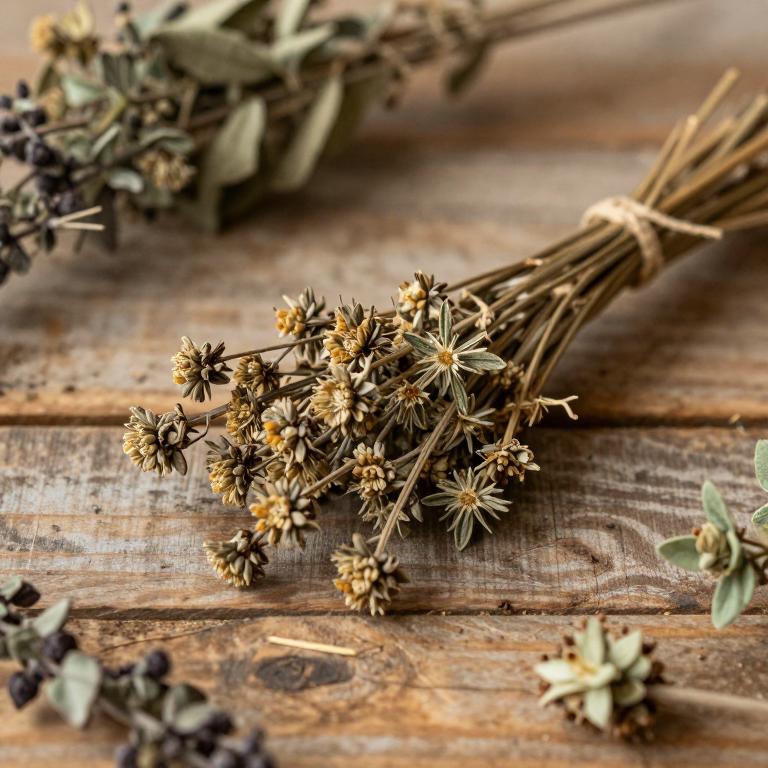
, scientifically known as Oldenlandia affinis, is a distinctive medicinal shrub native to the diverse landscapes of South Africa. Valued for its unique biochemical properties, this plant is increasingly studied for its potential therapeutic applications, offering promising insights into traditional healing practices and modern botanical pharmacology and natural medicine.
- Family
- Rubiaceae
- Native range
- Africa
- Parts used
- Not available
- Common names
- Not available
- Scientific synonyms
- Not available
Names and Synonyms
Scientific Names
Accepted name
Oldenlandia affinisSources: Wikidata
Taxonomical Classification
This plant belongs to the kingdom Plantae and the phylum Streptophyta within the class Equisetopsida. It is further classified under the subclass Magnoliidae and the order Gentianaales. Finally, it is a member of the Rubiaceae family and is specifically identified by the genus Oldenlandia.
| Rank | Classification |
|---|---|
| Kingdom | Plantae |
| Phylum | Streptophyta |
| Class | Equisetopsida |
| Subclass | Magnoliidae |
| Order | Gentianales |
| Family | Rubiaceae |
| Genus | Oldenlandia |
Sources: The World Checklist of Vascular Plants (WCVP)
Distribution
This plant, known as Oldenlandia affinis, exhibits a specific distribution across the West Tropical Africa region. Its presence is documented within the borders of Benin, where it occupies local ecological niches. The species can also be found extending through the territories of Burkina and Ghana. Furthermore, its geographical range continues into the coastal and inland areas of the Ivory Coast. Finally, the distribution of this medicinal plant is confirmed to include the nation of Liberia.
| Region | Area |
|---|---|
| West Tropical Africa | Benin |
| West Tropical Africa | Burkina |
| West Tropical Africa | Ghana |
| West Tropical Africa | Ivory Coast |
| West Tropical Africa | Liberia |
| West Tropical Africa | Nigeria |
| West Tropical Africa | Togo |
| West-Central Tropical Africa | Burundi |
| West-Central Tropical Africa | Cabinda |
| West-Central Tropical Africa | Central African Republic |
Sources: The World Checklist of Vascular Plants (WCVP)
Botanical Identification
Ecology
The ecology of Oldenlandia affinis is characterized by a broad altitudinal distribution that allows it to inhabit diverse topographical niches. This species demonstrates significant environmental adaptability, occupying a wide elevational range that begins at as low as 5 m AMSL and extends to a maximum altitude of 1400 m AMSL. This expansive vertical gradient suggests that the plant can thrive in various climatic zones, ranging from lowland coastal or subtropical environments to higher-altitude montane habitats, provided the specific substrate and moisture requirements of its niche are met.
- Elevational range max:
- 1400 m AMSL
- Elevational range min:
- 5 m AMSL
Life history
The life history of Oldenlandia affinis is characterized by a perennial lifecycle, allowing the plant to persist through multiple growing seasons. In terms of its structural growth strategies, it exhibits characteristics consistent with both the chamaephyte and therophyte life forms, reflecting its ability to adapt its stature and survival mechanisms to its specific environmental niche.
- Life form :
- chamaephyte
- Life form :
- therophyte
- Lifecycle :
- perennial
Morphology
The morphology of Oldenlandia affinis is characterized by its growth form as a non-woody herb. This self-supporting, independent plant typically functions as a terrestrial species rather than an aquatic, semiaquatic, or epiphytic one. In terms of stature, it exhibits moderate height variability, with individual plants generally reaching a mean height of approximately 0.60 m, though they can range from a minimum of 0.2 m to a maximum height of 1.2 m.
- Aquatic :
- terrestrial
- Climber :
- self-supporting
- Epiphyte :
- terrestrial
- Growth form :
- herb
- Parasite :
- independent
- Plant height max:
- 1.2 m
- Plant height mean:
- 0.6048037065 m
- Plant height min:
- 0.2 m
- Woodiness :
- non-woody
Reproduction
The reproduction of Oldenlandia affinis is characterized by the production of minute seeds that exhibit high uniformity in their physical dimensions. Quantitatively, the reproductive output is defined by a highly consistent seed mass, with a mean value of 4e-05 g. This consistency is reflected across the entire range of the seed population, as both the maximum and minimum recorded seed masses are identical at 4e-05 g. Such precision in seed mass suggests a specialized reproductive strategy involving the dispersal of very small, lightweight propagules that lack significant variation in individual weight.
- Seed mass mean:
- 4e-05 g
Sources: Global Inventory of Floras and Traits (GIFT)
Activities
Oldenlandia affinis has 2 reported activities identified across 0 scientific publications and several other databases. The most consistently reported activities include Uterotonic, Uteroactive.
| Activity | Supporting sources | Consensus |
|---|---|---|
| Uterotonic | 2 supporting sources | ★☆☆☆☆ |
| Uteroactive | 1 supporting sources | ★☆☆☆☆ |
Uterotonic
- Biochemistry
- Journal of ethnopharmacology
Uteroactive
- Journal of ethnopharmacology
Conditions
Oldenlandia affinis has 2 reported investigations on conditions identified across 0 scientific publications and several other databases. The most consistently reported conditions include cognitive disorders, uterine contraction.
| Condition | Supporting sources | Consensus |
|---|---|---|
| Cognitive disorders | 1 supporting sources | ★☆☆☆☆ |
| Uterine contraction | 1 supporting sources | ★☆☆☆☆ |
Cognitive disorders
- Journal of ethnopharmacology
Uterine contraction
- Biochimica et biophysica acta
Preparations
Oldenlandia affinis has 2 reported preparations identified across 0 scientific publications and several other databases. The most consistently reported preparations include aqueous decoction, cyclotide-enriched fraction.
| Preparation | Supporting sources | Consensus |
|---|---|---|
| Aqueous decoction | 1 supporting sources | ★☆☆☆☆ |
| Cyclotide-enriched fraction | 1 supporting sources | ★☆☆☆☆ |
Aqueous decoction
- Biochimica et biophysica acta
Cyclotide-enriched fraction
- Journal of ethnopharmacology