four-wing evening-primrose
Oenothera tetraptera · Accepted scientific name
Scientific literature: Very Sparse (2 studies) · ★☆☆☆☆
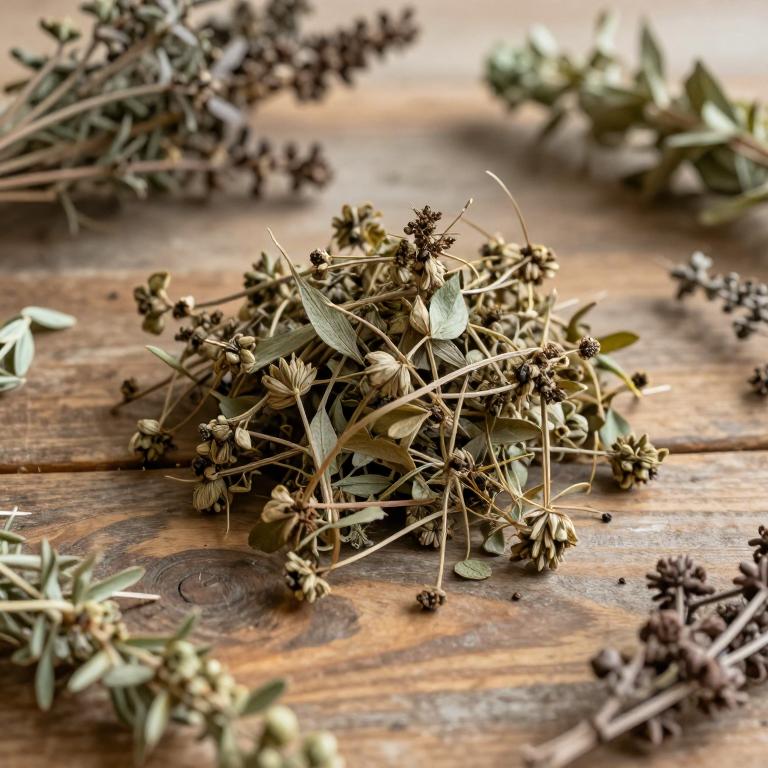
Four-wing evening-primrose, scientifically known as Oenothera tetraptera, is a distinctive wildflower native to North America. Characterized by its unique four-winged seed pods, this resilient perennial offers significant botanical interest. While less commonly documented than its relatives, it holds potential medicinal value within traditional herbal practices and ecological studies.
Names and Synonyms
Common Names
- four-wing evening-primrose
- white evening-primrose
- winged evening-primrose
- White Evening Primrose
Scientific Names
Accepted name
Oenothera tetrapteraSynonyms
- Oenothera tetraptera var. chenopodifolia
- Oenothera tetraptera var. roseoidea
- Oenothera tetraptera var. depauperata
- Oenothera dubia f. latifolia
- Oenothera dubia
- Oenothera latiflora
- Oenothera tetraptera var. immutabilis
- Hartmannia latiflora
- Hartmannia macrantha
- Oenothera candida
- Hartmannia tetraptera
- Oenothera mutabilis
- Xylopleurum tetrapterum
Regional and Traditional Names
Spanish:
- Hierba del golpe
- Linda tarde blanca
Sources: Wikidata, Catalogue of Life
Taxonomical Classification
This plant belongs to the kingdom Plantae within the phylum Streptophyta and the class Equisetopsida. It is further classified under the subclass Magnoliidae and the order Myrtaleales, falling into the family Onagraceae. Finally, it is categorized under the genus Oenothera.
| Rank | Classification |
|---|---|
| Kingdom | Plantae |
| Phylum | Streptophyta |
| Class | Equisetopsida |
| Subclass | Magnoliidae |
| Order | Myrtales |
| Family | Onagraceae |
| Genus | Oenothera |
Sources: The World Checklist of Vascular Plants (WCVP)
Distribution
This plant exhibits a diverse geographical distribution across several distinct regions. Within the Macaronesian islands, its presence is specifically noted in Madeira. Its range extends into South Tropical Africa, where it can be found in both Angola and Zimbabwe. In the Southern African region, the species inhabits the Cape Provinces. Finally, its distribution includes the mountainous territory of Lesotho.
| Region | Area |
|---|---|
| Macaronesia | Madeira |
| South Tropical Africa | Angola |
| South Tropical Africa | Zimbabwe |
| Southern Africa | Cape Provinces |
| Southern Africa | Lesotho |
| Southern Africa | KwaZulu-Natal |
| Southern Africa | Free State |
| Southern Africa | Northern Provinces |
| Western Indian Ocean | Mauritius |
| China | China South-Central |
Sources: The World Checklist of Vascular Plants (WCVP)
Botanical Identification
Ecology
The ecology of Oenothera tetraptera is characterized by a broad altitudinal distribution that allows it to inhabit diverse montane and submontane landscapes. This species demonstrates remarkable environmental plasticity, occupying an elevational range that begins at a minimum of 155 m AMSL and extends to a maximum of 2685 m AMSL. Within these varying topographical zones, the plant maintains a mean elevation of approximately 1905 m AMSL, suggesting a preference for mid-to-high altitude ecosystems where specific temperature and moisture regimes are met. This wide vertical spread indicates its ability to adapt to a variety of climatic conditions, ranging from lower, warmer foothills to much higher, more temperate or alpine-adjacent environments.
- Elevational range max:
- 2685 m AMSL
- Elevational range mean:
- 1905 m AMSL
- Elevational range min:
- 155 m AMSL
Life history
The life history of Oenothera tetraptera is characterized by a variable lifecycle, as it can function as an annual, biennial, or perennial plant depending on environmental conditions and resource availability. This flexibility allows the species to adapt to shifting ecological pressures, ensuring persistence in diverse habitats. Throughout its life, the plant progresses through distinct developmental stages, often utilizing its ability to persist over multiple seasons to maximize reproductive success and colonize suitable niches.
- Lifecycle :
- perennial
Morphology
The morphology of Oenothera tetraptera is characterized by its growth form as a non-woody herb and forb, primarily existing as a self-supporting plant rather than a climber or liana. It is an independent species, functioning without parasitic dependencies, and is classified as a terrestrial organism rather than an aquatic, semiaquatic, or epiphytic one. The plant maintains a relatively low stature, with a height ranging from a minimum of 0.15 m to a maximum of 0.5 m.
- Aquatic :
- terrestrial
- Climber :
- self-supporting
- Epiphyte :
- terrestrial
- Growth form :
- herb
- Growth form :
- forb
- Parasite :
- independent
- Plant height max:
- 0.5 m
- Plant height min:
- 0.15 m
- Woodiness :
- non-woody
Physiology
The physiology of Oenothera tetraptera is characterized by a C3 photosynthetic pathway, which dictates its carbon fixation processes and metabolic efficiency in its natural habitat. The vegetative structure is defined by its leaf morphology, where the leaves typically exhibit a length ranging from a minimum of 3 cm to a maximum of 10 cm. Accompanying this longitudinal growth, the leaf width varies significantly, spanning from a minimum of 1 cm to a maximum of 3 cm, contributing to the overall surface area available for light interception and gas exchange.
- Leaf length max:
- 10 cm
- Leaf length min:
- 3 cm
- Leaf width max:
- 3 cm
- Leaf width min:
- 1 cm
- Photosynthetic pathway :
- C3
Reproduction
The reproduction of Oenothera tetraptera is characterized by its seed production, which exhibits significant variability in individual seed dimensions. The seed mass within a population fluctuates across a wide spectrum, ranging from a minimum of 0.00018 g to a maximum of 0.05 g. When considering the overall reproductive output, the data indicates a mean seed mass of approximately 0.016826667 g.
- Seed mass max:
- 0.05 g
- Seed mass mean:
- 0.016826667 g
- Seed mass min:
- 0.00018 g
Sources: Global Inventory of Floras and Traits (GIFT)
Plant Parts
Oenothera tetraptera has 1 reported plant parts identified across 1 scientific publications and several other databases that are studied for medicinal purposes. The most consistently reported plant part include leaf.
| Plant part | Supporting sources | Consensus |
|---|---|---|
| Leaf | 1 supporting sources | ★☆☆☆☆ |
Leaf
- Phytochemistry
Chemicals
Oenothera tetraptera has 1 reported phytochemicals identified across 1 scientific publications and several other databases. The most consistently reported chemicals include oenotherin T(1).
| Chemical | Supporting sources | Consensus |
|---|---|---|
| oenotherin T(1) | 1 supporting sources | ★☆☆☆☆ |
oenotherin T(1)
- Phytochemistry