Narrow-Leaved Water-Dropwort
Oenanthe silaifolia · Accepted scientific name
Scientific literature: Very Sparse (6 studies) · ★☆☆☆☆
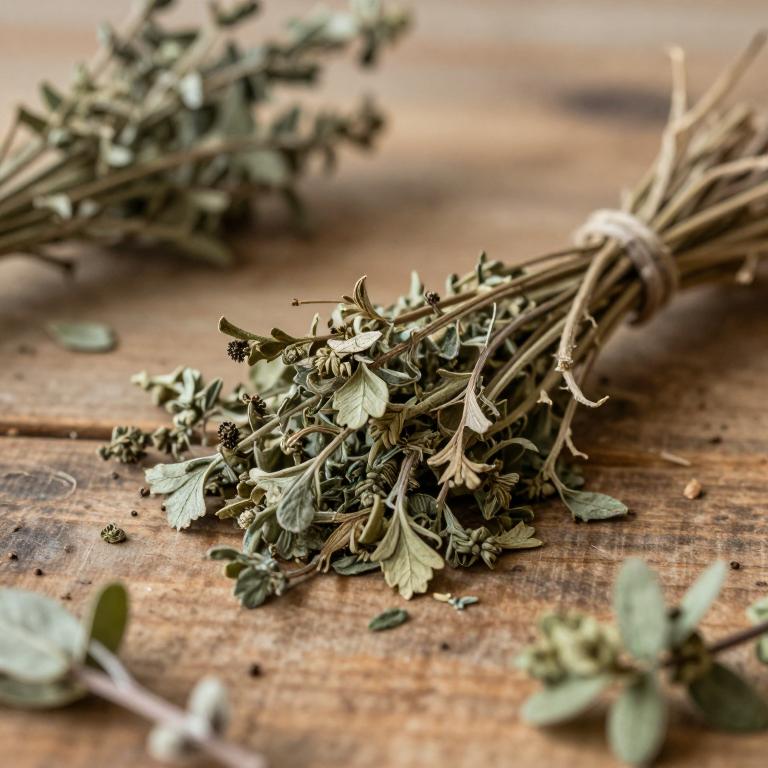
Narrow-leaved Water-dropwort, scientifically known as Oenanthe silaifolia, is a perennial herb found in wetland habitats. While traditionally utilized in folk medicine for various ailments, it demands extreme caution. This plant contains potent toxins, making accurate identification crucial to avoid accidental poisoning, as its effects can be life-threateningly severe.
Names and Synonyms
Common Names
- Narrow-Leaved Water-Dropwort
- Sulphurwort
- narrow-leaf water-dropwort
- Narrow Leafed Water Dropwort
Scientific Names
Accepted name
Oenanthe silaifoliaSynonyms
- Oenanthe brevisecta
- Oenanthe biebersteinii f. divaricata
- Oenanthe biebersteinii f. hungarica
- Karsthia carniolica
- Phellandrium lobelii
- Oenanthe biebersteinii var. lanceolata
- Oenanthe radiata
- Oenanthe australis
- Oenanthe media var. heterophylla
- Oenanthe peucedanifolia subsp. silaifolia
- Oenanthe glauca
- Oenanthe divaricata
- Oenanthe lachenalii subsp. silaifolia
- Oenanthe hungarica
- Oenanthe silaifolia subsp. media
- Oenanthe grandisecta
- Oenanthe caucasica
- Oenanthe peucedanifolia var. silaifolia
- Oenanthe biebersteinii f. brevisecta
- Oenanthe media var. crassipes
- Oenanthe chalcidica
- Oenanthe media var. incrassata
- Oenanthe silaifolia subsp. montana
- Oenanthe media var. boissieri
- Oenanthe silaifolia subsp. media
- Oenanthe silaifolia var. media
- Oenanthe silaifolia f. lanceolata
- Oenanthe silaifolia subsp. hungarica
- Oenanthe silaifolia var. hungarica
- Oenanthe silaifolia f. grandisecta
- Oenanthe media
- Oenanthe longifoliolata
- Oenanthe karsthia
- Oenanthe microsperma
- Oenanthe biebersteinii f. montana
- Oenanthe biebersteinii f. grandisecta
- Oenanthe heterococca
Regional and Traditional Names
Spanish:
- Oenanthe media
- Oenanthe biebersteini
- Oenanthe longifoliata
- Oenanthe karsthia
- Oenanthe heldreichii
- Karsthia carniolica
- Phellandrium lobelii
- Oenanthe peucedanifolia subsp. silaifolia
- Oenanthe lachenalii subsp. silaifolia
German:
- Silau-Pferdesaat
- Silaupferdesaat
- silaublättriger Wasserfenchel
French:
- Œnanthe à feuilles de silaüs
- Œnanthe a feuilles de silaus
- Oenanthe a feuilles de silaus
- oenanthe à feuilles de silaüs
- Oenanthe Intermédiaire
- Oenanthe Intermédiaire
- Oenanthe à feuilles de silaüs
- Œnanthe intermédiaire
- Œnanthe à feuilles de silaüs
Sources: Wikidata, Catalogue of Life
Taxonomical Classification
This plant belongs to the kingdom Plantae and the phylum Streptophyta within the class Equisetopsida. It is further classified under the subclass Magnoliidae and the order Apiales. Finally, it is a member of the family Apiaceae and is situated within the genus Oenanthe.
| Rank | Classification |
|---|---|
| Kingdom | Plantae |
| Phylum | Streptophyta |
| Class | Equisetopsida |
| Subclass | Magnoliidae |
| Order | Apiales |
| Family | Apiaceae |
| Genus | Oenanthe |
Sources: The World Checklist of Vascular Plants (WCVP)
Distribution
This plant exhibits a specific geographical range across several regions of Europe. In Northern Europe, its presence is noted within Great Britain. Moving into Middle Europe, the species can be found in Austria and Belgium. It also inhabits the territories of Germany and the Czechia-Slovakia border region. Together, these locations define the known distribution of Oenanthe silaifolia.
| Region | Area |
|---|---|
| Northern Europe | Great Britain |
| Middle Europe | Austria |
| Middle Europe | Belgium |
| Middle Europe | Czechia-Slovakia |
| Middle Europe | Germany |
| Middle Europe | Hungary |
| Middle Europe | Netherlands |
| Southwestern Europe | Corse |
| Southwestern Europe | France |
| Southwestern Europe | Sardegna |
Sources: The World Checklist of Vascular Plants (WCVP)
Botanical Identification
Ecology
The ecology of Oenanthe silaifolia is fundamentally defined by its preference for specific hydrological conditions, primarily thriving within wet meadows. These habitats provide the constant moisture levels and saturated soil environments necessary for its physiological requirements. By occupying these damp, open landscapes, the species exists within a niche characterized by high water availability, which influences the surrounding biodiversity and the structural composition of the meadow ecosystem.
- Habitat :
- meadows: wet
Life history
The life history of Oenanthe silaifolia is characterized by its status as a perennial plant, allowing it to persist through multiple growing seasons. Functioning as a hemicryptophyte, the plant protects its perennuating buds at the soil surface or just below it, which is a key adaptation for its survival in its specific habitat. Additionally, the species exhibits a deciduous nature, shedding its foliage as part of its seasonal cycle.
- Deciduousness :
- deciduous
- Life form :
- hemicryptophyte
- Lifecycle :
- perennial
Morphology
The morphology of Oenanthe silaifolia is characterized by its growth form as a non-woody herb, exhibiting a primarily terrestrial habit. This plant typically maintains an erect shoot orientation and functions as a self-supporting organism rather than a climber, liana, or vine. It is an independent species, lacking parasitic or epiphytic tendencies, and grows strictly in terrestrial environments. In terms of stature, the plant is relatively low-growing, with heights ranging from a minimum of 0.25 m to a maximum of 0.8 m, maintaining a mean plant height of approximately 0.688 m.
- Aquatic :
- terrestrial
- Climber :
- self-supporting
- Epiphyte :
- terrestrial
- Growth form :
- herb
- Parasite :
- independent
- Plant height max:
- 0.8 m
- Plant height mean:
- 0.688 m
- Plant height min:
- 0.25 m
- Shoot orientation :
- erect
- Woodiness :
- non-woody
Physiology
The physiology of Oenanthe silaifolia is characterized by a C3 photosynthetic pathway, utilizing the standard Calvin cycle for carbon fixation without the specialized adaptations found in C4 or CAM species. In terms of nutrient acquisition, the plant is strictly non-carnivorous, relying on its root system and soil interactions to absorb essential minerals and water rather than capturing and digesting prey.
- Carnivory :
- non-carnivorous
- Photosynthetic pathway :
- C3
Reproduction
The reproduction of Oenanthe silaifolia is primarily driven by biotic mechanisms, as the plant relies on sexual reproduction processes. The flowering period is concentrated in the early summer months, with flowering typically starting in June and concluding in July. During this stage, the plant utilizes a biotic pollination syndrome, specifically relying on insects to facilitate the transfer of pollen. Following successful pollination, the plant produces seeds with a mean mass of approximately 0.001691 g. Notably, asexual reproduction is absent in this species, meaning the population relies entirely on the sexual cycle for propagation and genetic diversity.
- Flowering time :
- Jun
- Flowering time :
- Jul
- Pollination syndrome :
- insect
- Pollination syndrome :
- biotic
- Reproduction asexual :
- absent
- Seed mass mean:
- 0.001691 g
Sources: Global Inventory of Floras and Traits (GIFT)
Chemicals
Oenanthe silaifolia has 3 reported phytochemicals identified across 0 scientific publications and several other databases. The most consistently reported chemicals include Coumarins, Flavonoids, Glycosides.
| Chemical | Supporting sources | Consensus |
|---|---|---|
| Coumarins | 1 supporting sources | ★☆☆☆☆ |
| Flavonoids | 1 supporting sources | ★☆☆☆☆ |
| Glycosides | 1 supporting sources | ★☆☆☆☆ |
Coumarins
- Pharmaceuticals (Basel, Switzerland)
Flavonoids
- Pharmaceuticals (Basel, Switzerland)
Glycosides
- Pharmaceuticals (Basel, Switzerland)
Activities
Oenanthe silaifolia has 3 reported activities identified across 0 scientific publications and several other databases. The most consistently reported activities include Antioxidant, Antiviral, Cytotoxic.
| Activity | Supporting sources | Consensus |
|---|---|---|
| Antioxidant | 1 supporting sources | ★☆☆☆☆ |
| Antiviral | 1 supporting sources | ★☆☆☆☆ |
| Cytotoxic | 1 supporting sources | ★☆☆☆☆ |
Antioxidant
- Pharmaceuticals (Basel, Switzerland)
Antiviral
- Pharmaceuticals (Basel, Switzerland)
Cytotoxic
- Pharmaceuticals (Basel, Switzerland)