Ocotea puberula
Ocotea puberula · Accepted scientific name
Scientific literature: Very Sparse (3 studies) · ★☆☆☆☆
, scientifically known as Ocotea pubeurlla, is a remarkable medicinal plant valued for its potent therapeutic properties. Belonging to the Lauraceae family, it is rich in bioactive compounds like essential oils and alkaloids. Often used in traditional medicine, it offers significant antioxidant and antimicrobial benefits for holistic wellness.
- Family
- Lauraceae
- Native range
- Northern America
- Parts used
- Leaf
- Common names
- Not available
- Scientific synonyms
- Myrcia Schaueriana · Ocotea Martiniana · 21 more
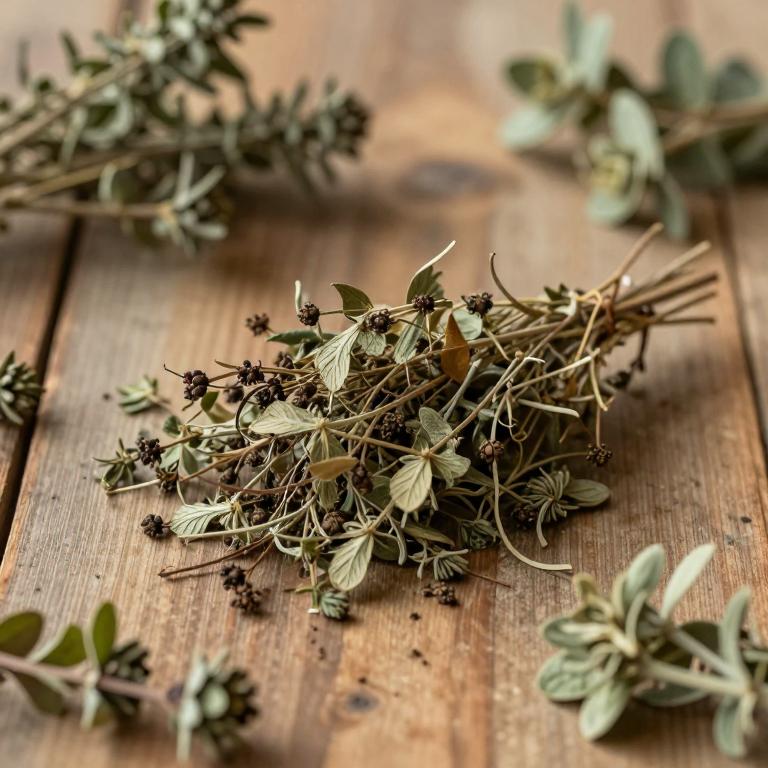
Names and Synonyms
Scientific Names
Accepted name
Ocotea puberulaSynonyms
- Myrcia schaueriana
- Ocotea martiniana
- Persea richardiana
- Laurus puberula
- Oreodaphne hostmanniana
- Ocotea arechavaletae
- Oreodaphne martiniana var. opaca
- Oreodaphne martiniana var. latifolia
- Gymnobalanus perseoides
- Oreodaphne acutifolia var. latifolia
- Oreodaphne martiniana var. dubia
- Strychnodaphne puberula
- Oreodaphne martiniana
- Oreodaphne warmingii
- Ocotea pyramidata
- Ocotea paranapiacabensis
- Ocotea paraensis
- Ocotea baturitensis
- Ocotea ucayalensis
- Ocotea puberula var. arechavaletae
- Ocotea puberula var. truncata
- Strychnodaphne puberula var. truncata
- Ocotea subglabra
Regional and Traditional Names
Spanish:
- Moena
- Moena
- Laurel Guaica
French:
- Cedre gris
- Cedre Gris
Sources: Wikidata, Catalogue of Life
Taxonomical Classification
This plant belongs to the kingdom Plantae and the phylum Streptophyta, specifically falling under the class Equisetopsida and subclass Magnoliidae. Within the order Laurales, it is a member of the family Lauraceae and is classified under the genus Ocotea.
| Rank | Classification |
|---|---|
| Kingdom | Plantae |
| Phylum | Streptophyta |
| Class | Equisetopsida |
| Subclass | Magnoliidae |
| Order | Laurales |
| Family | Lauraceae |
| Genus | Ocotea |
Sources: The World Checklist of Vascular Plants (WCVP)
Distribution
This plant exhibits a widespread distribution across several key regions of Mexico. It is found within the central part of the country, specifically in Mexico Central. Additionally, its presence extends to the northeastern territories categorized as Mexico Northeast. The species also inhabits the coastal and inland areas of Mexico Gulf. Finally, the botanical range covers the diverse landscapes of both Mexico Southwest and Mexico Southeast.
| Region | Area |
|---|---|
| Mexico | Mexico Central |
| Mexico | Mexico Northeast |
| Mexico | Mexico Gulf |
| Mexico | Mexico Southwest |
| Mexico | Mexico Southeast |
| Central America | Costa Rica |
| Central America | Panamá |
| Northern South America | French Guiana |
| Northern South America | Guyana |
| Northern South America | Suriname |
Sources: The World Checklist of Vascular Plants (WCVP)
Botanical Identification
Ecology
The ecology of Ocotea pubeula is characterized by its presence in specific low-to-mid elevation forest environments, ranging from sea level up to a maximum elevation of 1600 m AMSL. It is specifically adapted to thrive within a bosque bajo habitat, where it is typically found growing on saturated soil. This preference for moisture-rich substrates suggests that the species plays a role in ecosystems defined by high humidity and consistent water availability.
- Elevational range max:
- 1600 m AMSL
- Elevational range min:
- 0 m AMSL
- Habitat :
- Bosque bajo on saturated soil
Life history
The life history of Ocotea pube rula is characterized by its classification as a perennial species, meaning it maintains its vegetative structures and remains physiologically active over many years rather than completing its cycle within a single growing season. As a long-lived woody plant, it establishes itself through seedling development and progresses through successive stages of growth, eventually reaching maturity where it can engage in repeated reproductive cycles. This perennial nature allows the plant to invest significant resources into structural stability and long-term survival within its ecological niche, contributing to the sustained presence of its biomass in the environment over multiple annual and biennial periods.
- Lifecycle :
- perennial
Morphology
The morphology of Ocotea pubebrula is characterized by its stature as a woody tree that functions as a self-supporting growth form. This species typically reaches a mean height of 15 meters, though it has the capacity to attain a maximum height of up to 30 meters. As a terrestrial organism, it is not aquatic or semiaquatic, nor does it exhibit epiphytic behavior, maintaining a strictly terrestrial existence. Furthermore, it is an independent plant that does not function as a parasite, relying on its own structural integrity rather than acting as a climber, vine, or liana.
- Aquatic :
- terrestrial
- Climber :
- self-supporting
- Epiphyte :
- terrestrial
- Growth form :
- tree
- Parasite :
- independent
- Plant height max:
- 30 m
- Plant height mean:
- 15 m
- Woodiness :
- woody
Physiology
The physiology of Ocotea pubeula is characterized by a C3 photosynthetic pathway, which dictates its carbon fixation processes and metabolic efficiency. The plant exhibits a highly consistent leaf dry matter content (LDMC) with a recorded mean, minimum, and maximum value of 351.7 mg/g, indicating a stable structural composition within its foliar tissues. Furthermore, this species does not function as a nitrogen fixer, relying instead on external nitrogen sources from the soil rather than symbiotic biological nitrogen fixation.
- Leaf dry matter content (LDMC) mean:
- 351.7 mg/g
- Nitrogen fixer :
- no
- Photosynthetic pathway :
- C3
Reproduction
The reproduction of Ocotea pubeula is characterized by a specialized reproductive strategy involving the production of drupes, which are indehiscent fruits. These fruits typically possess a mean length of 0.8 cm and a mean width of 0.7 cm. The seeds contained within these fruits are remarkably uniform in mass, with a recorded mean, minimum, and maximum value of 0.1257 g. In terms of genetic diversity and pollination, self-fertilization is absent in this species, indicating a reliance on cross-pollination mechanisms. Furthermore, the plant employs a zoochorous dispersal syndrome, meaning its seeds are dispersed by animals, facilitating its spread throughout its natural habitat.
- Dehiscence :
- indehiscent
- Dispersal syndrome :
- zoochorous
- Fruit length mean:
- 0.8 cm
- Fruit type :
- drupe
- Fruit width mean:
- 0.7 cm
- Seed mass mean:
- 0.1257 g
- Self fertilization :
- absent
Sources: Global Inventory of Floras and Traits (GIFT)
Plant Parts
Ocotea puberula has 1 reported plant parts identified across 1 scientific publications and several other databases that are studied for medicinal purposes. The most consistently reported plant part include leaf.
| Plant part | Supporting sources | Consensus |
|---|---|---|
| Leaf | 1 supporting sources | ★☆☆☆☆ |
Leaf
- Journal of natural products
Chemicals
Ocotea puberula has 1 reported phytochemicals identified across 1 scientific publications and several other databases. The most consistently reported chemicals include Magnocurarine.
| Chemical | Supporting sources | Consensus |
|---|---|---|
| Magnocurarine | 1 supporting sources | ★☆☆☆☆ |
Magnocurarine
- Journal of natural products
Activities
Ocotea puberula has 1 reported activities identified across 1 scientific publications and several other databases. The most consistently reported activities include Antiaging.
| Activity | Supporting sources | Consensus |
|---|---|---|
| Antiaging | 1 supporting sources | ★☆☆☆☆ |
Antiaging
- Journal of natural products