Ocotea odorifera
Ocotea odorifera · Accepted scientific name
Scientific literature: Very Sparse (14 studies) · ★☆☆☆☆
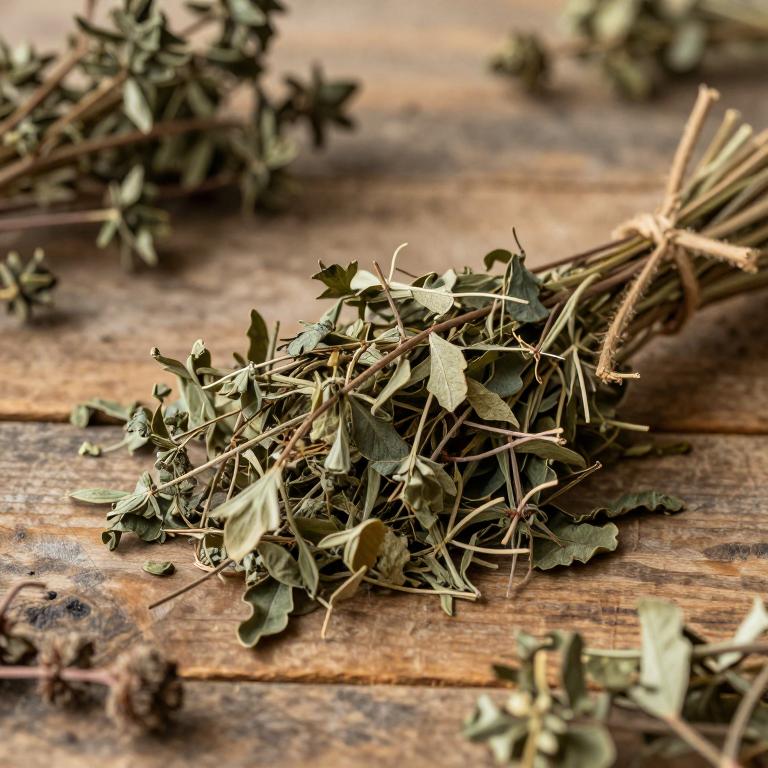
Ocotea odorifera, scientifically known as Ocotea odorifera, is a highly aromatic evergreen tree native to the Brazilian Atlantic Forest. Renowned for its precious essential oil, extracted from its fragrant leaves, it possesses significant medicinal properties, including antimicrobial, anti-inflammatory, and antioxidant activities, making it a vital botanical resource.
- Family
- Lauraceae
- Native range
- Southern America
- Parts used
- Leaf
- Common names
- Not available
- Scientific synonyms
- Laurus Odorifera · Aydendron Suaveolens · 4 more
Names and Synonyms
Scientific Names
Accepted name
Ocotea odoriferaSynonyms
- Laurus odorifera
- Aydendron suaveolens
- Mespilodaphne pretiosa var. latifolia
- Mespilodaphne pretiosa var. longifolia
- Ocotea pretiosa
- Laurus camelilla
Sources: Wikidata
Taxonomical Classification
This plant belongs to the kingdom Plantae and the phylum Streptophyta, falling under the class Equisetopsida and subclass Magnoliidae. Within the order Laurales, it is a member of the Lauraceae family and is specifically classified under the genus Ocotea.
| Rank | Classification |
|---|---|
| Kingdom | Plantae |
| Phylum | Streptophyta |
| Class | Equisetopsida |
| Subclass | Magnoliidae |
| Order | Laurales |
| Family | Lauraceae |
| Genus | Ocotea |
Sources: The World Checklist of Vascular Plants (WCVP)
Distribution
This plant is widely distributed across several key regions within the country of Brazil. Its presence is notably documented throughout the Brazil Northeast region. Furthermore, the species can be found thriving in the Brazil Southeast area. It also extends its natural range into the Brazil South territory. Together, these locations highlight the broad geographical coverage of Ocotea odorifera.
| Region | Area |
|---|---|
| Brazil | Brazil Northeast |
| Brazil | Brazil Southeast |
| Brazil | Brazil South |
Sources: The World Checklist of Vascular Plants (WCVP)
Botanical Identification
Ecology
The ecology of Ocotea odorifera is characterized by its presence in diverse forest ecosystems, specifically within the Floresta Estacional Semidecidual and the Floresta Ombrófila (also known as Floresta Pluvial). This species demonstrates a broad altitudinal distribution, inhabiting environments that range from sea level (0 m AMSL) up to a maximum elevation of 800 m AMSL.
- Elevational range max:
- 800 m AMSL
- Elevational range min:
- 0 m AMSL
- Habitat :
- Floresta Estacional Semidecidual, Floresta Ombrófila (= Floresta Pluvial)
Life history
The life history of Ocotea odorifera is characterized by its existence as a perennial organism, ensuring its presence in the ecosystem over many years. As a phanerophyte, the plant maintains its photosynthetic organs on elevated branches well above the ground, a life form that can be further classified as a phanerophyte due to its structural development. Throughout its life cycle, the species exhibits an evergreen deciduousness, meaning it retains its foliage year-round rather than shedding all its leaves seasonally.
- Deciduousness :
- evergreen
- Life form :
- phanerophyte
- Lifecycle :
- perennial
Morphology
The morphology of Ocotea odorifera is characterized by its growth form as a woody tree, which functions as a self-supporting structure rather than a climber or liana. As a terrestrial species, it does not exhibit epiphytic or aquatic habits, existing as an independent organism without parasitic tendencies. In terms of its physical dimensions, the plant typically reaches a height ranging from a maximum of 17 m to an average height of approximately 20 m.
- Aquatic :
- terrestrial
- Climber :
- self-supporting
- Epiphyte :
- terrestrial
- Growth form :
- tree
- Parasite :
- independent
- Plant height max:
- 17 m
- Plant height mean:
- 20 m
- Woodiness :
- woody
Physiology
The physiology of Ocotea odorifera is characterized by a C3 photosynthetic pathway, a common metabolic strategy among woody angiosperms that involves the direct fixation of atmospheric carbon dioxide through the Calvin cycle. As a non-nitrogen-fixing species, the plant does not possess a symbiotic relationship with nitrogen-fixing bacteria to convert atmospheric nitrogen into bioavailable forms, meaning it relies entirely on the uptake of nitrates and ammonium from the soil through its root system to meet its nutritional requirements for amino acid and protein synthesis.
- Nitrogen fixer :
- no
- Photosynthetic pathway :
- C3
Sources: Global Inventory of Floras and Traits (GIFT)
Plant Parts
Ocotea odorifera has 1 reported plant parts identified across 2 scientific publications and several other databases that are studied for medicinal purposes. The most consistently reported plant part include leaf.
| Plant part | Supporting sources | Consensus |
|---|---|---|
| Leaf | 2 supporting sources | ★☆☆☆☆ |
Leaf
- Journal of ethnopharmacology
- Antonie van Leeuwenhoek
Chemicals
Ocotea odorifera has 5 reported phytochemicals identified across 2 scientific publications and several other databases. The most consistently reported chemicals include 1-Nitro-2-phenylethane, Ellagitannin, Reticuline, S-(+)-Reticuline, Tellimagrandin II.
| Chemical | Supporting sources | Consensus |
|---|---|---|
| 1-Nitro-2-phenylethane | 1 supporting sources | ★☆☆☆☆ |
| Ellagitannin | 1 supporting sources | ★☆☆☆☆ |
| Reticuline | 1 supporting sources | ★☆☆☆☆ |
| S-(+)-Reticuline | 1 supporting sources | ★☆☆☆☆ |
| Tellimagrandin II | 1 supporting sources | ★☆☆☆☆ |
1-Nitro-2-phenylethane
- Journal of ethnopharmacology
Ellagitannin
- Antonie van Leeuwenhoek
Reticuline
- Journal of ethnopharmacology
S-(+)-Reticuline
- Journal of ethnopharmacology
Tellimagrandin II
- Antonie van Leeuwenhoek
Activities
Ocotea odorifera has 2 reported activities identified across 2 scientific publications and several other databases. The most consistently reported activities include Antifungal, Antimalarial.
| Activity | Supporting sources | Consensus |
|---|---|---|
| Antifungal | 1 supporting sources | ★☆☆☆☆ |
| Antimalarial | 1 supporting sources | ★☆☆☆☆ |
Antifungal
- Antonie van Leeuwenhoek
Antimalarial
- Journal of ethnobiology and ethnomedicine
Conditions
Ocotea odorifera has 3 reported investigations on conditions identified across 2 scientific publications and several other databases. The most consistently reported conditions include dermatosis, malaria, rheumatism.
| Condition | Supporting sources | Consensus |
|---|---|---|
| Dermatosis | 1 supporting sources | ★☆☆☆☆ |
| Malaria | 1 supporting sources | ★☆☆☆☆ |
| Rheumatism | 1 supporting sources | ★☆☆☆☆ |
Dermatosis
- Antonie van Leeuwenhoek
Malaria
- Journal of ethnobiology and ethnomedicine
Rheumatism
- Journal of ethnopharmacology
Preparations
Ocotea odorifera has 6 reported preparations identified across 2 scientific publications and several other databases. The most consistently reported preparations include crude methanol extract, essential oils from leaves and branches, its fractions, leaf decoction, leaf extract.
| Preparation | Supporting sources | Consensus |
|---|---|---|
| Crude methanol extract | 1 supporting sources | ★☆☆☆☆ |
| Essential oils from leaves and branches | 1 supporting sources | ★☆☆☆☆ |
| Its fractions | 1 supporting sources | ★☆☆☆☆ |
| Leaf decoction | 1 supporting sources | ★☆☆☆☆ |
| Leaf extract | 1 supporting sources | ★☆☆☆☆ |
| Methanol extract | 1 supporting sources | ★☆☆☆☆ |
Crude methanol extract
- Journal of ethnopharmacology
Essential oils from leaves and branches
- Journal of ethnopharmacology
Its fractions
- Journal of ethnopharmacology
Leaf decoction
- Journal of ethnopharmacology
Leaf extract
- Journal of ethnopharmacology
Methanol extract
- Antonie van Leeuwenhoek