Tilo
Ocotea foetens · Accepted scientific name
Scientific literature: Very Sparse (1 studies) · ★☆☆☆☆
Tilo, scientifically known as Ocotea foetens, is a majestic evergreen tree native to the Macaronesian islands. Renowned for its dense, aromatic foliage and fragrant blossoms, it holds significant ecological value. In traditional herbalism, its leaves are utilized for their calming properties and potential therapeutic benefits in holistic wellness.
- Family
- Lauraceae
- Native range
- Africa
- Parts used
- Not available
- Common names
- Not available
- Scientific synonyms
- Laurus Till · Laurus Foetens · 6 more
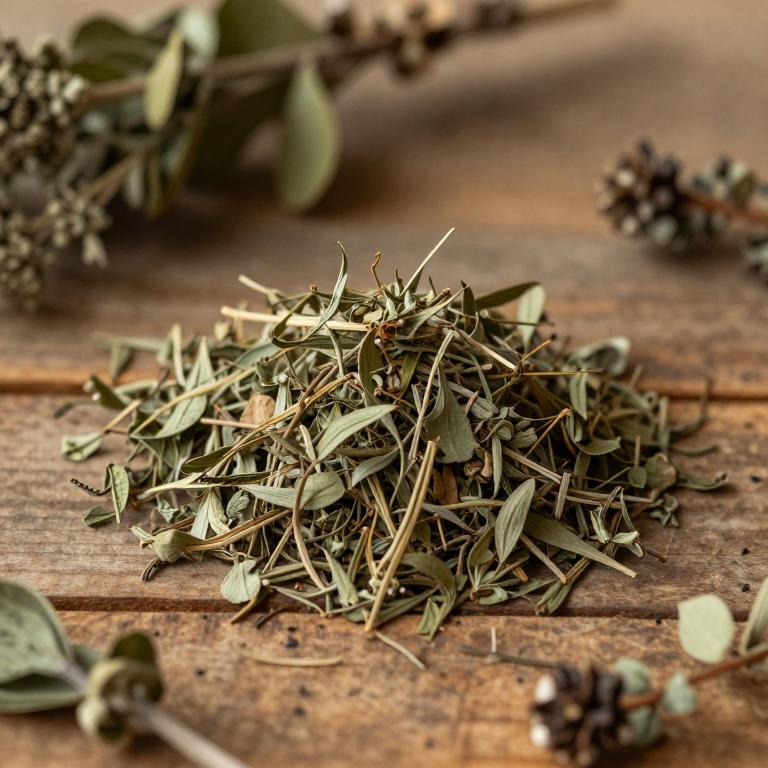
Names and Synonyms
Scientific Names
Accepted name
Ocotea foetensSynonyms
- Laurus till
- Laurus foetens
- Keiria lutea
- Mespilodaphne foetens
- Oreodaphne foetens
- Persea foetida
- Persea foetens
- Borbonia foetens
Regional and Traditional Names
Spanish:
- Til
- Tilo
German:
- Stinkender Lorbeer
Sources: Wikidata
Taxonomical Classification
This plant belongs to the kingdom Plantae and is classified under the phylum Streptophyta and class Equisetopsida. Within the subclass Magnoliidae, it is categorized under the order Laurales and the family Lauraceae. Finally, it is identified by its genus, Ocotea.
| Rank | Classification |
|---|---|
| Kingdom | Plantae |
| Phylum | Streptophyta |
| Class | Equisetopsida |
| Subclass | Magnoliidae |
| Order | Laurales |
| Family | Lauraceae |
| Genus | Ocotea |
Sources: The World Checklist of Vascular Plants (WCVP)
Distribution
This plant exhibits a specific geographical distribution centered within the Macaronesian region. It is primarily found inhabiting the natural landscapes of the Canary Islands. Additionally, its presence extends to the lush environments of Madeira. These two island archipelagos serve as the main habitats for this particular species. Consequently, its range is quite restricted to these unique Atlantic territories.
| Region | Area |
|---|---|
| Macaronesia | Canary Is. |
| Macaronesia | Madeira |
Sources: The World Checklist of Vascular Plants (WCVP)
Botanical Identification
Life history
The life history of Ocotea foetens is characterized by a perennial lifecycle, allowing the individual to persist through multiple growing seasons within its ecosystem. As a member of the phanerophyte life forms, specifically categorized under both phanerophyte and nanophanerophyte classifications, its regenerative buds are located high above the ground on woody stems or branches, providing structural resilience and enabling it to maintain a significant stature over time.
- Life form :
- phanerophyte
- Lifecycle :
- perennial
Morphology
The morphology of Ocotea foetens is characterized by its growth form as a robust, woody tree that reaches a maximum plant height of approximately 30 m. It functions as an independent organism rather than a parasite or an epiphyte, maintaining a strictly terrestrial existence without aquatic or semiaquatic tendencies. As a self-supporting tree, it does not exhibit climbing habits such as lianas or vines, instead relying on its sturdy, woody structure to maintain its upright stature within its ecosystem.
- Aquatic :
- terrestrial
- Climber :
- self-supporting
- Epiphyte :
- terrestrial
- Growth form :
- tree
- Parasite :
- independent
- Plant height max:
- 30 m
- Woodiness :
- woody
Physiology
The physiology of Ocotea foetens is characterized by a C3 photosynthetic pathway, which dictates its carbon fixation processes and metabolic efficiency within its environment. Its vegetative structure features an alternate leaf arrangement, with individual leaves exhibiting a narrow-elliptic form. The morphological dimensions of these leaves vary significantly, with lengths ranging from a minimum of 6 cm to a maximum of 13 cm, while their widths fluctuate between a minimum of 2 cm and a maximum of 7 cm.
- Leaf arrangement :
- alternate
- Leaf form :
- narrow-elliptic
- Leaf length max:
- 13 cm
- Leaf length min:
- 6 cm
- Leaf width max:
- 7 cm
- Leaf width min:
- 2 cm
- Photosynthetic pathway :
- C3
Reproduction
The reproduction of Ocotea foetens is characterized by a bisexual sexual reproduction system where self-fertilization is absent, relying instead on biotic pollination mechanisms. The flowering period typically commences in June and extends through September. The plant utilizes an insect-based pollination syndrome to facilitate fertilization. Following pollination, the plant develops fruit classified as a berry, which is indehiscent in nature. These fruits are characterized by a black color and reach a consistent length of approximately 2.5 cm. The reproductive output is prolific, with the fruit containing more than 1000 seeds, each having a mean seed mass of 0.8 g. Dispersal is achieved through a zoochorous syndrome, specifically via endozoochory, where animals consume the fruit and disperse the seeds.
- Dehiscence :
- indehiscent
- Dispersal syndrome :
- zoochorous
- Dispersal syndrome :
- endozoochorous
- Flowering time :
- Jun
- Flowering time :
- Sep
- Fruit colour :
- black
- Fruit length max:
- 2.5 cm
- Fruit type :
- berry
- Pollination syndrome :
- insect
- Pollination syndrome :
- biotic
- Reproduction sexual :
- bisexual
- Seed mass mean:
- 0.8 g
- Seeds_per_fruit :
- >1000
- Self fertilization :
- absent
Sources: Global Inventory of Floras and Traits (GIFT)
Chemicals
Ocotea foetens has 1 reported phytochemicals identified across 0 scientific publications and several other databases. The most consistently reported chemicals include Flavonoids.
| Chemical | Supporting sources | Consensus |
|---|---|---|
| Flavonoids | 1 supporting sources | ★☆☆☆☆ |
Flavonoids
- Molecules (Basel, Switzerland)