Ocotea fasciculata
Ocotea fasciculata · Accepted scientific name
Scientific literature: Very Sparse (5 studies) · ★☆☆☆☆
Ocotea fasciaculata, scientifically known as Ocotea fasciaculata, is a remarkable medicinal plant prized for its potent therapeutic properties. Native to tropical regions, this species contains unique bioactive compounds used in traditional medicine to treat inflammation and infections, offering a natural, aromatic resource for holistic health and modern pharmacology.
- Family
- Lauraceae
- Native range
- Southern America
- Parts used
- Leaf
- Common names
- Not available
- Scientific synonyms
- Oreodaphne Fasciculata · Mespilodaphne Fasciculata · 4 more
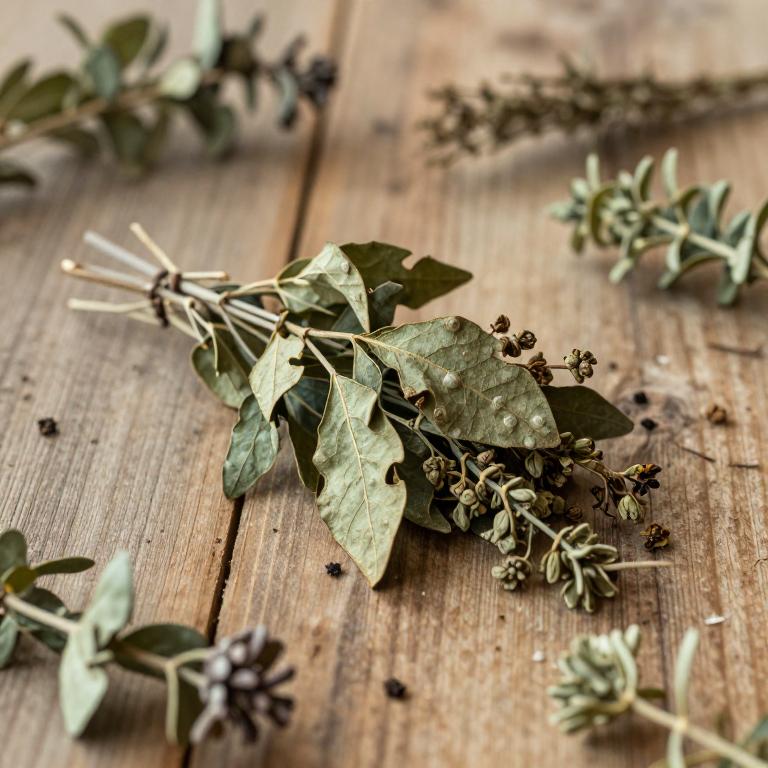
Names and Synonyms
Scientific Names
Accepted name
Ocotea fasciculataSynonyms
- Oreodaphne fasciculata
- Mespilodaphne fasciculata
- Ocotea nunesii
- Ocotea duckei
- Ocotea scrobiculifera
- Cinnamomum bahiense
Sources: Wikidata
Taxonomical Classification
This plant belongs to the kingdom Plantae and the phylum Streptophyta, falling under the class Equisetopsida and subclass Magnoliidae. Within the order Laurales and the family Lauraceae, it is classified under the genus Ocotea. Specifically, Ocotea fasciaculata represents a distinct species within this botanical lineage.
| Rank | Classification |
|---|---|
| Kingdom | Plantae |
| Phylum | Streptophyta |
| Class | Equisetopsida |
| Subclass | Magnoliidae |
| Order | Laurales |
| Family | Lauraceae |
| Genus | Ocotea |
Sources: The World Checklist of Vascular Plants (WCVP)
Distribution
This plant exhibits a specific distribution pattern across the Caribbean and Northern South America. Within the Caribbean region, its presence is noted in Trinidad and Tobago. Moving to the mainland, it can be found throughout several countries in Northern South America. Specifically, its range includes French Guiana, Guyana, and Suriname. Finally, the species extends its reach into the territory of Venezuela.
| Region | Area |
|---|---|
| Caribbean | Trinidad-Tobago |
| Northern South America | French Guiana |
| Northern South America | Guyana |
| Northern South America | Suriname |
| Northern South America | Venezuela |
| Brazil | Brazil West-Central |
| Brazil | Brazil Northeast |
| Brazil | Brazil Southeast |
| Brazil | Brazil North |
Sources: The World Checklist of Vascular Plants (WCVP)
Botanical Identification
Ecology
The ecology of Ocotea fasciiculata is characterized by its specialized adaptation to semi-arid environments, specifically thriving within the Caatinga (strictu sensu) and Carrasco ecosystems. These habitats are defined by seasonal water scarcity and high solar radiation, requiring the species to possess physiological mechanisms for drought tolerance. In the Carrasco formations, which often consist of rocky outcrops or transition zones, the plant must contend with shallow soils and rapid drainage, playing a critical role in the structural complexity of these niche environments. Its presence within these specific biomes indicates a high degree of specialization to the xeric conditions and the distinct soil compositions found in the northeastern Brazilian landscapes.
- Habitat :
- Caatinga (stricto sensu), Carrasco
Morphology
The morphology of Ocotea fasciiculata is characterized by its growth form as a woody tree that reaches a maximum plant height of approximately 15 meters. This species functions as a self-supporting organism, neither acting as a climber (such as a liana or vine) nor as a parasite, maintaining an independent existence within its ecosystem. It is a terrestrial plant, lacking aquatic or semiaquatic tendencies, and does not exhibit epiphytic behavior, remaining firmly rooted in the ground rather than growing as a holoepiphyte or hemiepiphyte. Its structural integrity is defined by its woody nature, providing the necessary support for its upright, tree-like stature.
- Aquatic :
- terrestrial
- Climber :
- self-supporting
- Epiphyte :
- terrestrial
- Growth form :
- tree
- Parasite :
- independent
- Plant height max:
- 15 m
- Woodiness :
- woody
Physiology
The physiology of Ocotea fasciiculata is fundamentally characterized by its utilization of the C3 photosynthetic pathway, a mechanism where carbon dioxide is fixed directly into a three-carbon compound during the initial stage of the Calvin cycle. This metabolic process dictates the plant's resource management, particularly its reliance on stomatal conductance for gas exchange, which necessitates a careful physiological balance between CO2 uptake and transpirational water loss. As a C3 species, its photosynthetic efficiency is highly sensitive to temperature fluctuations and light intensity, influencing its metabolic rate and overall growth patterns within its ecological niche. Furthermore, the enzymatic activity of RuBisCO (ribulose-1,5-bisphosphate carboxylase/oxygenase) serves as the primary driver for carbon assimilation, though it remains susceptible to photorespiration under conditions of high heat or water scarcity. This physiological framework governs the plant's energy production, nutrient cycling, and its adaptive capacity to environmental stressors.
- Photosynthetic pathway :
- C3
Sources: Global Inventory of Floras and Traits (GIFT)
Plant Parts
Ocotea fasciculata has 1 reported plant parts identified across 1 scientific publications and several other databases that are studied for medicinal purposes. The most consistently reported plant part include leaf.
| Plant part | Supporting sources | Consensus |
|---|---|---|
| Leaf | 1 supporting sources | ★☆☆☆☆ |
Leaf
- Mutation research
Chemicals
Ocotea fasciculata has 3 reported phytochemicals identified across 1 scientific publications and several other databases. The most consistently reported chemicals include Yangambin, Epi-yangambin, Reticuline.
| Chemical | Supporting sources | Consensus |
|---|---|---|
| Yangambin | 2 supporting sources | ★☆☆☆☆ |
| Epi-yangambin | 1 supporting sources | ★☆☆☆☆ |
| Reticuline | 1 supporting sources | ★☆☆☆☆ |
Yangambin
- Journal of pharmaceutical and biomedical analysis
- Mutation research
Epi-yangambin
- Journal of pharmaceutical and biomedical analysis
Reticuline
- Journal of ethnopharmacology
Preparations
Ocotea fasciculata has 1 reported preparations identified across 1 scientific publications and several other databases. The most consistently reported preparations include hydroalcoholic extract of O. duckei leaves.
| Preparation | Supporting sources | Consensus |
|---|---|---|
| Hydroalcoholic extract of o. duckei leaves | 1 supporting sources | ★☆☆☆☆ |
Hydroalcoholic extract of o. duckei leaves
- Mutation research