Ocotea bullata
Ocotea bullata · Accepted scientific name
Scientific literature: Very Sparse (18 studies) · ★☆☆☆☆
Ocotea bullata, scientifically known as Ocotea bullata, is a majestic evergreen tree native to the temperate rainforests of Chile. Highly valued for its medicinal properties, its bark contains bioactive compounds used traditionally to treat inflammation and digestive issues, making it a significant botanical resource in South American ethnomedicine.
- Family
- Lauraceae
- Native range
- Africa
- Parts used
- Stem · Leaf
- Common names
- Not available
- Scientific synonyms
- Oreodaphne Bullata · Myrsine Racemosa · 4 more
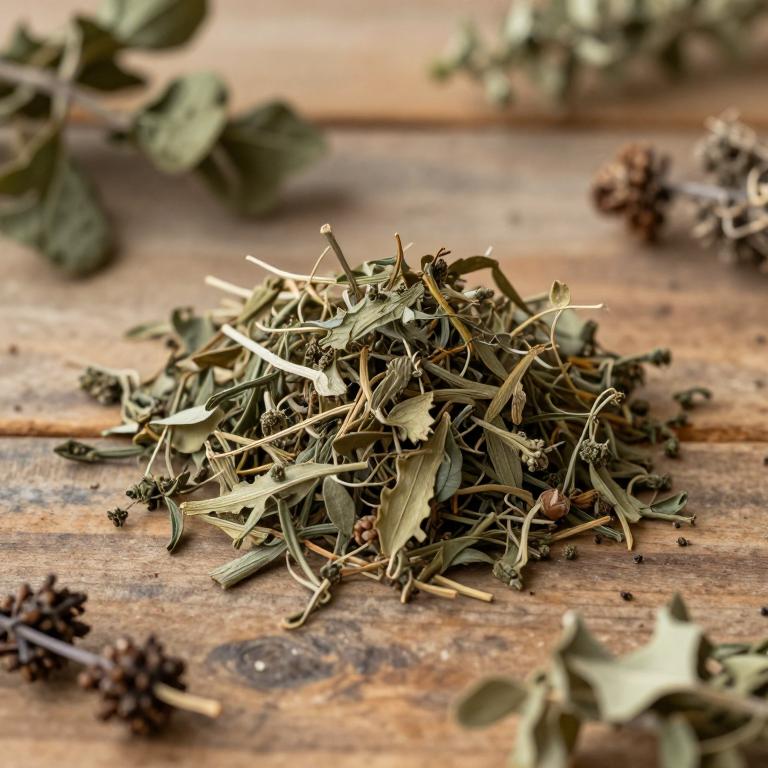
Names and Synonyms
Scientific Names
Accepted name
Ocotea bullataSynonyms
- Oreodaphne bullata
- Myrsine racemosa
- Quercus africana
- Mespilodaphne bullata
- Laurus bullata
- Manglilla racemosa
Sources: Wikidata
Taxonomical Classification
This plant belongs to the kingdom Plantae and the phylum Streptophyta. It is classified under the class Equisetopsida and the subclass Magnoliidae, falling within the order Laurales. Furthermore, it is a member of the family Lauraceae and is specifically categorized under the genus Ocotea.
| Rank | Classification |
|---|---|
| Kingdom | Plantae |
| Phylum | Streptophyta |
| Class | Equisetopsida |
| Subclass | Magnoliidae |
| Order | Laurales |
| Family | Lauraceae |
| Genus | Ocotea |
Sources: The World Checklist of Vascular Plants (WCVP)
Distribution
This plant is primarily distributed throughout the various regions of Southern Africa. It can be found growing within the diverse landscapes of the Cape Provinces. Additionally, its presence extends into the mountainous terrain of Lesotho. The species is also known to inhabit parts of KwaZulu-Natal. Finally, its geographical range includes the northernmost stretches of the Northern Provinces.
| Region | Area |
|---|---|
| Southern Africa | Cape Provinces |
| Southern Africa | Lesotho |
| Southern Africa | KwaZulu-Natal |
| Southern Africa | Northern Provinces |
Sources: The World Checklist of Vascular Plants (WCVP)
Botanical Identification
Ecology
The ecology of Ocotea bullata is defined by its presence in specific montane forest ecosystems, where it plays a structural role within the canopy. This species is adapted to varied topographical gradients, inhabiting a distinct elevational range that reaches a maximum of 1435 m AMSL. It thrives in environments characterized by moderate to high moisture availability, typically found in humid subtropical or temperate forest zones where soil stability and organic matter levels are sufficient to support its growth. The plant's distribution is closely tied to these altitudinal limits, as the climatic conditions—such as temperature fluctuations and cloud cover—change significantly as it approaches its upper elevational threshold.
- Elevational range max:
- 1435 m AMSL
Life history
The life history of Ocotea bullata is characterized by its status as a perennial species, allowing it to maintain a stable presence within its ecosystem over many years. As an evergreen plant, it retains its foliage throughout the year, ensuring continuous photosynthetic activity and providing a consistent structural component to its habitat. This combination of a long-lived lifecycle and a non-deciduous habit enables the plant to establish a robust and enduring presence in its natural environment.
- Deciduousness :
- evergreen
- Lifecycle :
- perennial
Morphology
The morphology of Ocotea bullata is characterized by its growth form as a woody tree, which functions as a self-supporting structure rather than a climber or vine. As an independent organism, it does not exhibit parasitic or epiphytic behavior, maintaining a strictly terrestrial existence. The plant's stature is substantial, with height dimensions ranging from a minimum of 4 m to a maximum of 30 m, maintaining an average height of approximately 20 m.
- Aquatic :
- terrestrial
- Climber :
- self-supporting
- Epiphyte :
- terrestrial
- Growth form :
- tree
- Parasite :
- independent
- Plant height max:
- 30 m
- Plant height mean:
- 20 m
- Plant height min:
- 4 m
- Woodiness :
- woody
Physiology
The physiology of Ocotea bullata is characterized by a C3 photosynthetic pathway, which dictates its carbon fixation processes and metabolic efficiency within its natural habitat. As a non-nitrogen-fixing species, it does not possess the symbiotic relationship with nitrogen-fixing bacteria required to convert atmospheric nitrogen into bioavailable forms, meaning its nitrogen acquisition is entirely dependent on the uptake of nitrates and ammonium from the soil through its root system.
- Nitrogen fixer :
- no
- Photosynthetic pathway :
- C3
Sources: Global Inventory of Floras and Traits (GIFT)
Plant Parts
Ocotea bullata has 3 reported plant parts identified across 4 scientific publications and several other databases that are studied for medicinal purposes. The most consistently reported plant part include stem, leaf, root.
| Plant part | Supporting sources | Consensus |
|---|---|---|
| Stem | 2 supporting sources | ★☆☆☆☆ |
| Leaf | 1 supporting sources | ★☆☆☆☆ |
| Root | 1 supporting sources | ★☆☆☆☆ |
Stem
- Journal of integrative medicine
- Phytochemistry
Leaf
- Journal of ethnopharmacology
Root
- African journal of traditional, complementary, and alternative medicines : AJTCAM
Chemicals
Ocotea bullata has 5 reported phytochemicals identified across 4 scientific publications and several other databases. The most consistently reported chemicals include Flavonoid, Flavonol, Ocobullenone, RUTIN, quercetin.
| Chemical | Supporting sources | Consensus |
|---|---|---|
| Flavonoid | 1 supporting sources | ★☆☆☆☆ |
| Flavonol | 1 supporting sources | ★☆☆☆☆ |
| Ocobullenone | 1 supporting sources | ★☆☆☆☆ |
| RUTIN | 1 supporting sources | ★☆☆☆☆ |
| quercetin | 1 supporting sources | ★☆☆☆☆ |
Flavonoid
- Journal of integrative medicine
Flavonol
- Journal of integrative medicine
Ocobullenone
- Phytochemistry
RUTIN
- Journal of integrative medicine
quercetin
- Journal of integrative medicine
Activities
Ocotea bullata has 2 reported activities identified across 4 scientific publications and several other databases. The most consistently reported activities include Antidiabetic, Antioxidant.
| Activity | Supporting sources | Consensus |
|---|---|---|
| Antidiabetic | 1 supporting sources | ★☆☆☆☆ |
| Antioxidant | 1 supporting sources | ★☆☆☆☆ |
Antidiabetic
- Journal of integrative medicine
Antioxidant
- Journal of integrative medicine
Conditions
Ocotea bullata has 3 reported investigations on conditions identified across 4 scientific publications and several other databases. The most consistently reported conditions include headache, headaches, inflammation.
| Condition | Supporting sources | Consensus |
|---|---|---|
| Headache | 1 supporting sources | ★☆☆☆☆ |
| Headaches | 1 supporting sources | ★☆☆☆☆ |
| Inflammation | 1 supporting sources | ★☆☆☆☆ |
Headache
- Journal of ethnopharmacology
Headaches
- Journal of ethnopharmacology
Inflammation
- Journal of integrative medicine
Preparations
Ocotea bullata has 2 reported preparations identified across 4 scientific publications and several other databases. The most consistently reported preparations include ethanolic extracts, stem bark.
| Preparation | Supporting sources | Consensus |
|---|---|---|
| Ethanolic extracts | 1 supporting sources | ★☆☆☆☆ |
| Stem bark | 1 supporting sources | ★☆☆☆☆ |
Ethanolic extracts
- Journal of ethnopharmacology
Stem bark
- Phytochemistry