Nautochilus
Ocimum · Accepted scientific name
Scientific literature: Sparse (64 studies) · ★★☆☆☆
Nautochilus, scientifically known as Ocimum, is a versatile genus of aromatic herbs celebrated in traditional medicine worldwide. Renowned for its diverse species, including holy basil, it offers potent antibacterial, antioxidant, and anti-inflammatory properties. These plants are essential in herbal remedies, promoting wellness through their unique therapeutic essence.
- Family
- Lamiaceae
- Native range
- Europe
- Parts used
- Leaf · Flower
- Common names
- Basil · Basils
- Scientific synonyms
- Becium · Erythrochlamys · 2 more
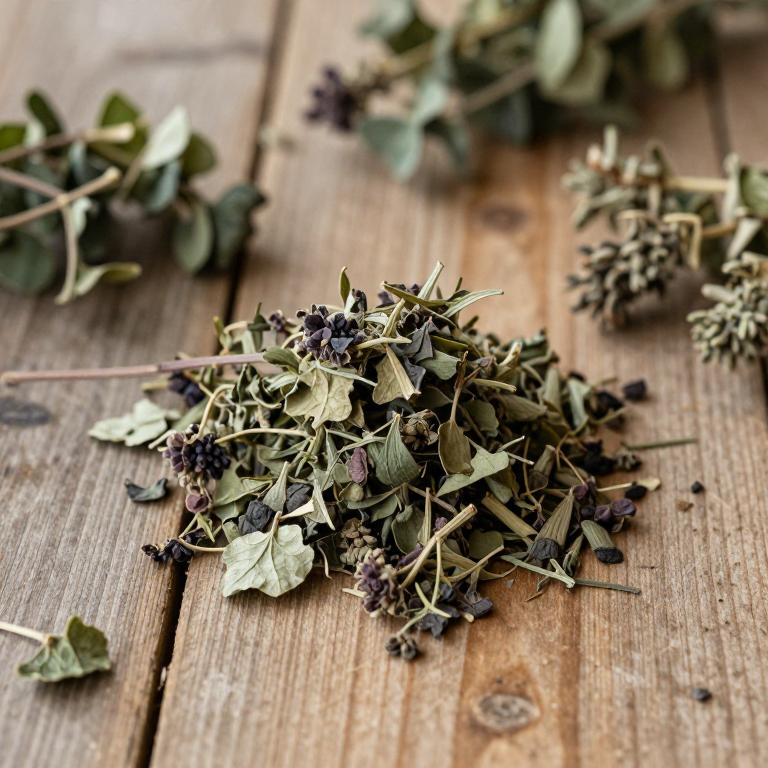
Names and Synonyms
Common Names
- basil
- Basils
Scientific Names
Accepted name
OcimumSynonyms
- Becium
- Erythrochlamys
- Nautochilus
- Hyperaspis
Regional and Traditional Names
Spanish:
- Erythrochlamys
- Hyperaspis
- Albahacas
German:
- Basilikum
- Basilikum
Sources: Wikidata, Catalogue of Life
Taxonomical Classification
This plant belongs to the kingdom Plantae and the phylum Streptophyta, specifically falling under the class Equisetopsida. Within the subclass Magnoliidae, it is classified under the order Lamiales and the family Lamiaceae. Finally, it is identified by its genus, Ocimum.
| Rank | Classification |
|---|---|
| Kingdom | Plantae |
| Phylum | Streptophyta |
| Class | Equisetopsida |
| Subclass | Magnoliidae |
| Order | Lamiales |
| Family | Lamiaceae |
| Genus | Ocimum |
Sources: The World Checklist of Vascular Plants (WCVP)
Distribution
This plant exhibits a diverse range of habitats across several European regions. In Northern Europe, its presence can be observed in Great Britain. Moving into Middle Europe, it is commonly found throughout Germany. The species also inhabits Southeastern Europe, specifically within the territories of Bulgaria and Romania. Finally, its distribution extends into Eastern Europe, covering parts of South European Russia.
| Region | Area |
|---|---|
| Northern Europe | Great Britain |
| Middle Europe | Germany |
| Southeastern Europe | Bulgaria |
| Southeastern Europe | Romania |
| Eastern Europe | South European Russia |
| Eastern Europe | Ukraine |
| Northern Africa | Egypt |
| Macaronesia | Canary Is. |
| Macaronesia | Cape Verde |
| West Tropical Africa | Benin |
Sources: The World Checklist of Vascular Plants (WCVP)
Plant Parts
Ocimum has 4 reported plant parts identified across 12 scientific publications and several other databases that are studied for medicinal purposes. The most consistently reported plant part include leaf, flower, root, stem.
| Plant part | Supporting sources | Consensus |
|---|---|---|
| Leaf | 7 supporting sources | ★★★★☆ |
| Flower | 2 supporting sources | ★☆☆☆☆ |
| Root | 2 supporting sources | ★☆☆☆☆ |
| Stem | 1 supporting sources | ★☆☆☆☆ |
Leaf
- Protoplasma
- Pharmacognosy research
- Bioinformation
- Anti-cancer drugs
- Nutrition and cancer
View 2 additional sources
- Environmental toxicology and pharmacology
- Planta medica
Flower
- Pharmacognosy research
- Bioinformation
Root
- Frontiers in plant science
- Bioinformation
Stem
- Bioinformation
Chemicals
Ocimum has 28 reported phytochemicals identified across 12 scientific publications and several other databases. The most consistently reported chemicals include Terpenoids, eugenol, Flavonoids, 3-Hydroxybenzoic acid, 3-epimaslinic acid.
| Chemical | Supporting sources | Consensus |
|---|---|---|
| Terpenoids | 3 supporting sources | ★★☆☆☆ |
| eugenol | 3 supporting sources | ★★☆☆☆ |
| Flavonoids | 2 supporting sources | ★☆☆☆☆ |
| 3-Hydroxybenzoic acid | 1 supporting sources | ★☆☆☆☆ |
| 3-epimaslinic acid | 1 supporting sources | ★☆☆☆☆ |
| Alphitolic acid | 1 supporting sources | ★☆☆☆☆ |
| Borneol | 1 supporting sources | ★☆☆☆☆ |
| Chicoric acid | 1 supporting sources | ★☆☆☆☆ |
| LIMONENE | 1 supporting sources | ★☆☆☆☆ |
| Linalool | 1 supporting sources | ★☆☆☆☆ |
Terpenoids
- Phytochemistry reviews : proceedings of the Phytochemical Society of Europe
- Molecules (Basel, Switzerland)
- Molecular biology reports
eugenol
- Protoplasma
- Natural product research
- Zhongguo Zhong yao za zhi = Zhongguo zhongyao zazhi = China journal of Chinese materia medica
Flavonoids
- Molecules (Basel, Switzerland)
- Planta medica
3-Hydroxybenzoic acid
- Frontiers in plant science
3-epimaslinic acid
- Frontiers in plant science
Alphitolic acid
- Frontiers in plant science
Borneol
- Physiology and molecular biology of plants : an international journal of functional plant biology
Chicoric acid
- Frontiers in plant science
LIMONENE
- Physiology and molecular biology of plants : an international journal of functional plant biology
Linalool
- Protoplasma
Activities
Ocimum has 6 reported activities identified across 12 scientific publications and several other databases. The most consistently reported activities include Antimicrobial, Anticancer, Antifungal, Antioxidant, Cytotoxic.
| Activity | Supporting sources | Consensus |
|---|---|---|
| Antimicrobial | 2 supporting sources | ★☆☆☆☆ |
| Anticancer | 1 supporting sources | ★☆☆☆☆ |
| Antifungal | 1 supporting sources | ★☆☆☆☆ |
| Antioxidant | 1 supporting sources | ★☆☆☆☆ |
| Cytotoxic | 1 supporting sources | ★☆☆☆☆ |
| Hepatoprotective | 1 supporting sources | ★☆☆☆☆ |
Antimicrobial
- Current pharmaceutical biotechnology
- Health science reports
Anticancer
- Food research international (Ottawa, Ont.)
Antifungal
- Mycoses
Antioxidant
- Current pharmaceutical biotechnology
Cytotoxic
- Current pharmaceutical biotechnology
Hepatoprotective
- Current pharmaceutical biotechnology
Conditions
Ocimum has 4 reported investigations on conditions identified across 12 scientific publications and several other databases. The most consistently reported conditions include Alzheimer's disease, antimalarial, cancer, malaria.
| Condition | Supporting sources | Consensus |
|---|---|---|
| Alzheimer's disease | 1 supporting sources | ★☆☆☆☆ |
| Antimalarial | 1 supporting sources | ★☆☆☆☆ |
| Cancer | 1 supporting sources | ★☆☆☆☆ |
| Malaria | 1 supporting sources | ★☆☆☆☆ |
Alzheimer's disease
- Food research international (Ottawa, Ont.)
Antimalarial
- Natural product research
Cancer
- Food research international (Ottawa, Ont.)
Malaria
- Frontiers in plant science
Preparations
Ocimum has 10 reported preparations identified across 12 scientific publications and several other databases. The most consistently reported preparations include alcoholic extracts, aqueous extracts (AEs), essential oil, extract, extracts.
| Preparation | Supporting sources | Consensus |
|---|---|---|
| Alcoholic extracts | 1 supporting sources | ★☆☆☆☆ |
| Aqueous extracts (aes) | 1 supporting sources | ★☆☆☆☆ |
| Essential oil | 1 supporting sources | ★☆☆☆☆ |
| Extract | 1 supporting sources | ★☆☆☆☆ |
| Extracts | 1 supporting sources | ★☆☆☆☆ |
| High polarity extracts | 1 supporting sources | ★☆☆☆☆ |
| Hydroalcoholic extracts | 1 supporting sources | ★☆☆☆☆ |
| Leaf extract | 1 supporting sources | ★☆☆☆☆ |
| Oil extracts | 1 supporting sources | ★☆☆☆☆ |
| Water extracts | 1 supporting sources | ★☆☆☆☆ |
Alcoholic extracts
- ACS omega
Aqueous extracts (aes)
- Environmental research
Essential oil
- Plants (Basel, Switzerland)
Extract
- Anti-cancer drugs
Extracts
- Mycoses
High polarity extracts
- Plants (Basel, Switzerland)
Hydroalcoholic extracts
- ACS omega
Leaf extract
- Anti-cancer drugs
Oil extracts
- RSC advances
Water extracts
- ACS omega