Ocimum lamiifolium
Ocimum lamiifolium · Accepted scientific name
Scientific literature: Very Sparse (26 studies) · ★☆☆☆☆
Ocimum lamiiifolium, scientifically known as Ocimum lamiiifolium, is a potent medicinal herb belonging to the Lamiaceae family. Commonly referred to as "False Basil," this aromatic plant is celebrated in traditional medicine for its diverse therapeutic properties, offering significant anti-inflammatory, antimicrobial, and antioxidant benefits to support holistic wellness.
- Family
- Lamiaceae
- Native range
- Africa
- Parts used
- Leaf · Root
- Common names
- Not available
- Scientific synonyms
- Ocimum Hararense · Plectranthus Ovatifolius · 2 more
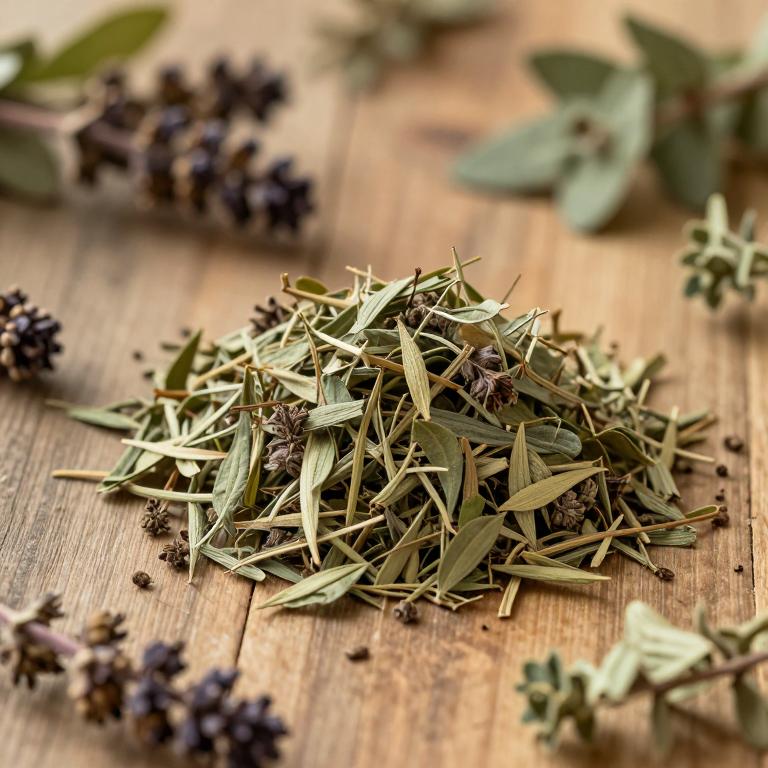
Names and Synonyms
Scientific Names
Accepted name
Ocimum lamiifoliumSynonyms
- Ocimum hararense
- Plectranthus ovatifolius
- Ocimum nakurense
- Ocimum rothii
Sources: Wikidata
Taxonomical Classification
This plant belongs to the kingdom Plantae within the phylum Streptophyta and the class Equisetopsida. It is further classified under the subclass Magnoliidae and the order Lamiales, falling into the family Lamiaceae. Finally, it is categorized under the genus Ocimum.
| Rank | Classification |
|---|---|
| Kingdom | Plantae |
| Phylum | Streptophyta |
| Class | Equisetopsida |
| Subclass | Magnoliidae |
| Order | Lamiales |
| Family | Lamiaceae |
| Genus | Ocimum |
Sources: The World Checklist of Vascular Plants (WCVP)
Distribution
This plant exhibits a diverse geographical distribution across several regions of the African continent. Within West-Central Tropical Africa, it can be found growing in Cameroon and Gabon. Its presence also extends to the Democratic Republic of the Congo in the same central region. Additionally, the species is located in Rwanda, further establishing its footprint in West-Central Tropical Africa. Finally, its range reaches into Northeast Tropical Africa, specifically within the borders of Eritrea.
| Region | Area |
|---|---|
| West-Central Tropical Africa | Cameroon |
| West-Central Tropical Africa | Gabon |
| West-Central Tropical Africa | Rwanda |
| West-Central Tropical Africa | DR Congo |
| Northeast Tropical Africa | Eritrea |
| Northeast Tropical Africa | Ethiopia |
| East Tropical Africa | Kenya |
| East Tropical Africa | Tanzania |
| East Tropical Africa | Uganda |
| South Tropical Africa | Malawi |
Sources: The World Checklist of Vascular Plants (WCVP)
Botanical Identification
Life history
The life history of Ocimum lamiifolium is characterized by its status as a perennial plant, allowing it to persist through multiple growing seasons rather than completing its life cycle in a single year. In terms of its growth habit and structural architecture, it is classified as a chamaephyte, meaning its perennable buds are located close to or just above the soil surface, which influences how it manages environmental stresses and regenerative growth. This combination of a perennial lifecycle and a chamaephyte life form enables the species to maintain a stable presence within its ecological niche, utilizing its low-growing, bud-protected structure to endure seasonal variations while continuing its reproductive cycles over time.
- Life form :
- chamaephyte
- Lifecycle :
- perennial
Morphology
The morphology of Ocimum lamiifolium is characterized by a shrub growth form that reaches an average plant height of 2.1 m. This species functions as a self-supporting, independent plant, lacking any parasitic or epiphytic tendencies, and is strictly terrestrial in its habitat. Structurally, the plant exhibits a woody nature, distinguishing its physical composition from non-woody herbaceous species.
- Aquatic :
- terrestrial
- Climber :
- self-supporting
- Epiphyte :
- terrestrial
- Growth form :
- shrub
- Parasite :
- independent
- Plant height mean:
- 2.1 m
- Woodiness :
- woody
Sources: Global Inventory of Floras and Traits (GIFT)
Plant Parts
Ocimum lamiifolium has 3 reported plant parts identified across 9 scientific publications and several other databases that are studied for medicinal purposes. The most consistently reported plant part include leaf, root, stem.
| Plant part | Supporting sources | Consensus |
|---|---|---|
| Leaf | 7 supporting sources | ★★★★☆ |
| Root | 1 supporting sources | ★☆☆☆☆ |
| Stem | 1 supporting sources | ★☆☆☆☆ |
Leaf
- Food chemistry
- BMC complementary and alternative medicine
- International journal of microbiology
- Evidence-based complementary and alternative medicine : eCAM
- Current microbiology
View 2 additional sources
- Experimental and toxicologic pathology : official journal of the Gesellschaft fur Toxikologische Pathologie
- Journal of ethnopharmacology
Root
- Current microbiology
Stem
- Current microbiology
Chemicals
Ocimum lamiifolium has 3 reported phytochemicals identified across 9 scientific publications and several other databases. The most consistently reported chemicals include ALPHA-PHELLANDRENE, SABINENE, n-Hexane.
| Chemical | Supporting sources | Consensus |
|---|---|---|
| ALPHA-PHELLANDRENE | 1 supporting sources | ★☆☆☆☆ |
| SABINENE | 1 supporting sources | ★☆☆☆☆ |
| n-Hexane | 1 supporting sources | ★☆☆☆☆ |
ALPHA-PHELLANDRENE
- Food chemistry
SABINENE
- Food chemistry
n-Hexane
- Tropical medicine and health
Activities
Ocimum lamiifolium has 3 reported activities identified across 9 scientific publications and several other databases. The most consistently reported activities include Antimalarial, Antipyretic, Hepatoprotective.
| Activity | Supporting sources | Consensus |
|---|---|---|
| Antimalarial | 1 supporting sources | ★☆☆☆☆ |
| Antipyretic | 1 supporting sources | ★☆☆☆☆ |
| Hepatoprotective | 1 supporting sources | ★☆☆☆☆ |
Antimalarial
- BMC complementary and alternative medicine
Antipyretic
- Journal of ethnopharmacology
Hepatoprotective
- Food chemistry
Conditions
Ocimum lamiifolium has 9 reported investigations on conditions identified across 9 scientific publications and several other databases. The most consistently reported conditions include Aspergillus flavus, common cold, diarrhea, headache, infections.
| Condition | Supporting sources | Consensus |
|---|---|---|
| Aspergillus flavus | 1 supporting sources | ★☆☆☆☆ |
| Common cold | 1 supporting sources | ★☆☆☆☆ |
| Diarrhea | 1 supporting sources | ★☆☆☆☆ |
| Headache | 1 supporting sources | ★☆☆☆☆ |
| Infections | 1 supporting sources | ★☆☆☆☆ |
| Inflammation | 1 supporting sources | ★☆☆☆☆ |
| Pain | 1 supporting sources | ★☆☆☆☆ |
| Pyrexia | 1 supporting sources | ★☆☆☆☆ |
| Respiratory tract infections | 1 supporting sources | ★☆☆☆☆ |
Aspergillus flavus
- International journal of microbiology
Common cold
- Journal of alternative and complementary medicine (New York, N.Y.)
Diarrhea
- Evidence-based complementary and alternative medicine : eCAM
Headache
- Journal of alternative and complementary medicine (New York, N.Y.)
Infections
- Scientific reports
Inflammation
- Phytotherapy research : PTR
Pain
- Phytotherapy research : PTR
Pyrexia
- Journal of ethnopharmacology
Respiratory tract infections
- Evidence-based complementary and alternative medicine : eCAM
Preparations
Ocimum lamiifolium has 12 reported preparations identified across 9 scientific publications and several other databases. The most consistently reported preparations include 80% Methanol Extract, 80% methanol and n-hexane extracts, Aqueous extracts, aqueous and ethanol extracts, aqueous and ethanol extracts of the leaves.
| Preparation | Supporting sources | Consensus |
|---|---|---|
| 80% methanol extract | 1 supporting sources | ★☆☆☆☆ |
| 80% methanol and n-hexane extracts | 1 supporting sources | ★☆☆☆☆ |
| Aqueous extracts | 1 supporting sources | ★☆☆☆☆ |
| Aqueous and ethanol extracts | 1 supporting sources | ★☆☆☆☆ |
| Aqueous and ethanol extracts of the leaves | 1 supporting sources | ★☆☆☆☆ |
| Aqueous and organic extracts of leaves | 1 supporting sources | ★☆☆☆☆ |
| Aqueous extract | 1 supporting sources | ★☆☆☆☆ |
| Aqueous extracts | 1 supporting sources | ★☆☆☆☆ |
| Essential oils obtained from leaves | 1 supporting sources | ★☆☆☆☆ |
| Ethanol extract | 1 supporting sources | ★☆☆☆☆ |
80% methanol extract
- Evidence-based complementary and alternative medicine : eCAM
80% methanol and n-hexane extracts
- Tropical medicine and health
Aqueous extracts
- Experimental and toxicologic pathology : official journal of the Gesellschaft fur Toxikologische Pathologie
Aqueous and ethanol extracts
- Phytotherapy research : PTR
Aqueous and ethanol extracts of the leaves
- Journal of ethnopharmacology
Aqueous and organic extracts of leaves
- International journal of microbiology
Aqueous extract
- Journal of ethnopharmacology
Aqueous extracts
- East African medical journal
Essential oils obtained from leaves
- Food chemistry
Ethanol extract
- Journal of ethnopharmacology