African blue basil
Ocimum kilimandscharicum · Accepted scientific name
Scientific literature: Very Extensive (262 studies) · ★★★★★
African blue basil, scientifically known as Ocimum kilimandscharicum, is a distinctive aromatic herb native to the highlands of East Africa. Renowned for its striking indigo flowers and pungent fragrance, this medicinal plant is traditionally utilized in various cultures to treat respiratory ailments, digestive issues, and to promote overall wellness.
- Family
- Lamiaceae
- Native range
- Africa
- Parts used
- Leaf
- Common names
- African Blue Basil · Camphor Basil
- Scientific synonyms
- Ocimum Johnstonii · Ocimum Tortuosum
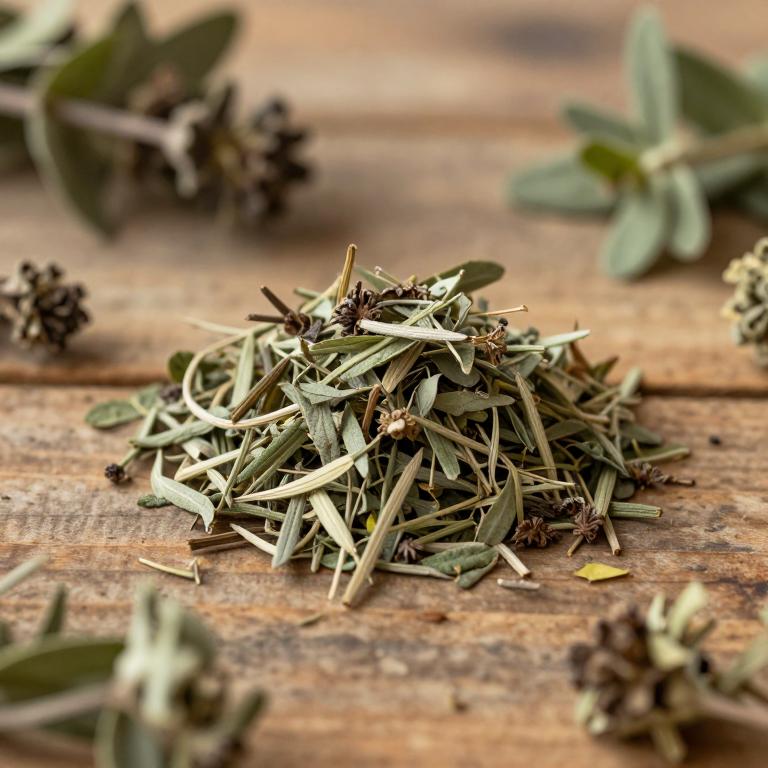
Names and Synonyms
Common Names
- African blue basil
- camphor basil
Scientific Names
Accepted name
Ocimum kilimandscharicumSynonyms
- Ocimum johnstonii
- Ocimum tortuosum
Regional and Traditional Names
German:
- Kampferbasilikum
French:
- Basilic camphré
Sources: Wikidata, Catalogue of Life
Taxonomical Classification
This plant belongs to the kingdom Plantae and the phylum Streptophyta, falling under the class Equisetopsida and subclass Magnoliidae. Within the order Lamiales and the family Lamiaceae, it is classified under the genus Ocimum.
| Rank | Classification |
|---|---|
| Kingdom | Plantae |
| Phylum | Streptophyta |
| Class | Equisetopsida |
| Subclass | Magnoliidae |
| Order | Lamiales |
| Family | Lamiaceae |
| Genus | Ocimum |
Sources: The World Checklist of Vascular Plants (WCVP)
Distribution
This plant exhibits a wide distribution across several regions of the African continent. In Northeast Tropical Africa, it can be found inhabiting the territories of Ethiopia as well as Sudan and South Sudan. Moving toward East Tropical Africa, its presence extends into the landscapes of Kenya. It is also commonly documented growing throughout the country of Uganda. Finally, the species completes its regional range within the borders of Tanzania.
| Region | Area |
|---|---|
| Northeast Tropical Africa | Ethiopia |
| Northeast Tropical Africa | Sudan-South Sudan |
| East Tropical Africa | Kenya |
| East Tropical Africa | Tanzania |
| East Tropical Africa | Uganda |
| South Tropical Africa | Angola |
| Indian Subcontinent | India |
| Indo-China | Myanmar |
| Indo-China | Thailand |
Sources: The World Checklist of Vascular Plants (WCVP)
Botanical Identification
Life history
The life history of Ocimum kilimandscharicum is characterized by a perennial lifecycle, allowing the plant to persist through multiple growing seasons. In terms of its structural growth strategy and ecological classification, it exhibits a dual life form complexity; it is categorized as a phanerophyte, possessing visible stems above the ground, while also displaying characteristics of a nanophanerophyte, where the shoot system remains relatively low to the ground.
- Life form :
- nanophanerophyte
- Life form :
- phanerophyte
- Lifecycle :
- perennial
Morphology
The morphology of Ocimum kilimandscharicum is characterized by its growth form as a woody herb, exhibiting a self-supporting structure that does not require external support to maintain its posture. The plant typically reaches an average height of 1.5 m, establishing itself as an independent organism that does not function as a parasite. As a terrestrial species, it grows directly in the soil rather than as an epiphyte, maintaining a robust, woody constitution throughout its development.
- Climber :
- self-supporting
- Epiphyte :
- terrestrial
- Growth form :
- herb
- Parasite :
- independent
- Plant height mean:
- 1.5 m
- Woodiness :
- woody
Physiology
The physiology of Ocimum kilimandscharicum is characterized by complex metabolic pathways primarily focused on the biosynthesis of volatile essential oils within specialized glandular trichomes located on the leaf surfaces. These trichomes act as specialized secretory structures that manage the storage and controlled release of bioactive terpenoids. The plant's carbon assimilation is driven by C3 photosynthetic processes, where light energy is converted into chemical energy to support rapid vegetative growth and the production of secondary metabolites. Regarding its nutrient acquisition and symbiotic relationships, the plant does not function as a nitrogen fixer; it lacks the specialized root nodules or symbiotic associations with diazotrophic bacteria required to convert atmospheric nitrogen into ammonia, relying instead on the uptake of inorganic nitrogen sources from the soil. Its physiological resilience is further marked by efficient transpiration regulation and a robust secondary metabolism that serves as a chemical defense mechanism against herbivory and environmental stressors.
- Nitrogen fixer :
- no
Sources: Global Inventory of Floras and Traits (GIFT)
Plant Parts
Ocimum kilimandscharicum has 1 reported plant parts identified across 3 scientific publications and several other databases that are studied for medicinal purposes. The most consistently reported plant part include leaf.
| Plant part | Supporting sources | Consensus |
|---|---|---|
| Leaf | 3 supporting sources | ★★☆☆☆ |
Leaf
- Protoplasma
- Natural product research
- Journal of ethnopharmacology
Chemicals
Ocimum kilimandscharicum has 29 reported phytochemicals identified across 3 scientific publications and several other databases. The most consistently reported chemicals include camphor, LIMONENE, eugenol, 1,8-Cineole, ALPHA-PINENE.
| Chemical | Supporting sources | Consensus |
|---|---|---|
| camphor | 3 supporting sources | ★★☆☆☆ |
| LIMONENE | 2 supporting sources | ★☆☆☆☆ |
| eugenol | 2 supporting sources | ★☆☆☆☆ |
| 1,8-Cineole | 1 supporting sources | ★☆☆☆☆ |
| ALPHA-PINENE | 1 supporting sources | ★☆☆☆☆ |
| BETA-CARYOPHYLLENE | 1 supporting sources | ★☆☆☆☆ |
| BETA-PINENE | 1 supporting sources | ★☆☆☆☆ |
| BORNYL ACETATE | 1 supporting sources | ★☆☆☆☆ |
| CALCIUM | 1 supporting sources | ★☆☆☆☆ |
| CAMPHENE | 1 supporting sources | ★☆☆☆☆ |
camphor
- Dr. Duke
- Natural product research
- PloS one
LIMONENE
- Dr. Duke
- PloS one
eugenol
- Dr. Duke
- Natural product research
1,8-Cineole
- Dr. Duke
ALPHA-PINENE
- Dr. Duke
BETA-CARYOPHYLLENE
- Dr. Duke
BETA-PINENE
- Dr. Duke
BORNYL ACETATE
- Dr. Duke
CALCIUM
- Natural product research
CAMPHENE
- Dr. Duke
Activities
Ocimum kilimandscharicum has 192 reported activities identified across 3 scientific publications and several other databases. The most consistently reported activities include Antibacterial, Antioxidant, Gastroprotective, (-)-Chronotropic, (-)-Inotropic.
| Activity | Supporting sources | Consensus |
|---|---|---|
| Antibacterial | 2 supporting sources | ★☆☆☆☆ |
| Antioxidant | 2 supporting sources | ★☆☆☆☆ |
| Gastroprotective | 2 supporting sources | ★☆☆☆☆ |
| (-)-Chronotropic | 1 supporting sources | ★☆☆☆☆ |
| (-)-Inotropic | 1 supporting sources | ★☆☆☆☆ |
| ACE-Inhibitor | 1 supporting sources | ★☆☆☆☆ |
| AChE-Inhibitor | 1 supporting sources | ★☆☆☆☆ |
| Acaricide | 1 supporting sources | ★☆☆☆☆ |
| Aldose-Reductase-Inhibitor | 1 supporting sources | ★☆☆☆☆ |
| Allelochemic | 1 supporting sources | ★☆☆☆☆ |
Antibacterial
- Dr. Duke
- Protoplasma
Antioxidant
- Dr. Duke
- Protoplasma
Gastroprotective
- Dr. Duke
- Journal of ethnopharmacology
(-)-Chronotropic
- Dr. Duke
(-)-Inotropic
- Dr. Duke
ACE-Inhibitor
- Dr. Duke
AChE-Inhibitor
- Dr. Duke
Acaricide
- Dr. Duke
Aldose-Reductase-Inhibitor
- Dr. Duke
Allelochemic
- Dr. Duke
Conditions
Ocimum kilimandscharicum has 11 reported investigations on conditions identified across 3 scientific publications and several other databases. The most consistently reported conditions include Bacillus subtilis, Enterococcus faecalis, Gram-negative bacteria, Gram-positive bacteria, Staphylococcus aureus.
| Condition | Supporting sources | Consensus |
|---|---|---|
| Bacillus subtilis | 1 supporting sources | ★☆☆☆☆ |
| Enterococcus faecalis | 1 supporting sources | ★☆☆☆☆ |
| Gram-negative bacteria | 1 supporting sources | ★☆☆☆☆ |
| Gram-positive bacteria | 1 supporting sources | ★☆☆☆☆ |
| Staphylococcus aureus | 1 supporting sources | ★☆☆☆☆ |
| Streptococcus mutans | 1 supporting sources | ★☆☆☆☆ |
| Fungi | 1 supporting sources | ★☆☆☆☆ |
| Infectious diseases | 1 supporting sources | ★☆☆☆☆ |
| Malaria | 1 supporting sources | ★☆☆☆☆ |
| Melanoma | 1 supporting sources | ★☆☆☆☆ |
Bacillus subtilis
- Natural product communications
Enterococcus faecalis
- Natural product communications
Gram-negative bacteria
- Natural product communications
Gram-positive bacteria
- Natural product communications
Staphylococcus aureus
- Natural product communications
Streptococcus mutans
- Natural product communications
Fungi
- Natural product communications
Infectious diseases
- Natural product research
Malaria
- Journal of ethnopharmacology
Melanoma
- Protoplasma
Preparations
Ocimum kilimandscharicum has 7 reported preparations identified across 3 scientific publications and several other databases. The most consistently reported preparations include O. kilimandscharicum leaf extract, aqueous extract, aqueous extract of leaves, callus cultures, ethanol extract of leaves.
| Preparation | Supporting sources | Consensus |
|---|---|---|
| O. kilimandscharicum leaf extract | 1 supporting sources | ★☆☆☆☆ |
| Aqueous extract | 1 supporting sources | ★☆☆☆☆ |
| Aqueous extract of leaves | 1 supporting sources | ★☆☆☆☆ |
| Callus cultures | 1 supporting sources | ★☆☆☆☆ |
| Ethanol extract of leaves | 1 supporting sources | ★☆☆☆☆ |
| Leaf extract | 1 supporting sources | ★☆☆☆☆ |
| Total plant extracts | 1 supporting sources | ★☆☆☆☆ |
O. kilimandscharicum leaf extract
- PloS one
Aqueous extract
- Journal of ethnopharmacology
Aqueous extract of leaves
- Journal of ethnopharmacology
Callus cultures
- Protoplasma
Ethanol extract of leaves
- Natural product research
Leaf extract
- Natural product research
Total plant extracts
- Journal of ethnopharmacology