Ocimum carnosum
Ocimum carnosum · Accepted scientific name
Scientific literature: Very Sparse (12 studies) · ★☆☆☆☆
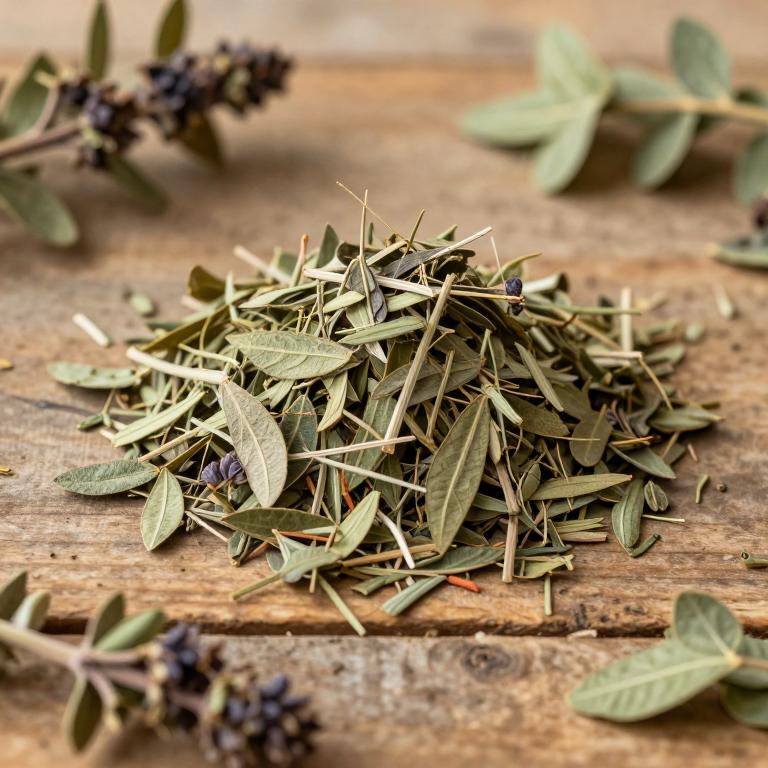
, scientifically known as Ocimum carnosum, is a potent medicinal shrub belonging to the Lamiaceae family. Renowned for its aromatic leaves, this plant offers significant therapeutic benefits, including antimicrobial, anti-inflammatory, and antioxidant properties. It is widely utilized in traditional medicine to treat various ailments and promote overall holistic wellness.
- Family
- Lamiaceae
- Native range
- Northern America
- Parts used
- Not available
- Common names
- Not available
- Scientific synonyms
- Lumnitzera Carnosa · Ocimum Atrovirens · 8 more
Names and Synonyms
Scientific Names
Accepted name
Ocimum carnosumSynonyms
- Lumnitzera carnosa
- Ocimum atrovirens
- Ocimum ebracteatum
- Ocimum montevideanum
- Ocimum selloi
- Ocimum selloi var. angustifolium
- Ocimum selloi var. tweedieanum
- Ocimum tweedieanum
- Ocimum selloi f. subintegrifolium
- Ocimum selloi f. serratum
Regional and Traditional Names
Spanish:
- albaca
- albahacar
Sources: Wikidata, Catalogue of Life
Taxonomical Classification
This plant belongs to the kingdom Plantae and is classified under the phylum Streptophyta and class Equisetopsida. Within the subclass Magnoliidae, it is categorized under the order Lamiales and the family Lamiaceae. Finally, it is identified by the genus Ocimum.
| Rank | Classification |
|---|---|
| Kingdom | Plantae |
| Phylum | Streptophyta |
| Class | Equisetopsida |
| Subclass | Magnoliidae |
| Order | Lamiales |
| Family | Lamiaceae |
| Genus | Ocimum |
Sources: The World Checklist of Vascular Plants (WCVP)
Distribution
This plant exhibits a wide presence across several key regions of Mexico. Specifically, it can be found growing throughout Mexico Central. Its range also extends into the diverse landscapes of Mexico Northeast. Furthermore, the species is distributed across the coastal areas of Mexico Gulf. Finally, it is documented in both the Mexico Southwest and Mexico Southeast regions.
| Region | Area |
|---|---|
| Mexico | Mexico Central |
| Mexico | Mexico Northeast |
| Mexico | Mexico Gulf |
| Mexico | Mexico Southwest |
| Mexico | Mexico Southeast |
| Central America | El Salvador |
| Northern South America | Venezuela |
| Western South America | Bolivia |
| Brazil | Brazil West-Central |
| Brazil | Brazil Northeast |
Sources: The World Checklist of Vascular Plants (WCVP)
Botanical Identification
Ecology
The ecology of Ocimum carnosum is characterized by a versatile distribution across diverse environments, ranging from sea level up to an elevation of 1000 m AMSL. This species thrives in a variety of habitats, demonstrating significant adaptability to both natural and human-modified landscapes. It is commonly found within Anthropogenic Areas (Área Antrópica), as well as in more complex forest ecosystems, specifically within Ombrophilous Forests (Floresta Ombrófila), which includes both Ombrophilous Rain Forests (Floresta Pluvial) and Mixed Ombrophilous Forests (Floresta Ombrófila Mista). This wide ecological amplitude allows the plant to occupy niches ranging from lowland disturbed sites to higher altitude forest interiors.
- Elevational range max:
- 1000 m AMSL
- Elevational range min:
- 0 m AMSL
- Habitat :
- Área Antrópica, Floresta Ombrófila (= Floresta Pluvial), Floresta Ombrófila Mista
Life history
The life history of Ocimum carnosum is characterized by its classification as a perennial plant, allowing it to persist through multiple growing seasons. In terms of its structural life form, it is categorized as a hemicryptophyte, a growth habit where the perennating buds are located at the soil surface, protected by leaf litter or other organic matter. This hemicryptophytic nature ensures its survival and ability to regenerate during unfavorable environmental conditions, maintaining its presence within its ecological niche over an extended period.
- Life form :
- hemicryptophyte
- Lifecycle :
- perennial
Morphology
The morphology of Ocimum carnosum is characterized by its growth form as a non-woody herb, specifically functioning as a forb. It is a self-supporting plant that does not exhibit climbing tendencies, such as being a liana or vine, and it maintains an independent existence rather than acting as an obligatory or facultative parasite. The plant is strictly terrestrial in its ecological habit, lacking any aquatic, semiaquatic, or epiphytic characteristics, whether as a holoepiphyte or hemiepiphyte. Its structure is defined by its non-woody nature, ensuring it remains a herbaceous species throughout its lifecycle.
- Aquatic :
- terrestrial
- Climber :
- self-supporting
- Epiphyte :
- terrestrial
- Growth form :
- herb
- Parasite :
- independent
- Woodiness :
- non-woody
Reproduction
Reproduction in Ocimum carnosum is primarily driven by the production of prolific quantities of small, lightweight seeds contained within specialized fruiting structures. The reproductive cycle relies on the development of these seeds, which exhibit a highly consistent and uniform mass profile. Specifically, the seed mass is characterized by a singular value where the mean, maximum, and minimum measurements are all identical, recorded at 6e-04 g. This lack of variance in seed mass suggests a highly stabilized reproductive strategy, ensuring that each unit produced for dispersal maintains a precise weight of 0.0006 g, which likely facilitates efficient dissemination through wind or mechanical disturbance within its natural habitat.
- Seed mass mean:
- 6e-04 g
Sources: Global Inventory of Floras and Traits (GIFT)
Chemicals
Ocimum carnosum has 4 reported phytochemicals identified across 0 scientific publications and several other databases. The most consistently reported chemicals include Methyl chavicol, Flavonoids, Methylchavicol, trans-Anethol.
| Chemical | Supporting sources | Consensus |
|---|---|---|
| Methyl chavicol | 2 supporting sources | ★☆☆☆☆ |
| Flavonoids | 1 supporting sources | ★☆☆☆☆ |
| Methylchavicol | 1 supporting sources | ★☆☆☆☆ |
| trans-Anethol | 1 supporting sources | ★☆☆☆☆ |
Methyl chavicol
- Anais da Academia Brasileira de Ciencias
- Environmental science and pollution research international
Flavonoids
- Journal of ethnopharmacology
Methylchavicol
- Natural product communications
trans-Anethol
- Anais da Academia Brasileira de Ciencias
Activities
Ocimum carnosum has 2 reported activities identified across 0 scientific publications and several other databases. The most consistently reported activities include Antispasmodic, Analgesic.
| Activity | Supporting sources | Consensus |
|---|---|---|
| Antispasmodic | 2 supporting sources | ★☆☆☆☆ |
| Analgesic | 1 supporting sources | ★☆☆☆☆ |
Antispasmodic
- Journal of ethnopharmacology
- Anais da Academia Brasileira de Ciencias
Analgesic
- Journal of ethnopharmacology
Preparations
Ocimum carnosum has 2 reported preparations identified across 0 scientific publications and several other databases. The most consistently reported preparations include essential oils, hydroethanolic extracts.
| Preparation | Supporting sources | Consensus |
|---|---|---|
| Essential oils | 2 supporting sources | ★☆☆☆☆ |
| Hydroethanolic extracts | 1 supporting sources | ★☆☆☆☆ |
Essential oils
- Environmental science and pollution research international
- Natural product communications
Hydroethanolic extracts
- Journal of ethnopharmacology