Xkakaltun
Ocimum campechianum · Accepted scientific name
Scientific literature: Very Sparse (7 studies) · ★☆☆☆☆
Xkakaltun, scientifically known as Ocimum campechianum, is a versatile aromatic herb native to tropical regions. Highly valued in traditional medicine, this species is celebrated for its potent antimicrobial and anti-inflammatory properties. Often used in infusions and topical remedies, it remains a vital botanical resource for holistic healing practices worldwide.
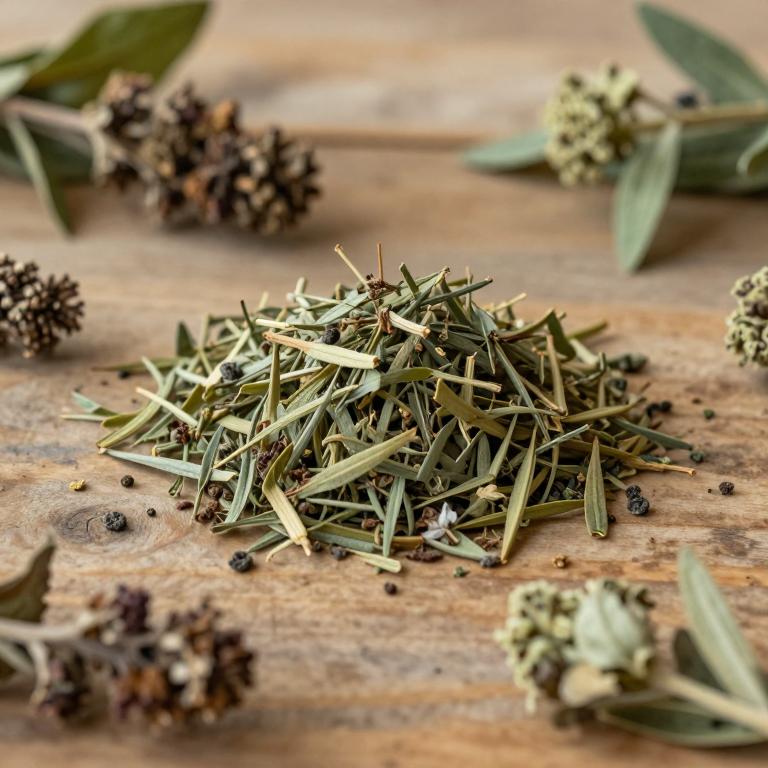
Names and Synonyms
Common Names
- Mosquito Basil
- wild sweet basil
- least basil
Scientific Names
Accepted name
Ocimum campechianumSynonyms
- Ocimum micranthum
- Ocimum pubescens
- Ocimum flexuosum
- Ocimum guatemalense
- Ocimum montanum
Regional and Traditional Names
Spanish:
- Ocimum micranthum
- Ocimum montanum
- Ocimum pubescens
- Albacarón
- Hierba de toro
- Albacaron
- Albahaca de monte
- Albácar
- albahaca
Sources: Wikidata, Catalogue of Life
Taxonomical Classification
This plant belongs to the kingdom Plantae and is classified under the phylum Streptophyta and class Equisetopsida. Within the subclass Magnoliidae, it is organized into the order Lamiales and the family Lamiaceae. Finally, it is categorized under the genus Ocimum.
| Rank | Classification |
|---|---|
| Kingdom | Plantae |
| Phylum | Streptophyta |
| Class | Equisetopsida |
| Subclass | Magnoliidae |
| Order | Lamiales |
| Family | Lamiaceae |
| Genus | Ocimum |
Sources: The World Checklist of Vascular Plants (WCVP)
Distribution
This plant exhibits a wide geographical distribution across several key regions in North America. In the United States, its presence is specifically noted within the state of Florida in the Southeast. Moving into Mexico, the species can be found spanning multiple diverse territories. It inhabits the Northeast, Northwest, and Southwest regions of the country. Furthermore, its range extends into the Southeast portion of Mexico as well.
| Region | Area |
|---|---|
| Southeastern U.S.A. | Florida |
| Mexico | Mexico Northeast |
| Mexico | Mexico Northwest |
| Mexico | Mexico Southwest |
| Mexico | Mexico Southeast |
| Central America | Belize |
| Central America | Costa Rica |
| Central America | El Salvador |
| Central America | Guatemala |
| Central America | Honduras |
Sources: The World Checklist of Vascular Plants (WCVP)
Botanical Identification
Ecology
Ocimum campechianum exhibits a diverse ecological plasticity, thriving across a wide spectrum of environmental conditions and distinct biomes. It is found in a variety of habitats, including Anthropogenic areas, Caatinga (strictu sensu), Cerrado (lato sensu), Seasonal Deciduous Forest, Seasonal Semi-deciduous Forest, Ombrophilous Forest (Pluvial Forest), Restinga, and the Amazonian Savanna. This broad distributional range allows the species to occupy both disturbed and natural landscapes. Furthermore, the plant demonstrates significant altitudinal adaptability, occurring from sea level up to an elevation of 1700 m AMSL.
- Elevational range max:
- 1700 m AMSL
- Elevational range min:
- 0 m AMSL
- Habitat :
- Área Antrópica, Caatinga (stricto sensu), Cerrado (lato sensu), Floresta Estacional Decidual, Floresta Estacional Semidecidual, Floresta Ombrófila (= Floresta Pluvial), Restinga, Savana Amazônica
Life history
The life history of Ocimum campechianum is characterized by a lifecycle classified as annual, meaning it completes its entire biological progression from germination to seed production within a single growing season. In terms of its ecological life form, the species functions as a therophyte, surviving the unfavorable seasons primarily as ephemeral seeds that await optimal conditions to germinate. Additionally, its growth habit can be described as a chamaephyte, indicating that its perennating buds are located close to the soil surface, which allows it to adapt to various environmental pressures during its short life cycle.
- Life form :
- chamaephyte
- Life form :
- therophyte
- Lifecycle :
- annual
Morphology
The morphology of Ocimum campechianum is characterized by its growth form as a non-woody herb and forb, typically reaching an average plant height of 0.4 m. It is a self-supporting plant that does not exhibit climbing behavior, such as being a liana or vine, and it functions as an independent organism rather than a parasite. The species is strictly terrestrial in its ecological habit, meaning it is neither aquatic, semiaquatic, nor an epiphyte (including holoepiphytes or hemiepiphytes), instead maintaining a standard ground-based growth pattern.
- Aquatic :
- terrestrial
- Climber :
- self-supporting
- Epiphyte :
- terrestrial
- Growth form :
- herb
- Growth form :
- forb
- Parasite :
- independent
- Plant height mean:
- 0.4 m
- Woodiness :
- non-woody
Physiology
The physiology of Ocimum campechianum is characterized by complex metabolic pathways optimized for survival in diverse tropical environments, particularly through its efficient photosynthetic processes and specialized secondary metabolism. The plant exhibits robust growth patterns driven by its ability to synthesize various essential oils and bioactive compounds within glandular trichomes, which serve both defensive and physiological functions. In terms of nutrient acquisition and soil interaction, the species does not function as a nitrogen fixer; it lacks the symbiotic relationship with diazotrophic bacteria, such as Rhizobium, required to convert atmospheric nitrogen into usable forms, meaning it relies entirely on the uptake of nitrates and ammonium from the soil through its root system. Its physiological regulation is further defined by its transpiration rates and osmotic adjustments, which allow it to maintain turgor pressure and metabolic activity under varying moisture availability.
- Nitrogen fixer :
- no
Reproduction
Reproduction in Ocimum campechanum is centered around the production of minute seeds that facilitate its dispersal and subsequent propagation. The reproductive output is characterized by highly consistent seed dimensions, with a measured seed mass that remains uniform across observations. Specifically, the seed mass exhibits a mean value of 0.00128 g, a figure that is mirrored by both the maximum and minimum recorded seed mass values of 0.00128 g. This lack of variance in seed mass indicates a highly stabilized reproductive mechanism, ensuring that each individual seed carries a standardized amount of biological material necessary for the initiation of new plant life.
- Seed mass mean:
- 0.00128 g
Sources: Global Inventory of Floras and Traits (GIFT)
Chemicals
Ocimum campechianum has 4 reported phytochemicals identified across 0 scientific publications and several other databases. The most consistently reported chemicals include DPPH, Flavonoids, Steroids, Terpenoids.
| Chemical | Supporting sources | Consensus |
|---|---|---|
| DPPH | 1 supporting sources | ★☆☆☆☆ |
| Flavonoids | 1 supporting sources | ★☆☆☆☆ |
| Steroids | 1 supporting sources | ★☆☆☆☆ |
| Terpenoids | 1 supporting sources | ★☆☆☆☆ |
DPPH
- Pharmacognosy research
Flavonoids
- Molecules (Basel, Switzerland)
Steroids
- Molecules (Basel, Switzerland)
Terpenoids
- Molecules (Basel, Switzerland)
Activities
Ocimum campechianum has 1 reported activities identified across 0 scientific publications and several other databases. The most consistently reported activities include Antioxidant.
| Activity | Supporting sources | Consensus |
|---|---|---|
| Antioxidant | 1 supporting sources | ★☆☆☆☆ |
Antioxidant
- Phytotherapy research : PTR
Conditions
Ocimum campechianum has 2 reported investigations on conditions identified across 0 scientific publications and several other databases. The most consistently reported conditions include hypertension, obesity.
| Condition | Supporting sources | Consensus |
|---|---|---|
| Hypertension | 1 supporting sources | ★☆☆☆☆ |
| Obesity | 1 supporting sources | ★☆☆☆☆ |
Hypertension
- Pharmacognosy research
Obesity
- Pharmacognosy research
Preparations
Ocimum campechianum has 3 reported preparations identified across 0 scientific publications and several other databases. The most consistently reported preparations include Methanol and aqueous extracts, Traditional preparations, ethanolic extracts.
| Preparation | Supporting sources | Consensus |
|---|---|---|
| Methanol and aqueous extracts | 1 supporting sources | ★☆☆☆☆ |
| Traditional preparations | 1 supporting sources | ★☆☆☆☆ |
| Ethanolic extracts | 1 supporting sources | ★☆☆☆☆ |
Methanol and aqueous extracts
- Phytotherapy research : PTR
Traditional preparations
- Pharmacognosy research
Ethanolic extracts
- Pharmacognosy research