Ocimum basilicum var. minimum
Ocimum basilicum var. minimum · Accepted scientific name
Scientific literature: Very Sparse (4 studies) · ★☆☆☆☆
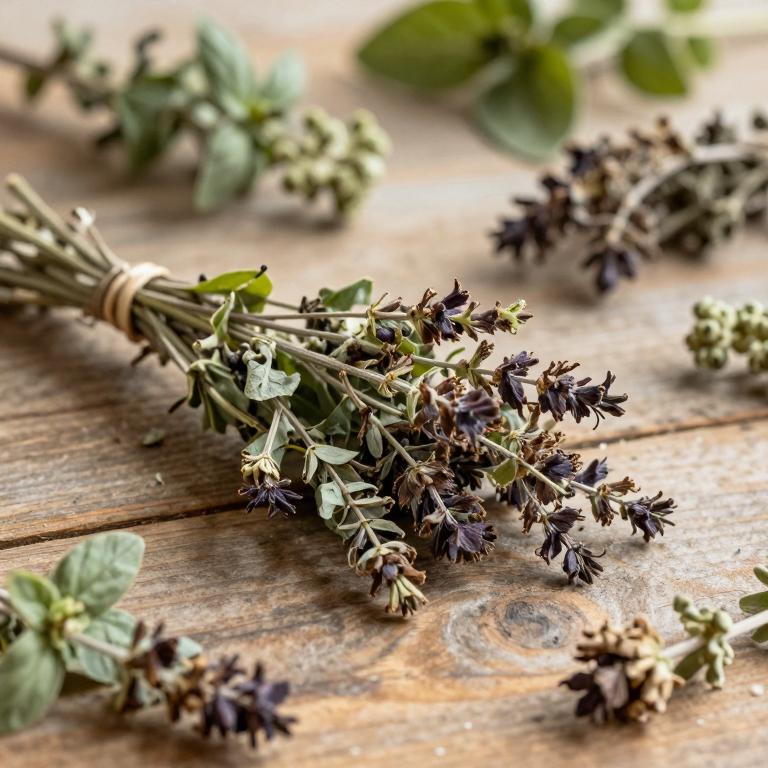
, scientifically known as Ocimum basilicum var. minimum, is a compact, aromatic variety of sweet basil prized for its culinary and medicinal properties. Rich in essential oils like linalool, this plant offers potent antioxidant, antibacterial, and anti-inflammatory benefits, making it a versatile staple in traditional herbal wellness practices.
- Family
- Lamiaceae
- Native range
- Africa
- Parts used
- Not available
- Common names
- Not available
- Scientific synonyms
- Ocimum Basilicum Var. Chamaeleonticum · Ocimum Minimum
Names and Synonyms
Scientific Names
Accepted name
Ocimum basilicum var. minimumSynonyms
- Ocimum basilicum var. chamaeleonticum
- Ocimum minimum
Sources: Wikidata
Taxonomical Classification
This plant belongs to the kingdom Plantae within the phylum Streptophyta and the class Equisetopsida. It is further classified under the subclass Magnoliidae and the order Lamiales, falling within the family Lamiaceae. Finally, it is identified by the genus Ocimum as the variety minimum.
| Rank | Classification |
|---|---|
| Kingdom | Plantae |
| Phylum | Streptophyta |
| Class | Equisetopsida |
| Subclass | Magnoliidae |
| Order | Lamiales |
| Family | Lamiaceae |
| Genus | Ocimum |
Sources: The World Checklist of Vascular Plants (WCVP)
Distribution
This plant exhibits a diverse geographical range spanning several distinct oceanic and continental regions. In West-Central Tropical Africa, its presence is specifically noted around the Gulf of Guinea Islands. Moving toward the Indian Subcontinent, it is widely distributed across both India and Sri Lanka. Furthermore, the species can be found in the South-Central Pacific, specifically within the Tuamotu Archipelago. This wide dispersal illustrates the plant's ability to inhabit various tropical environments across the globe.
| Region | Area |
|---|---|
| West-Central Tropical Africa | Gulf of Guinea Is. |
| Indian Subcontinent | India |
| Indian Subcontinent | Sri Lanka |
| South-Central Pacific | Tuamotu |
Sources: The World Checklist of Vascular Plants (WCVP)
Chemicals
Ocimum basilicum var. minimum has 4 reported phytochemicals identified across 0 scientific publications and several other databases. The most consistently reported chemicals include 1,8-Cineole, BETA-ELEMENE, Linalool, eugenol.
| Chemical | Supporting sources | Consensus |
|---|---|---|
| 1,8-Cineole | 1 supporting sources | ★☆☆☆☆ |
| BETA-ELEMENE | 1 supporting sources | ★☆☆☆☆ |
| Linalool | 1 supporting sources | ★☆☆☆☆ |
| eugenol | 1 supporting sources | ★☆☆☆☆ |
1,8-Cineole
- Natural product communications
BETA-ELEMENE
- Natural product communications
Linalool
- Natural product communications
eugenol
- Natural product communications