Ochradenus jagodowy
Ochradenus baccatus · Accepted scientific name
Scientific literature: Very Sparse (15 studies) · ★☆☆☆☆
Ochradenus jagodowy, scientifically known as Ochradenus baccatus, is a remarkable medicinal plant renowned for its potent therapeutic properties. Traditionally utilized in diverse healing practices, this species contains unique bioactive compounds that offer significant antioxidant and anti-inflammatory benefits, making it a vital subject for modern pharmacological research and herbal medicine.
- Family
- Resedaceae
- Native range
- Africa
- Parts used
- Leaf
- Common names
- Taily Weed
- Scientific synonyms
- Ochradenus Rostratus · Asparagus Deltae · 1 more
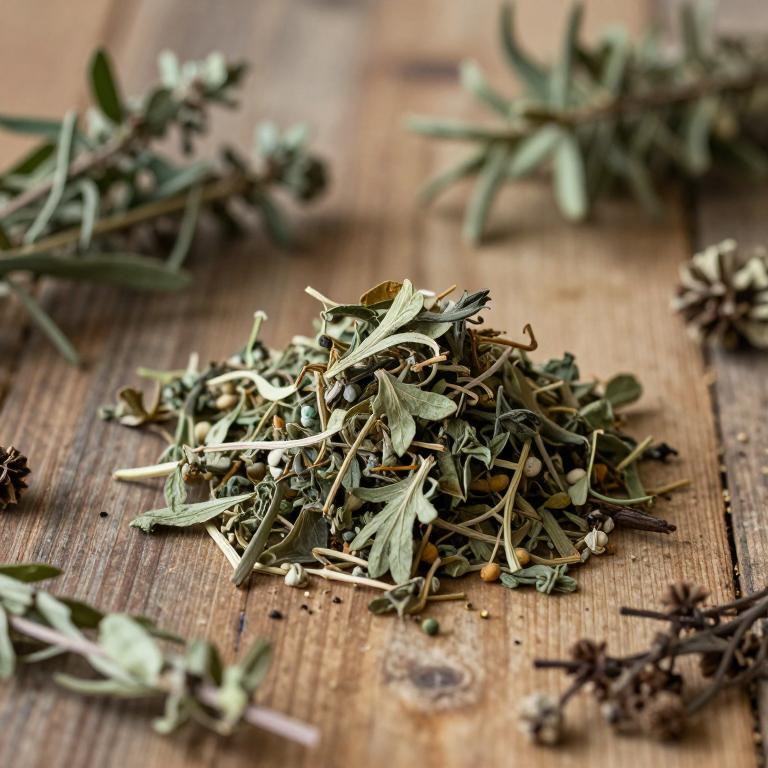
Names and Synonyms
Common Names
- Taily Weed
Scientific Names
Accepted name
Ochradenus baccatusSynonyms
- Ochradenus rostratus
- Asparagus deltae
- Ochradenus baccatus var. scandens
Regional and Traditional Names
Spanish:
- Ochradenus jagodowy
German:
- Ochradenus jagodowy
French:
- Ochradenus jagodowy
Sources: Wikidata, Catalogue of Life
Taxonomical Classification
This plant belongs to the kingdom Plantae and is classified under the phylum Streptophyta and the class Equisetopsida. Within the subclass Magnoliidae, it is situated in the order Brassicales and the family Resedaceae. Finally, the species is identified by its genus, Ochradenus, and its specific name, baccatus.
| Rank | Classification |
|---|---|
| Kingdom | Plantae |
| Phylum | Streptophyta |
| Class | Equisetopsida |
| Subclass | Magnoliidae |
| Order | Brassicales |
| Family | Resedaceae |
| Genus | Ochradenus |
Sources: The World Checklist of Vascular Plants (WCVP)
Distribution
This plant, Ochradenus baccatus, exhibits a specific distribution pattern across several regions of the African continent. In Northern Africa, it can be found growing within the territories of Egypt and Libya. Its presence extends into Northeast Tropical Africa as well. Specifically, the species inhabits the lands of Chad, Djibouti, and Eritrea. Together, these locations define the primary geographical range for this medicinal plant.
| Region | Area |
|---|---|
| Northern Africa | Egypt |
| Northern Africa | Libya |
| Northeast Tropical Africa | Chad |
| Northeast Tropical Africa | Djibouti |
| Northeast Tropical Africa | Eritrea |
| Northeast Tropical Africa | Ethiopia |
| Northeast Tropical Africa | Somalia |
| Northeast Tropical Africa | Sudan-South Sudan |
| Western Asia | Iran |
| Western Asia | Palestine |
Sources: The World Checklist of Vascular Plants (WCVP)
Botanical Identification
Life history
The life history of Ochradenus baccatus is characterized by a perennial lifecycle, allowing the plant to persist through multiple growing seasons rather than completing its cycle within a single year. In terms of its structural growth strategy, the species is classified as a chamaephyte, a life form where the majority of the plant's regenerative buds are located close to the soil surface, often just above it. This specific life form, categorized consistently as a chamaephyte in both its primary and secondary biological assessments, enables the plant to endure various environmental stressors by maintaining its vital parts near the ground level.
- Life form :
- chamaephyte
- Lifecycle :
- perennial
Morphology
The morphology of Ochradenus baccatus is characterized by a versatile growth habit that can manifest as either a herb or a shrub, depending on environmental conditions. It exhibits a woody constitution, providing structural integrity to its frame. While it possesses the capacity to inhabit aquatic and semiaquatic environments, it is primarily categorized as a terrestrial species. In terms of its climbing capabilities, the plant is self-supporting, functioning as a self-supporting liana or vine rather than relying on external hosts. Furthermore, it is an independent organism that does not function as a parasite, and it maintains a terrestrial existence rather than acting as an epiphyte.
- Aquatic :
- terrestrial
- Climber :
- self-supporting
- Epiphyte :
- terrestrial
- Growth form :
- herb
- Growth form :
- shrub
- Parasite :
- independent
- Woodiness :
- woody
Physiology
The physiology of Ochradenus baccatus is characterized by its specific metabolic processes, most notably its reliance on a C3 photosynthetic pathway. This means that the plant fixes carbon dioxide through the Calvin cycle, utilizing the enzyme RuBisCO to catalyze the initial carboxylation step, which results in the direct formation of a three-carbon compound. This carbon fixation strategy dictates the plant's water-use efficiency and its adaptive responses to varying environmental light intensities and temperature fluctuations. Through this C3 mechanism, the plant manages its gas exchange and energy production to support its growth and medicinal secondary metabolite synthesis.
- Photosynthetic pathway :
- C3
Reproduction
The reproduction of Ochradenus baccatus is characterized by a specific seasonal flowering cycle and the production of minute seeds. The flowering period typically begins in March and concludes in April, although the onset and duration of flowering can be variable across different months of the year. Following pollination, the plant produces very lightweight seeds, with a mean seed mass of approximately 0.001103333 g. The individual seed weight exhibits slight variation, ranging from a minimum mass of 0.00084 g to a maximum mass of 0.00156 g.
- Flowering time :
- Mar
- Flowering time :
- Apr
- Seed mass max:
- 0.00156 g
- Seed mass mean:
- 0.001103333 g
- Seed mass min:
- 0.00084 g
Sources: Global Inventory of Floras and Traits (GIFT)
Plant Parts
Ochradenus baccatus has 1 reported plant parts identified across 1 scientific publications and several other databases that are studied for medicinal purposes. The most consistently reported plant part include leaf.
| Plant part | Supporting sources | Consensus |
|---|---|---|
| Leaf | 1 supporting sources | ★☆☆☆☆ |
Leaf
- Life (Basel, Switzerland)
Chemicals
Ochradenus baccatus has 2 reported phytochemicals identified across 1 scientific publications and several other databases. The most consistently reported chemicals include Flavonoids, Fatty acids.
| Chemical | Supporting sources | Consensus |
|---|---|---|
| Flavonoids | 2 supporting sources | ★☆☆☆☆ |
| Fatty acids | 1 supporting sources | ★☆☆☆☆ |
Flavonoids
- Insects
- Life (Basel, Switzerland)
Fatty acids
- Life (Basel, Switzerland)
Activities
Ochradenus baccatus has 2 reported activities identified across 1 scientific publications and several other databases. The most consistently reported activities include Antimicrobial, Antioxidant.
| Activity | Supporting sources | Consensus |
|---|---|---|
| Antimicrobial | 1 supporting sources | ★☆☆☆☆ |
| Antioxidant | 1 supporting sources | ★☆☆☆☆ |
Antimicrobial
- Heliyon
Antioxidant
- Heliyon
Conditions
Ochradenus baccatus has 8 reported investigations on conditions identified across 1 scientific publications and several other databases. The most consistently reported conditions include Alzheimer's disease, Enterococcus faecalis, Escherichia coli, Pseudomonas aeruginosa, Salmonella typhimurium.
| Condition | Supporting sources | Consensus |
|---|---|---|
| Alzheimer's disease | 1 supporting sources | ★☆☆☆☆ |
| Enterococcus faecalis | 1 supporting sources | ★☆☆☆☆ |
| Escherichia coli | 1 supporting sources | ★☆☆☆☆ |
| Pseudomonas aeruginosa | 1 supporting sources | ★☆☆☆☆ |
| Salmonella typhimurium | 1 supporting sources | ★☆☆☆☆ |
| Staphylococcus epidermidis | 1 supporting sources | ★☆☆☆☆ |
| Staphylococcus saprophyticus | 1 supporting sources | ★☆☆☆☆ |
| Streptococcus salivarius | 1 supporting sources | ★☆☆☆☆ |
Alzheimer's disease
- Life (Basel, Switzerland)
Enterococcus faecalis
- Heliyon
Escherichia coli
- Heliyon
Pseudomonas aeruginosa
- Heliyon
Salmonella typhimurium
- Heliyon
Staphylococcus epidermidis
- Heliyon
Staphylococcus saprophyticus
- Heliyon
Streptococcus salivarius
- Heliyon
Preparations
Ochradenus baccatus has 5 reported preparations identified across 1 scientific publications and several other databases. The most consistently reported preparations include 70 % ethanol extracts, extracts, leaf extract, methanolic extracts, methanolic extracts of aerial parts.
| Preparation | Supporting sources | Consensus |
|---|---|---|
| 70 % ethanol extracts | 1 supporting sources | ★☆☆☆☆ |
| Extracts | 1 supporting sources | ★☆☆☆☆ |
| Leaf extract | 1 supporting sources | ★☆☆☆☆ |
| Methanolic extracts | 1 supporting sources | ★☆☆☆☆ |
| Methanolic extracts of aerial parts | 1 supporting sources | ★☆☆☆☆ |
70 % ethanol extracts
- Heliyon
Extracts
- Archiv fur experimentelle Veterinarmedizin
Leaf extract
- Life (Basel, Switzerland)
Methanolic extracts
- Insects
Methanolic extracts of aerial parts
- Saudi journal of biological sciences