Coast Boxwood
Ochna natalitia · Accepted scientific name
Scientific literature: Very Sparse (4 studies) · ★☆☆☆☆
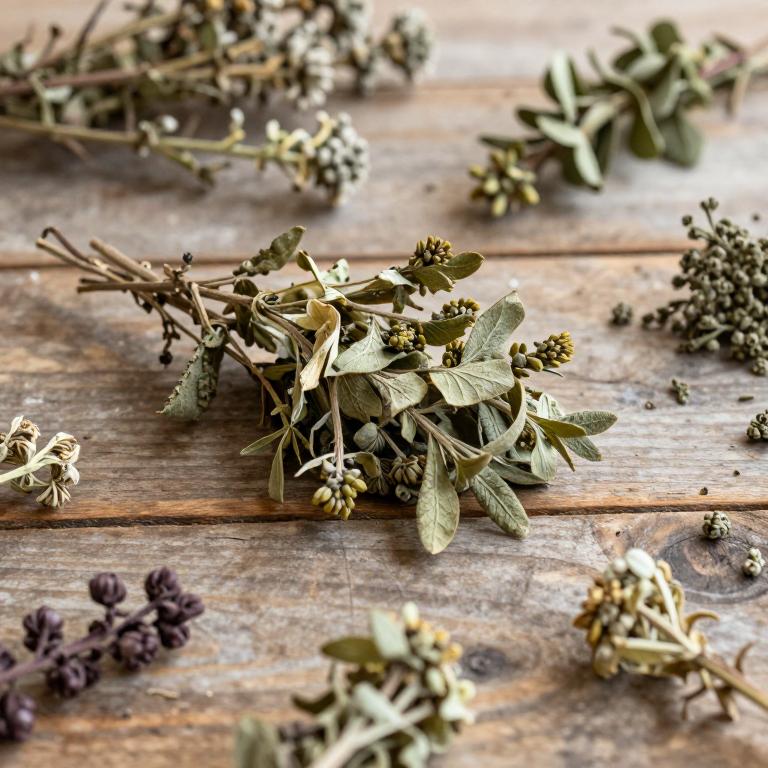
Coast Boxwood, scientifically known as Ochna natalitia, is a versatile, evergreen shrub native to Southern Africa. Renowned for its glossy foliage and vibrant seasonal changes, it serves both ornamental and medicinal purposes. Traditionally, various parts of the plant are utilized in folk remedies to treat diverse ailments and inflammations.
Names and Synonyms
Common Names
- Coast Boxwood
- Coast Redwood
- Coastal-Boxwood
- Coastal-Redwood
- Natal Plane
- Showy Ochna
- showy plane
Scientific Names
Accepted name
Ochna natalitiaSynonyms
- Ochna chilversii
- Diporidium natalitium
- Ochna atropurpurea var. natalitia
Sources: Wikidata, Catalogue of Life
Taxonomical Classification
This plant belongs to the kingdom Plantae within the phylum Streptophyta and the class Equisetopsida. It is further classified under the subclass Magnoliidae and the order Malpighiales. Finally, it is a member of the family Ochnacaceae, situated within the genus Ochna.
| Rank | Classification |
|---|---|
| Kingdom | Plantae |
| Phylum | Streptophyta |
| Class | Equisetopsida |
| Subclass | Magnoliidae |
| Order | Malpighiales |
| Family | Ochnaceae |
| Genus | Ochna |
Sources: The World Checklist of Vascular Plants (WCVP)
Distribution
This plant is indigenous to several key regions across Southern Africa. It can be found growing within the diverse landscapes of the Cape Provinces. Additionally, its range extends into the lush areas of KwaZulu-Natal. The species is also distributed throughout Esватини, contributing to the regional biodiversity. Finally, its presence is noted within the Northern Provinces of the subcontinent.
| Region | Area |
|---|---|
| Southern Africa | Cape Provinces |
| Southern Africa | KwaZulu-Natal |
| Southern Africa | Eswatini |
| Southern Africa | Northern Provinces |
Sources: The World Checklist of Vascular Plants (WCVP)
Botanical Identification
Ecology
The ecology of Ochna natalitia is characterized by a broad altitudinal distribution, allowing it to thrive across diverse topographical landscapes. This species is found inhabiting environments ranging from low-lying areas at an elevation of 5 m AMSL to significant mountainous regions reaching up to a maximum of 1524 m AMSL. This wide elevational range suggests an ecological adaptability to varying temperature gradients and atmospheric pressures, enabling the plant to establish itself in a variety of subtropical and tropical ecosystems within its native habitat.
- Elevational range max:
- 1524 m AMSL
- Elevational range min:
- 5 m AMSL
Life history
The life history of Ochna natalitia is characterized by its status as a perennial plant, allowing it to persist in its environment through multiple growing seasons. As a long-lived species, it establishes a stable presence within its natural habitat, often developing a robust woody structure over time. Its development follows a continuous cycle of growth, flowering, and fruiting, which supports its long-term survival and reproductive success within its ecological niche.
- Lifecycle :
- perennial
Morphology
The morphology of Ochna natalitia is characterized by a woody, self-supporting shrub growth form that functions as an independent organism, neither acting as a parasite nor an epiphyte, as it maintains a terrestrial habit. This plant exhibits a significant range in stature, with heights varying from a minimum of 0.15 m to a maximum of 10 m. Its structural development is defined by its woody nature, providing the necessary stability for its shrubby habit within its terrestrial habitat.
- Aquatic :
- terrestrial
- Climber :
- self-supporting
- Epiphyte :
- terrestrial
- Growth form :
- shrub
- Parasite :
- independent
- Plant height max:
- 10 m
- Plant height min:
- 0.15 m
- Woodiness :
- woody
Physiology
The physiology of Ochna natalitia is fundamentally characterized by its use of the C3 photosynthetic pathway, which dictates its metabolic processes and water-use efficiency. As a C3 plant, it utilizes the Calvin cycle to fix atmospheric carbon dioxide directly through the enzyme Rubisco, a mechanism that is highly efficient under moderate temperatures and sufficient moisture levels. This metabolic strategy implies that the plant undergoes photorespiration when environmental conditions become excessively hot or dry, as Rubisco may fix oxygen instead of carbon dioxide. Consequently, its physiological adaptations are geared toward managing transpiration rates and maintaining turgor pressure to support the energy demands of its growth cycle. The reliance on this specific photosynthetic pathway influences its leaf morphology and gas exchange dynamics, ensuring optimal carbohydrate production within its native ecological niches.
- Photosynthetic pathway :
- C3
Sources: Global Inventory of Floras and Traits (GIFT)
Chemicals
Ochna natalitia has 1 reported phytochemicals identified across 0 scientific publications and several other databases. The most consistently reported chemicals include acetone.
| Chemical | Supporting sources | Consensus |
|---|---|---|
| acetone | 1 supporting sources | ★☆☆☆☆ |
acetone
- Pharmaceutical biology
Activities
Ochna natalitia has 2 reported activities identified across 0 scientific publications and several other databases. The most consistently reported activities include Antifungal, Antioxidant.
| Activity | Supporting sources | Consensus |
|---|---|---|
| Antifungal | 1 supporting sources | ★☆☆☆☆ |
| Antioxidant | 1 supporting sources | ★☆☆☆☆ |
Antifungal
- Pharmaceutical biology
Antioxidant
- Pharmaceutical biology
Conditions
Ochna natalitia has 1 reported investigations on conditions identified across 0 scientific publications and several other databases. The most consistently reported conditions include Cryptococcus neoformans.
| Condition | Supporting sources | Consensus |
|---|---|---|
| Cryptococcus neoformans | 1 supporting sources | ★☆☆☆☆ |
Cryptococcus neoformans
- Pharmaceutical biology