water lily genus
Nymphaea · Accepted scientific name
Scientific literature: Very Sparse (12 studies) · ★☆☆☆☆
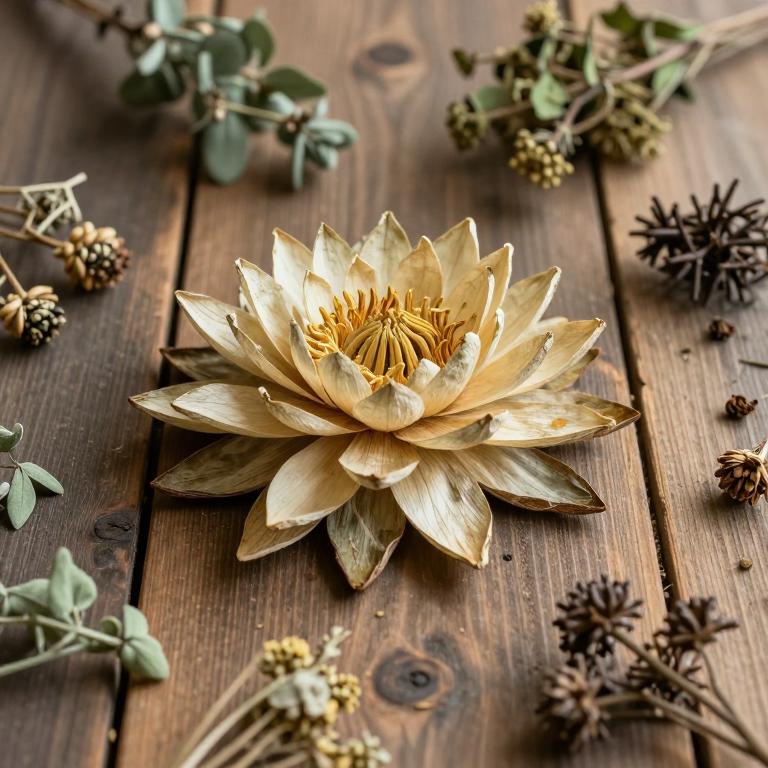
Water lily genus, scientifically known as Nymphaea, is a diverse group of aquatic perennials celebrated for their striking blooms. Beyond their aesthetic beauty, these plants hold significant medicinal value in various traditional practices, often utilized for their calming properties and potential to support holistic wellness and skin health.
Names and Synonyms
Common Names
- water-lily
- Waterlilies
- water-lilies
- white water-lilies
Scientific Names
Accepted name
NymphaeaSynonyms
- Leuconymphaea
- Ondinea
- Castalia
Regional and Traditional Names
Spanish:
- Leuconymphaea
- Nimphea
- Castalia
- Nimphaea
- Nymphea
- Nenúfar
- Ninfas o nenúfares
German:
- Seerosen
- Seerose
- Wasserrosen
- Seerosen
French:
- Nymphea
- Nymphéa
- Nymphéas
Sources: Wikidata, Catalogue of Life
Taxonomical Classification
This plant belongs to the kingdom Plantae and is classified under the phylum Streptophyta and class Equisetopsida. Within the subclass Magnoliidae, it is organized under the order Nymphaeales and the family Nymphaeaceae. Finally, it is identified by its genus, Nymphaea.
| Rank | Classification |
|---|---|
| Kingdom | Plantae |
| Phylum | Streptophyta |
| Class | Equisetopsida |
| Subclass | Magnoliidae |
| Order | Nymphaeales |
| Family | Nymphaeaceae |
| Genus | Nymphaea |
Sources: The World Checklist of Vascular Plants (WCVP)
Distribution
This plant exhibits a specific distribution pattern across the northern regions of Europe. It can be found growing in the natural landscapes of Denmark. Its presence is also noted within the borders of Finland. Furthermore, the species is distributed throughout Great Britain and Ireland. Finally, the plant extends its range to include the territory of Norway.
| Region | Area |
|---|---|
| Northern Europe | Denmark |
| Northern Europe | Finland |
| Northern Europe | Great Britain |
| Northern Europe | Ireland |
| Northern Europe | Norway |
| Northern Europe | Sweden |
| Middle Europe | Austria |
| Middle Europe | Belgium |
| Middle Europe | Czechia-Slovakia |
| Middle Europe | Germany |
Sources: The World Checklist of Vascular Plants (WCVP)
Plant Parts
Nymphaea has 1 reported plant parts identified across 1 scientific publications and several other databases that are studied for medicinal purposes. The most consistently reported plant part include flower.
| Plant part | Supporting sources | Consensus |
|---|---|---|
| Flower | 1 supporting sources | ★☆☆☆☆ |
Flower
- Journal of ethnopharmacology
Chemicals
Nymphaea has 4 reported phytochemicals identified across 1 scientific publications and several other databases. The most consistently reported chemicals include CATALASE, Peroxidase, Superoxide dismutase, betaine.
| Chemical | Supporting sources | Consensus |
|---|---|---|
| CATALASE | 1 supporting sources | ★☆☆☆☆ |
| Peroxidase | 1 supporting sources | ★☆☆☆☆ |
| Superoxide dismutase | 1 supporting sources | ★☆☆☆☆ |
| betaine | 1 supporting sources | ★☆☆☆☆ |
CATALASE
- Horticulture research
Peroxidase
- Horticulture research
Superoxide dismutase
- Horticulture research
betaine
- Horticulture research
Activities
Nymphaea has 4 reported activities identified across 1 scientific publications and several other databases. The most consistently reported activities include Antidiabetic, Antioxidant, Hypnotic, Narcotic.
| Activity | Supporting sources | Consensus |
|---|---|---|
| Antidiabetic | 1 supporting sources | ★☆☆☆☆ |
| Antioxidant | 1 supporting sources | ★☆☆☆☆ |
| Hypnotic | 1 supporting sources | ★☆☆☆☆ |
| Narcotic | 1 supporting sources | ★☆☆☆☆ |
Antidiabetic
- BioMed research international
Antioxidant
- BioMed research international
Hypnotic
- Journal of psychoactive drugs
Narcotic
- Journal of psychoactive drugs
Conditions
Nymphaea has 2 reported investigations on conditions identified across 1 scientific publications and several other databases. The most consistently reported conditions include cold stress, type 2 diabetes mellitus.
| Condition | Supporting sources | Consensus |
|---|---|---|
| Cold stress | 1 supporting sources | ★☆☆☆☆ |
| Type 2 diabetes mellitus | 1 supporting sources | ★☆☆☆☆ |
Cold stress
- Horticulture research
Type 2 diabetes mellitus
- BioMed research international