Water Elder
Nuxia oppositifolia · Accepted scientific name
Scientific literature: Very Sparse (5 studies) · ★☆☆☆☆
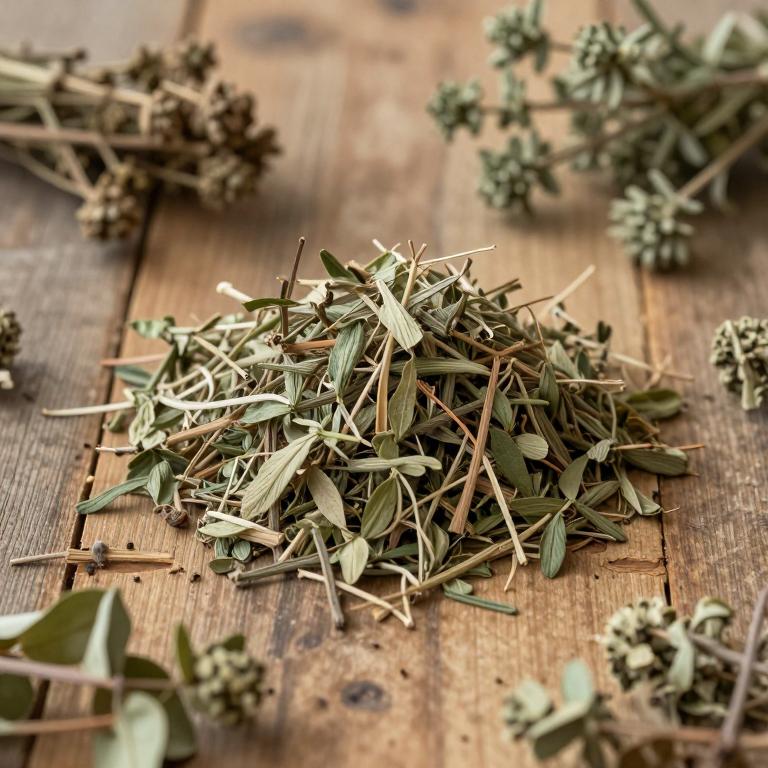
Water Elder, scientifically known as Nuxia oppositifolia, is a resilient aquatic perennial often found in wetland ecosystems. Renowned for its medicinal properties, this plant is traditionally utilized to treat inflammation and digestive ailments. Its unique ability to thrive in saturated soils makes it a vital component of riparian biodiversity.
Names and Synonyms
Common Names
- River-Elder
- Water-Elder
- river nuxia
Scientific Names
Accepted name
Nuxia oppositifoliaSynonyms
- Nuxia schlechteri
- Nuxia dentata
- Nuxia autunesii
- Nuxia tomentella
- Nuxia dentata var. glutinosa
- Nuxia capitata var. tomentella
- Nuxia tomentella var. typica
- Nuxia tomentella var. meridionalis
- Nuxia tomentella f. microphylla
- Nuxia tomentella f. farinosa
- Nuxia tomentella f. subdentata
- Lachnopylis oppositifolia
Sources: Wikidata, Catalogue of Life
Taxonomical Classification
This plant belongs to the kingdom Plantae and the phylum Streptophyta, placing it within the class Equisetopsida and subclass Magnoliidae. It is further classified under the order Lamiales and the family Stilbaceae. Finally, it is identified by the genus Nuxia (noting the corrected spelling of Nuxia oppositifolia).
| Rank | Classification |
|---|---|
| Kingdom | Plantae |
| Phylum | Streptophyta |
| Class | Equisetopsida |
| Subclass | Magnoliidae |
| Order | Lamiales |
| Family | Stilbaceae |
| Genus | Nuxia |
Sources: The World Checklist of Vascular Plants (WCVP)
Distribution
This plant exhibits a specific distribution pattern across several regions of the African continent. In West-Central Tropical Africa, it can be found within the Democratic Republic of the Congo. Its presence extends significantly into Northeast Tropical Africa as well. Specifically, it is located in the nations of Djibouti, Eritrea, and Ethiopia. Furthermore, the species is also documented to grow in Somalia.
| Region | Area |
|---|---|
| West-Central Tropical Africa | DR Congo |
| Northeast Tropical Africa | Djibouti |
| Northeast Tropical Africa | Eritrea |
| Northeast Tropical Africa | Ethiopia |
| Northeast Tropical Africa | Somalia |
| Northeast Tropical Africa | Sudan-South Sudan |
| East Tropical Africa | Kenya |
| East Tropical Africa | Tanzania |
| East Tropical Africa | Uganda |
| South Tropical Africa | Angola |
Sources: The World Checklist of Vascular Plants (WCVP)
Botanical Identification
Ecology
The ecology of Nuxia oppositifolia is defined by its ability to thrive across a diverse vertical gradient within its habitat, exhibiting significant adaptability to varying altitudinal conditions. This species occupies a broad ecological niche, with its distribution spanning an elevational range that begins at a minimum of 50 m AMSL and extends to a maximum of 1325 m AMSL. This wide altitudinal breadth suggests that the plant is capable of tolerating a variety of microclimates, ranging from lower-altitude, potentially warmer environments to higher-altitude zones characterized by different temperature regimes and moisture availability. Such a range indicates a resilient ecological profile, allowing the species to inhabit diverse landscapes within its geographic domain.
- Elevational range max:
- 1325 m AMSL
- Elevational range min:
- 50 m AMSL
Life history
The life history of Nuxia oppositifolia is characterized by its status as a perennial plant, allowing it to persist through multiple growing seasons. It exhibits a nanophanerophyte life form, meaning its woody stems remain very close to the ground or are only slightly elevated. Additionally, the species maintains an evergreen deciduousness, ensuring that its foliage remains functional and present throughout its life cycle rather than being shed seasonally.
- Deciduousness :
- evergreen
- Life form :
- nanophanerophyte
- Lifecycle :
- perennial
Morphology
The morphology of Nuxia oppositifolia is characterized by a woody growth form that manifests as both a tree and a shrub. As a self-supporting plant, it does not function as a climber or an epiphyte, maintaining a terrestrial existence rather than an aquatic or semiaquatic one. The species is an independent organism, exhibiting no parasitic behavior. In terms of stature, the plant displays significant variability in height; while it can reach a minimum of 1 meter, it typically grows to a mean height of 12 meters, with maximum recorded heights reaching up to 7 meters in certain contexts.
- Aquatic :
- terrestrial
- Climber :
- self-supporting
- Epiphyte :
- terrestrial
- Growth form :
- tree
- Growth form :
- shrub
- Parasite :
- independent
- Plant height max:
- 7 m
- Plant height mean:
- 12 m
- Plant height min:
- 1 m
- Woodiness :
- woody
Physiology
The physiology of Nuxia oppositifolia is characterized by complex metabolic processes adapted to its native woodland and forest habitats. As a woody angiosperm, it relies on efficient photosynthetic pathways to support its structural growth and seasonal flowering cycles. Regarding its nutrient acquisition strategies, the plant does not engage in symbiotic relationships with diazotrophic bacteria to convert atmospheric gases into organic forms; specifically, it is not a nitrogen fixer, as indicated by its lack of specialized root nodules for this purpose. Instead, its nitrogen requirements are met through the uptake of nitrates and ammonium ions from the soil via its root system. This reliance on soil-available nitrogen dictates its distribution patterns, favoring environments with sufficient organic matter decomposition to sustain its physiological demands for protein synthesis and enzymatic function.
- Nitrogen fixer :
- no
Reproduction
The reproduction of Nuxia oppositifolia is centered around the production of seeds that exhibit a highly uniform and extremely lightweight physical profile. Based on botanical data, the seeds produced by this species are characterized by a consistent seed mass, with a mean weight of 1e-05 g. This measurement is exceptionally precise, as both the maximum and minimum observed seed masses are also recorded at 1e-05 g, indicating a lack of significant variance in the weight of the individual reproductive units. Such minute seed mass suggests a reproductive strategy that may favor dispersal via wind or specialized mechanisms suited for very small, lightweight particles.
- Seed mass mean:
- 1e-05 g
Sources: Global Inventory of Floras and Traits (GIFT)
Chemicals
Nuxia oppositifolia has 2 reported phytochemicals identified across 0 scientific publications and several other databases. The most consistently reported chemicals include 3-Oxolupenal, Katononic acid.
| Chemical | Supporting sources | Consensus |
|---|---|---|
| 3-Oxolupenal | 1 supporting sources | ★☆☆☆☆ |
| Katononic acid | 1 supporting sources | ★☆☆☆☆ |
3-Oxolupenal
- Biomolecules
Katononic acid
- Biomolecules
Activities
Nuxia oppositifolia has 2 reported activities identified across 0 scientific publications and several other databases. The most consistently reported activities include Antidiabetic, Antioxidant.
| Activity | Supporting sources | Consensus |
|---|---|---|
| Antidiabetic | 1 supporting sources | ★☆☆☆☆ |
| Antioxidant | 1 supporting sources | ★☆☆☆☆ |
Antidiabetic
- Biomolecules
Antioxidant
- Biomolecules
Conditions
Nuxia oppositifolia has 1 reported investigations on conditions identified across 0 scientific publications and several other databases. The most consistently reported conditions include type 2 diabetes mellitus.
| Condition | Supporting sources | Consensus |
|---|---|---|
| Type 2 diabetes mellitus | 1 supporting sources | ★☆☆☆☆ |
Type 2 diabetes mellitus
- Biomolecules
Preparations
Nuxia oppositifolia has 1 reported preparations identified across 0 scientific publications and several other databases. The most consistently reported preparations include methanolic crude extract.
| Preparation | Supporting sources | Consensus |
|---|---|---|
| Methanolic crude extract | 1 supporting sources | ★☆☆☆☆ |
Methanolic crude extract
- Biomolecules