Notoseris khasiana
Notoseris khasiana · Accepted scientific name
Scientific literature: Very Sparse (5 studies) · ★☆☆☆☆
, scientifically known as Notoseris khasiana, is a rare medicinal herb native to the Khasi Hills of Meghalaya, India. Renowned for its diverse therapeutic properties, this plant is traditionally used in folk medicine to treat various ailments, offering significant potential for pharmacological research and the development of natural remedies.
- Family
- Asteraceae
- Native range
- Asia-Temperate
- Parts used
- Not available
- Common names
- Not available
- Scientific synonyms
- Lactuca Khasiana · Prenanthes Khasiana · 1 more
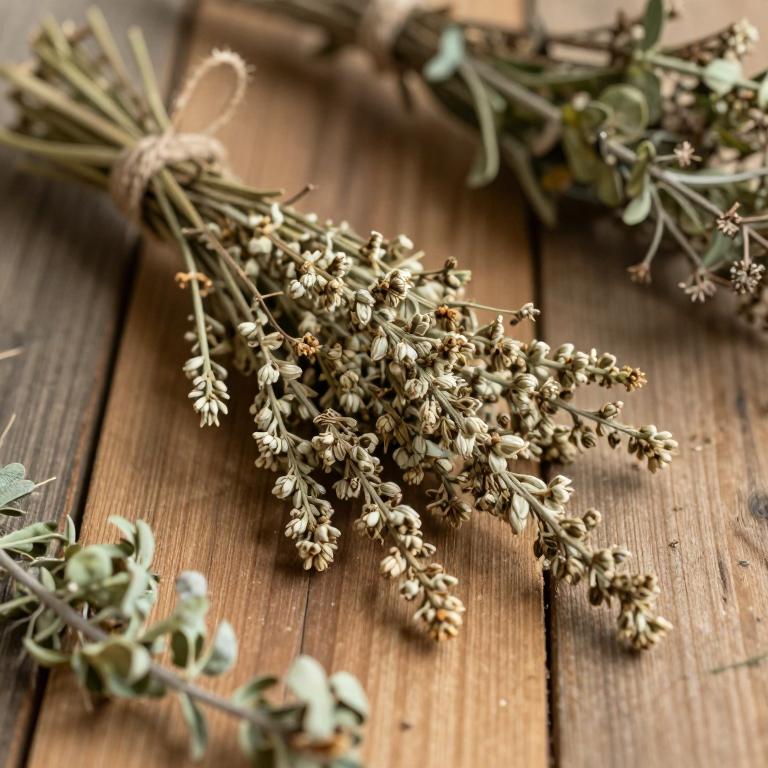
Names and Synonyms
Scientific Names
Accepted name
Notoseris khasianaSynonyms
- Lactuca khasiana
- Prenanthes khasiana
- Notoseris rhombiformis
Sources: Wikidata
Taxonomical Classification
This plant belongs to the kingdom Plantae and is classified under the phylum Streptophyta and class Equisetopsida. Within the subclass Magnoliidae, it is organized under the order Asterales and the family Asteraceae. Finally, its specific taxonomic identity is defined by the genus Notoseris.
| Rank | Classification |
|---|---|
| Kingdom | Plantae |
| Phylum | Streptophyta |
| Class | Equisetopsida |
| Subclass | Magnoliidae |
| Order | Asterales |
| Family | Asteraceae |
| Genus | Notoseris |
Sources: The World Checklist of Vascular Plants (WCVP)
Distribution
This plant exhibits a specific geographical distribution across several key regions in Asia. Within China, it is primarily located in the South-Central areas. In the Indian Subcontinent, its presence is noted specifically in the state of Assam. Furthermore, the species extends into the Indo-China region, particularly within Myanmar. These locations highlight the plant's preference for these particular subtropical environments.
| Region | Area |
|---|---|
| China | China South-Central |
| Indian Subcontinent | Assam |
| Indo-China | Myanmar |
Sources: The World Checklist of Vascular Plants (WCVP)
Botanical Identification
Ecology
The ecology of Notoseris khasiana is defined by its highly specialized habitat requirements, specifically occurring within high-altitude montane environments. This species exhibits a very narrow ecological niche, as its distribution is concentrated at a consistent elevation of 2700 m AMSL. This precise elevation profile, where the minimum, mean, and maximum recorded values all converge at 2700 m AMSL, suggests that the plant is an altitudinal specialist. Such a restricted range implies that Notoseris khasiana is adapted to the specific climatic conditions, temperature regimes, and atmospheric pressures unique to this particular height above mean sea level, likely thriving in the unique microclimates provided by high-elevation terrain.
- Elevational range max:
- 2700 m AMSL
Life history
The life history of Notoseris khasiana is characterized by its status as a perennial plant, meaning it persists through multiple growing seasons rather than completing its life cycle in a single year. As a perennial species, it maintains its physiological functions and structural integrity over an extended period, allowing it to establish a more permanent presence within its specific ecological niche. This long-term survival strategy enables the plant to undergo repeated cycles of vegetative growth and reproductive phases, adapting to seasonal variations and environmental fluctuations over several years.
- Lifecycle :
- perennial
Morphology
The morphology of Notoseris khasiana is characterized by its growth form as a non-woody herb. This plant is self-supporting rather than being a climber, maintaining an upright stature without the need for external support. In terms of physical dimensions, it typically reaches a mean plant height of 0.9 m, with individual specimens ranging from a minimum height of 0.8 m to a maximum height of 1 m.
- Climber :
- self-supporting
- Growth form :
- herb
- Plant height max:
- 1 m
- Plant height mean:
- 0.9 m
- Plant height min:
- 0.8 m
- Woodiness :
- non-woody
Physiology
The physiological characteristics of the foliage in Notoseris khasiana are defined by a specific range of morphological dimensions that reflect its vegetative growth patterns. The leaves exhibit a variable length, typically averaging 3.5 cm, though they can range from a minimum of 2 cm to a maximum of 5 cm. Complementing this longitudinal variation is a distinct breadth in the leaf structure, with widths ranging from a minimum of 0.2 cm to a maximum of 1.5 cm, resulting in a mean leaf width of 0.85 cm. These dimensional parameters suggest a specialized leaf architecture that governs the plant's surface area for light interception and gas exchange within its ecological niche.
- Leaf length max:
- 5 cm
- Leaf length mean:
- 3.5 cm
- Leaf length min:
- 2 cm
- Leaf width max:
- 1.5 cm
- Leaf width mean:
- 0.85 cm
- Leaf width min:
- 0.2 cm
Reproduction
The reproduction of Notoseris khasiana is characterized by the production of specialized fruit structures that exhibit highly consistent morphological dimensions. The fruits of this species are notably uniform in size, with both the mean and the measured minimum and maximum lengths reaching 0.38 cm. Similarly, the fruit width displays a consistent measurement across all observed samples, maintaining a mean, minimum, and maximum width of 0.1 cm. This lack of variance in fruit dimensions suggests a highly standardized reproductive output, where the fruit length is consistently 0.38 cm and the fruit width is steadily 0.1 cm.
- Fruit length max:
- 0.38 cm
- Fruit width max:
- 0.1 cm
Sources: Global Inventory of Floras and Traits (GIFT)
Chemicals
Notoseris khasiana has 5 reported phytochemicals identified across 0 scientific publications and several other databases. The most consistently reported chemicals include Austricin, Daucosterol, Jacquilenin, luteolin 7-O-beta-d-glucopyranoside, p-hydroxyphenylacetic acid.
| Chemical | Supporting sources | Consensus |
|---|---|---|
| Austricin | 1 supporting sources | ★☆☆☆☆ |
| Daucosterol | 1 supporting sources | ★☆☆☆☆ |
| Jacquilenin | 1 supporting sources | ★☆☆☆☆ |
| luteolin 7-O-beta-d-glucopyranoside | 1 supporting sources | ★☆☆☆☆ |
| p-hydroxyphenylacetic acid | 1 supporting sources | ★☆☆☆☆ |
Austricin
- Yao xue xue bao = Acta pharmaceutica Sinica
Daucosterol
- Yao xue xue bao = Acta pharmaceutica Sinica
Jacquilenin
- Yao xue xue bao = Acta pharmaceutica Sinica
luteolin 7-O-beta-d-glucopyranoside
- Yao xue xue bao = Acta pharmaceutica Sinica
p-hydroxyphenylacetic acid
- Yao xue xue bao = Acta pharmaceutica Sinica