Rosy Himalayan Lily
Notholirion thomsonianum · Accepted scientific name
Scientific literature: Very Sparse (11 studies) · ★☆☆☆☆
Rosy Himalayan Lily, scientifically known as Notholirion thomsonianum, is a stunning perennial herb native to the high-altitude regions of the Himalayas. Renowned for its vibrant pink blooms, this botanical treasure is valued in traditional medicine for its diverse therapeutic properties, offering potential healing benefits within its unique mountain ecosystem.
- Family
- Liliaceae
- Native range
- Asia-Temperate
- Parts used
- Not available
- Common names
- Rosy Himalayan Lily
- Scientific synonyms
- Fritillaria Thomsoniana · Lilium Longifolium
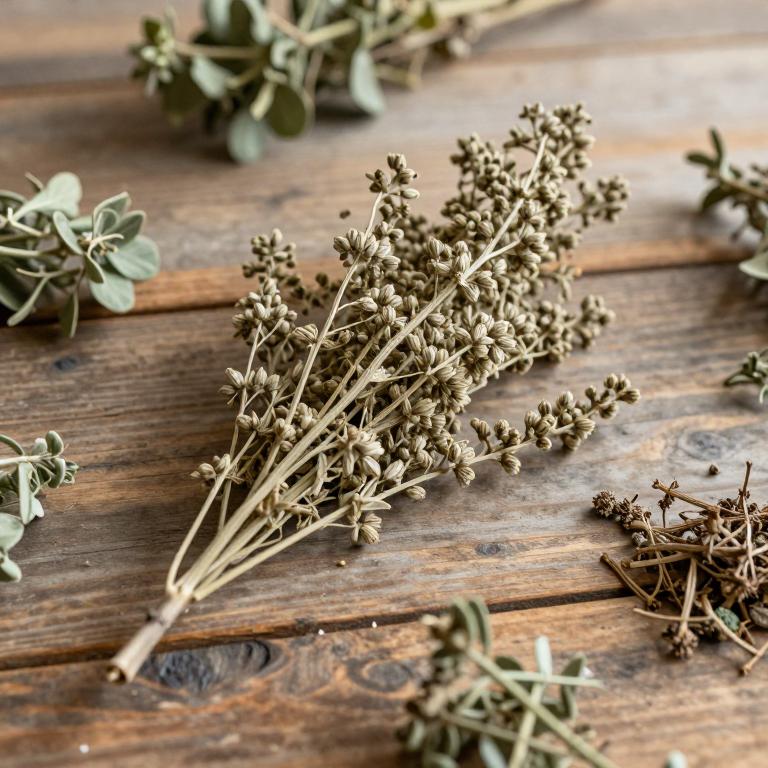
Names and Synonyms
Common Names
- Rosy Himalayan Lily
Scientific Names
Accepted name
Notholirion thomsonianumSynonyms
- Fritillaria thomsoniana
- Lilium longifolium
Sources: Wikidata, Catalogue of Life
Taxonomical Classification
This plant, Notholirion thomsonianum, belongs to the kingdom Plantae and the phylum Streptophyta. Within the class Equisetopsida and subclass Magnoliidae, it is categorized under the order Liliales and the family Liliaceae. It is specifically classified under the genus Notholirion.
| Rank | Classification |
|---|---|
| Kingdom | Plantae |
| Phylum | Streptophyta |
| Class | Equisetopsida |
| Subclass | Magnoliidae |
| Order | Liliales |
| Family | Liliaceae |
| Genus | Notholirion |
Sources: The World Checklist of Vascular Plants (WCVP)
Distribution
This plant exhibits a specific geographical distribution spanning across parts of Western Asia and the Indian Subcontinent. Within Western Asia, it can be located in the country of Afghanistan. Its presence is also noted within the Indian Subcontinent, specifically in Nepal. Furthermore, the species is found throughout Pakistan. Finally, the plant is known to inhabit the West Himalaya region.
| Region | Area |
|---|---|
| Western Asia | Afghanistan |
| Indian Subcontinent | Nepal |
| Indian Subcontinent | Pakistan |
| Indian Subcontinent | West Himalaya |
Sources: The World Checklist of Vascular Plants (WCVP)
Botanical Identification
Ecology
The ecology of Notholirion thomsonianum is strictly defined by its specific altitudinal preferences within its native montane habitats. This species thrives within a distinct vertical belt, occupying an elevational range that begins at 1000 m AMSL and extends up to a maximum of 1400 m AMSL. This specialized niche suggests an adaptation to the specific temperature gradients, moisture levels, and atmospheric pressures characteristic of these mid-to-high altitude zones.
- Elevational range max:
- 1400 m AMSL
- Elevational range min:
- 1000 m AMSL
Life history
The life history of Notholirion thomsonianum is characterized by its classification as a geophyte, a strategy that allows it to persist through unfavorable environmental conditions by storing nutrients and moisture in underground organs. This life form enables the plant to remain dormant during periods of stress, utilizing its specialized subterranean structures to facilitate rapid regrowth when optimal conditions return. As a geophyte, its developmental cycle is intrinsically linked to the seasonal availability of resources in its habitat, ensuring survival through vegetative persistence even when above-ground structures are absent. This specialized physiological adaptation supports its long-term presence in the ecosystem, allowing it to navigate environmental fluctuations with greater resilience than plants lacking such storage capabilities.
- Life form :
- geophyte
Morphology
The morphology of Notholirion thomsonianum is characterized by a growth form classified as an herb, exhibiting a non-woody structure throughout its development. As a climbing plant, it functions in a self-supporting manner, allowing it to ascend and occupy its niche within the ecosystem. The species is an independent organism, meaning it does not function as a parasite, and it maintains a terrestrial lifestyle rather than being an epiphyte.
- Climber :
- self-supporting
- Epiphyte :
- terrestrial
- Growth form :
- herb
- Parasite :
- independent
- Woodiness :
- non-woody
Sources: Global Inventory of Floras and Traits (GIFT)
Activities
Notholirion thomsonianum has 4 reported activities identified across 0 scientific publications and several other databases. The most consistently reported activities include Antibacterial, Antidiabetic, Antifungal, Antioxidant.
| Activity | Supporting sources | Consensus |
|---|---|---|
| Antibacterial | 1 supporting sources | ★☆☆☆☆ |
| Antidiabetic | 1 supporting sources | ★☆☆☆☆ |
| Antifungal | 1 supporting sources | ★☆☆☆☆ |
| Antioxidant | 1 supporting sources | ★☆☆☆☆ |
Antibacterial
- BMC complementary and alternative medicine
Antidiabetic
- BMC complementary medicine and therapies
Antifungal
- BMC complementary and alternative medicine
Antioxidant
- BMC complementary medicine and therapies
Conditions
Notholirion thomsonianum has 7 reported investigations on conditions identified across 0 scientific publications and several other databases. The most consistently reported conditions include Enterococcus faecalis, Escherichia coli, Proteus mirabilis, Pseudomonas aeruginosa, Salmonella typhi.
| Condition | Supporting sources | Consensus |
|---|---|---|
| Enterococcus faecalis | 1 supporting sources | ★☆☆☆☆ |
| Escherichia coli | 1 supporting sources | ★☆☆☆☆ |
| Proteus mirabilis | 1 supporting sources | ★☆☆☆☆ |
| Pseudomonas aeruginosa | 1 supporting sources | ★☆☆☆☆ |
| Salmonella typhi | 1 supporting sources | ★☆☆☆☆ |
| Diabetes mellitus | 1 supporting sources | ★☆☆☆☆ |
| Hyperglycemia | 1 supporting sources | ★☆☆☆☆ |
Enterococcus faecalis
- BMC complementary and alternative medicine
Escherichia coli
- BMC complementary and alternative medicine
Proteus mirabilis
- BMC complementary and alternative medicine
Pseudomonas aeruginosa
- BMC complementary and alternative medicine
Salmonella typhi
- BMC complementary and alternative medicine
Diabetes mellitus
- BMC complementary medicine and therapies
Hyperglycemia
- BMC complementary medicine and therapies
Preparations
Notholirion thomsonianum has 2 reported preparations identified across 0 scientific publications and several other databases. The most consistently reported preparations include Different fractions, chloroform and ethyl acetate fractions.
| Preparation | Supporting sources | Consensus |
|---|---|---|
| Different fractions | 1 supporting sources | ★☆☆☆☆ |
| Chloroform and ethyl acetate fractions | 1 supporting sources | ★☆☆☆☆ |
Different fractions
- BMC complementary and alternative medicine
Chloroform and ethyl acetate fractions
- BMC complementary and alternative medicine