Thlaspi caerulescens
Noccaea caerulescens · Accepted scientific name
Scientific literature: Very Sparse (1 studies) · ★☆☆☆☆
Thlaspi caerulescens, scientifically known as Noccaea caerulescens, is a remarkable hyperaccumulator plant renowned for its ability to thrive in metal-rich soils. Highly valued in phytoremediation, it absorbs heavy metals like zinc and cadmium, offering unique scientific potential for environmental cleanup and exploring plant resilience in toxic ecosystems.
- Family
- Brassicaceae
- Native range
- Europe
- Parts used
- Not available
- Common names
- Alpine Pennycress · Alpine Penny-Cress
- Scientific synonyms
- Crucifera Coerulescens · Noccaea Occitanica · 1 more
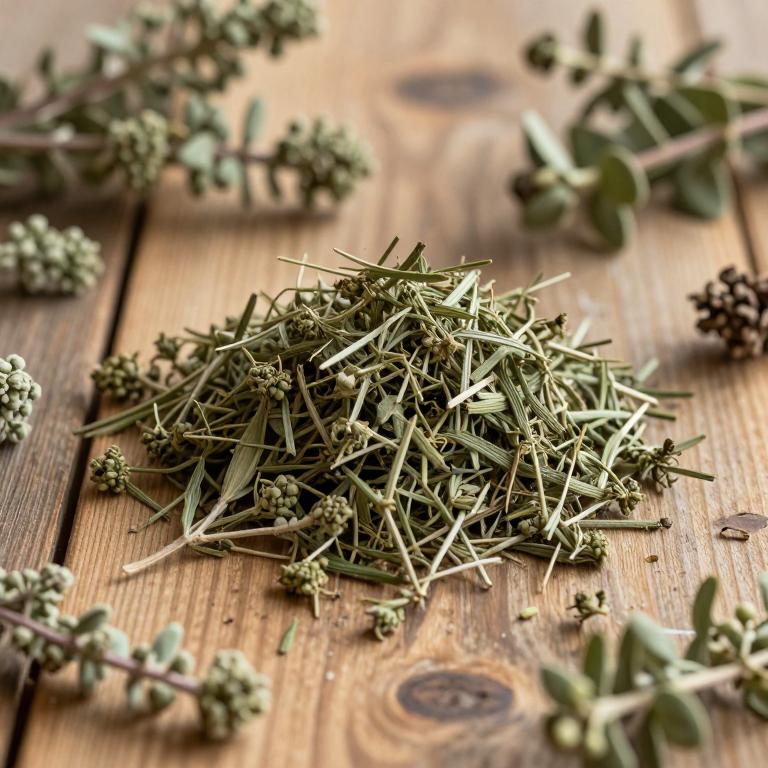
Names and Synonyms
Common Names
- alpine pennycress
- Alpine penny-cress
Scientific Names
Accepted name
Noccaea caerulescensSynonyms
- Crucifera coerulescens
- Noccaea occitanica
- Thlaspi caerulescens
Regional and Traditional Names
Spanish:
- Thlaspi caerulescens
- Thlaspi brachypetalum
- Thlaspi alpestre
- Thlaspi alpestre ssp brachypetalum
- Thlaspi alpestre ssp sylvestre
- Thlaspi alpestre ssp. brachypetalum
- Thlaspi alpestre ssp gudinianum
- Thlaspi alpestre ssp. gudinianum
- Thlaspi alpestre ssp. sylvestre
German:
- Gebirgs-Hellerkraut
- Voralpen-Hellerkraut
- Thlaspi caerulescens
- Alpen-Hellerkraut
- Thlaspi alpestre ssp. alpestre
- Thlaspi alpestre
- Gebirgs-Täschelkraut
- Gebirgs-Hellerkraut
- Gebirgs-Täschelkraut
French:
- Tabouret des bois
- Tabouret bleuâtre
- Tabouret bleu
- Tabouret bleuâtre
- Tabouret des bois
Sources: Wikidata, Catalogue of Life
Taxonomical Classification
This plant belongs to the kingdom Plantae and the phylum Streptophyta. Within the class Equisetopsida and subclass Magnoliidae, it is classified under the order Brassicales and the family Brassicaceae. Ultimately, its taxonomic identity is defined by the genus Noccaea.
| Rank | Classification |
|---|---|
| Kingdom | Plantae |
| Phylum | Streptophyta |
| Class | Equisetopsida |
| Subclass | Magnoliidae |
| Order | Brassicales |
| Family | Brassicaceae |
| Genus | Noccaea |
Sources: The World Checklist of Vascular Plants (WCVP)
Distribution
This plant, Noccaea caerulescens, is primarily distributed across the northern regions of Europe. Its presence is well-documented throughout Scandinavia, specifically within the borders of Norway and Sweden. The species can also be found in the coastal and inland areas of Finland. Furthermore, its geographical reach extends to Denmark, contributing to its northern European profile. Finally, the plant is also known to inhabit various locations throughout Great Britain.
| Region | Area |
|---|---|
| Northern Europe | Denmark |
| Northern Europe | Finland |
| Northern Europe | Great Britain |
| Northern Europe | Norway |
| Northern Europe | Sweden |
| Middle Europe | Austria |
| Middle Europe | Belgium |
| Middle Europe | Czechia-Slovakia |
| Middle Europe | Germany |
| Middle Europe | Netherlands |
Sources: The World Checklist of Vascular Plants (WCVP)
Botanical Identification
Life history
The life history of Noccaea caerulescens is characterized by its status as a perennial plant, allowing it to persist through multiple growing seasons. Morphologically, it is classified as a chamaephyte, a life form where the majority of the plant's shoot system remains close to the soil surface, often protected by residual leaf bases or debris. This species exhibits a deciduous nature, shedding its foliage as part of its seasonal cycle rather than maintaining evergreen growth.
- Deciduousness :
- deciduous
- Life form :
- chamaephyte
- Lifecycle :
- perennial
Morphology
The morphology of Noccaea caerulescens is characterized by its growth form as a non-woody herb, specifically categorized as a forb. This plant exhibits a relatively low stature, with a plant height that ranges from a minimum of 0.07 m to a maximum of 0.3 m, resulting in an average height of approximately 0.232 m. In terms of its structural habit, it is a self-supporting species rather than a liana or vine, and it functions as an independent organism without parasitic behavior. It is a terrestrial plant, meaning it is neither aquatic nor an epiphyte, maintaining its growth in soil-based environments.
- Aquatic :
- terrestrial
- Climber :
- self-supporting
- Epiphyte :
- terrestrial
- Growth form :
- herb
- Growth form :
- forb
- Parasite :
- independent
- Plant height max:
- 0.3 m
- Plant height mean:
- 0.232 m
- Plant height min:
- 0.07 m
- Woodiness :
- non-woody
Physiology
The physiology of Noccaea caerulescens is characterized by a C3 photosynthetic pathway, a metabolic strategy typical of many temperate plant species. The plant exhibits a mean leaf size of 1.14 cm², indicating relatively small individual leaf structures. It is a non-carnivorous species, relying on standard autotrophic nutrient acquisition methods rather than the capture of prey. Additionally, it possesses a mean Specific Leaf Area (SLA) of 303 cm²/g, a metric that reflects the relationship between the leaf's surface area and its dry mass, influencing its resource-use efficiency and light interception capabilities.
- Carnivory :
- non-carnivorous
- Leaf size mean:
- 1.14 cm²
- Photosynthetic pathway :
- C3
- Specific Leaf Area (SLA) mean:
- 303 cm²/g
Reproduction
The reproduction of Noccaea caerulescens is characterized by a sexual reproductive cycle, as asexual reproduction is notably absent. This monocarp species follows a specific flowering phenology, with the blooming period typically beginning in April and concluding in June. The pollination process is predominantly biotic, driven by an insect pollination syndrome with a specific reliance on bees. Within its reproductive structure, self-fertilization is present, ensuring reproductive success. The plant produces fruit in the form of a capsule, which is characterized by a dehiscent mechanism, meaning it opens at maturity to release its contents. The dispersal of seeds follows an autochorous syndrome, where the plant utilizes its own internal mechanisms to disperse seeds. These seeds are exceptionally minute, with a mean seed mass of 0.000379 g and a range spanning from a minimum of 0.00036 g to a maximum of 0.00036 g.
- Dehiscence :
- dehiscent
- Dispersal syndrome :
- autochorous
- Flowering time :
- Apr
- Flowering time :
- Jun
- Fruit type :
- capsule
- Monocarpy :
- monocarp
- Pollination syndrome :
- insect
- Pollination syndrome :
- bee
- Pollination syndrome :
- biotic
- Reproduction asexual :
- absent
- Seed mass max:
- 0.00036 g
- Seed mass mean:
- 0.000379 g
- Self fertilization :
- present
Sources: Global Inventory of Floras and Traits (GIFT)
Chemicals
Noccaea caerulescens has 1 reported phytochemicals identified across 0 scientific publications and several other databases. The most consistently reported chemicals include Glucosinolates.
| Chemical | Supporting sources | Consensus |
|---|---|---|
| Glucosinolates | 1 supporting sources | ★☆☆☆☆ |
Glucosinolates
- Journal of chromatography. A