salt tree
Nitraria retusa · Accepted scientific name
Scientific literature: Very Sparse (17 studies) · ★☆☆☆☆
Salt tree, scientifically known as Nitraria retusa, is a versatile medicinal shrub native to parts of Africa and Asia. Renowned for its diverse therapeutic properties, various parts of the plant are traditionally used to treat ailments ranging from skin infections to digestive issues, offering significant potential in ethnobotanical research.
- Family
- Nitrariaceae
- Native range
- Africa
- Parts used
- Leaf · Fruit
- Common names
- Salt Tree
- Scientific synonyms
- Peganum Retusum · Nitraria Schoberi Var. Faurei · 4 more
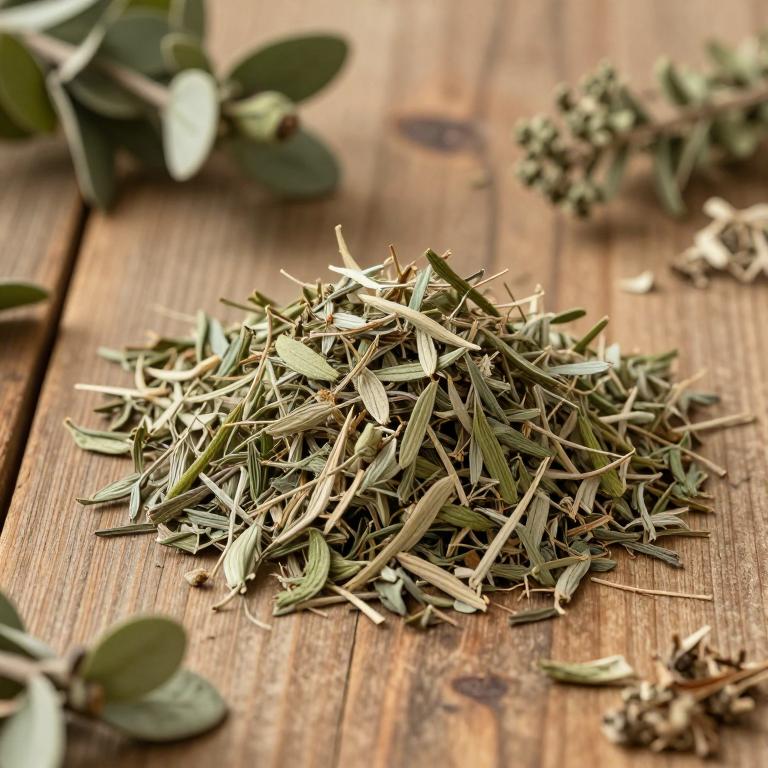
Names and Synonyms
Common Names
- salt tree
Scientific Names
Accepted name
Nitraria retusaSynonyms
- Peganum retusum
- Nitraria schoberi var. faurei
- Berberis africana
- Nitraria sericea
- Nitraria senegalensis
- Nitraria tridentata
Sources: Wikidata, Catalogue of Life
Taxonomical Classification
This plant belongs to the kingdom Plantae and is classified under the phylum Streptophyta within the class Equisetopsida. It is further categorized under the subclass Magnoliidae and the order Sapindales. Ultimately, its taxonomic identity is defined by its placement in the family Nitrariaceae and the genus Nitraria.
| Rank | Classification |
|---|---|
| Kingdom | Plantae |
| Phylum | Streptophyta |
| Class | Equisetopsida |
| Subclass | Magnoliidae |
| Order | Sapindales |
| Family | Nitrariaceae |
| Genus | Nitraria |
Sources: The World Checklist of Vascular Plants (WCVP)
Distribution
This plant, known as Nitraria retusa, exhibits a specific geographical distribution across the North African region. Its presence is documented in the country of Algeria, where it occupies certain ecological niches. Furthermore, the species can be found within the borders of Egypt, extending its range eastward. It is also distributed throughout Libya and the neighboring territory of Tunisia. Finally, the plant's reach extends to the westernmost part of the region in Morocco.
| Region | Area |
|---|---|
| Northern Africa | Algeria |
| Northern Africa | Egypt |
| Northern Africa | Libya |
| Northern Africa | Morocco |
| Northern Africa | Tunisia |
| Northern Africa | Western Sahara |
| Macaronesia | Canary Is. |
| West Tropical Africa | Mauritania |
| West Tropical Africa | Senegal |
| Northeast Tropical Africa | Sudan-South Sudan |
Sources: The World Checklist of Vascular Plants (WCVP)
Botanical Identification
Life history
The life history of Nitraria retusa is characterized by its status as a perennial species, meaning it persists through multiple growing seasons and maintains its vegetative structure over a long duration. As a long-lived woody plant, it undergoes a continuous cycle of growth, flowering, and seed production that extends far beyond a single year. Its developmental stages involve the establishment of a robust root system and a spreading canopy, which allow it to endure varying environmental conditions and seasonal shifts. Unlike annuals or biennials that complete their life cycle in a single season or two, this perennial plant focuses on sustained biomass accumulation and reproductive longevity, contributing to its stability within its native ecological niches.
- Lifecycle :
- perennial
Morphology
The morphology of Nitraria retusa is characterized by its growth as a woody shrub, typically exhibiting a robust and stable structure. It functions as an independent organism, meaning it is non-parasitic, and is primarily terrestrial in its habitat, although it may exist in semiaquatic environments. The plant reaches a significant stature, with a height ranging from a minimum of 2 meters to a maximum of 3 meters. In terms of its growth habit, it is classified as a shrub, maintaining a woody consistency throughout its stems and branches. Unlike climbing species, it is a self-supporting plant and does not exhibit obligatory or facultative climbing behaviors.
- Aquatic :
- terrestrial
- Climber :
- obligatory
- Growth form :
- shrub
- Parasite :
- independent
- Plant height max:
- 3 m
- Plant height min:
- 2 m
- Woodiness :
- woody
Physiology
The physiology of Nitraria retusa is characterized by a standard C3 photosynthetic pathway, which dictates its metabolic processes and carbon fixation mechanisms. Under this pathway, the initial fixation of atmospheric carbon dioxide is mediated by the enzyme Ribulose-1,5-bisphosphate carboxylase/oxygenase (RuBisCO), leading to the immediate formation of a three-carbon compound, 3-phosphoglycerate. This metabolic strategy implies that the plant undergoes photorespiration, particularly under conditions of high temperature or limited water availability, which can influence its overall gas exchange efficiency and water-use efficacy. The energy acquisition and biomass production of the species are fundamentally driven by these C3 cycles, influencing its growth patterns and adaptive responses to its specific environmental niches.
- Photosynthetic pathway :
- C3
Reproduction
The reproduction of Nitraria retusa is characterized by the production of seeds that exhibit specific morphological weight variations. The seed mass within a population shows a measurable range, with a recorded minimum mass of 0.02702 g and a maximum mass of 0.03804 g. When considering the overall distribution of these seeds, the mean seed mass is calculated to be 0.0313 g, reflecting the characteristic size and weight parameters essential to its reproductive biology.
- Seed mass max:
- 0.03804 g
- Seed mass mean:
- 0.0313 g
- Seed mass min:
- 0.02702 g
Sources: Global Inventory of Floras and Traits (GIFT)
Plant Parts
Nitraria retusa has 2 reported plant parts identified across 3 scientific publications and several other databases that are studied for medicinal purposes. The most consistently reported plant part include leaf, fruit.
| Plant part | Supporting sources | Consensus |
|---|---|---|
| Leaf | 2 supporting sources | ★☆☆☆☆ |
| Fruit | 1 supporting sources | ★☆☆☆☆ |
Leaf
- Cell proliferation
- Nutrition and cancer
Fruit
- Pharmaceutical biology
Chemicals
Nitraria retusa has 3 reported phytochemicals identified across 3 scientific publications and several other databases. The most consistently reported chemicals include Isorhamnetin, Isorhamnetin-3-O-rutinoside, palmitic acid.
| Chemical | Supporting sources | Consensus |
|---|---|---|
| Isorhamnetin | 1 supporting sources | ★☆☆☆☆ |
| Isorhamnetin-3-O-rutinoside | 1 supporting sources | ★☆☆☆☆ |
| palmitic acid | 1 supporting sources | ★☆☆☆☆ |
Isorhamnetin
- Bioscience, biotechnology, and biochemistry
Isorhamnetin-3-O-rutinoside
- Cell proliferation
palmitic acid
- Nutrition and cancer
Activities
Nitraria retusa has 2 reported activities identified across 3 scientific publications and several other databases. The most consistently reported activities include Antiobesity, Hypolipidemic.
| Activity | Supporting sources | Consensus |
|---|---|---|
| Antiobesity | 1 supporting sources | ★☆☆☆☆ |
| Hypolipidemic | 1 supporting sources | ★☆☆☆☆ |
Antiobesity
- Nutrients
Hypolipidemic
- Nutrients
Conditions
Nitraria retusa has 5 reported investigations on conditions identified across 3 scientific publications and several other databases. The most consistently reported conditions include obesity, cancer, hyperlipidemia, skin aging, tumor.
| Condition | Supporting sources | Consensus |
|---|---|---|
| Obesity | 2 supporting sources | ★☆☆☆☆ |
| Cancer | 1 supporting sources | ★☆☆☆☆ |
| Hyperlipidemia | 1 supporting sources | ★☆☆☆☆ |
| Skin aging | 1 supporting sources | ★☆☆☆☆ |
| Tumor | 1 supporting sources | ★☆☆☆☆ |
Obesity
- Food and chemical toxicology : an international journal published for the British Industrial Biological Research Association
- Nutrients
Cancer
- Nutrition and cancer
Hyperlipidemia
- Food and chemical toxicology : an international journal published for the British Industrial Biological Research Association
Skin aging
- Zhongguo Zhong yao za zhi = Zhongguo zhongyao zazhi = China journal of Chinese materia medica
Tumor
- Nutrition and cancer
Preparations
Nitraria retusa has 8 reported preparations identified across 3 scientific publications and several other databases. The most consistently reported preparations include ethanol extract, Chloroform extract from Leaves, Nitraria retusa extract, Tea, ethanolic extract.
| Preparation | Supporting sources | Consensus |
|---|---|---|
| Ethanol extract | 2 supporting sources | ★☆☆☆☆ |
| Chloroform extract from leaves | 1 supporting sources | ★☆☆☆☆ |
| Nitraria retusa extract | 1 supporting sources | ★☆☆☆☆ |
| Tea | 1 supporting sources | ★☆☆☆☆ |
| Ethanolic extract | 1 supporting sources | ★☆☆☆☆ |
| Extract | 1 supporting sources | ★☆☆☆☆ |
| Extract (nre) | 1 supporting sources | ★☆☆☆☆ |
| Extracts | 1 supporting sources | ★☆☆☆☆ |
Ethanol extract
- Food and chemical toxicology : an international journal published for the British Industrial Biological Research Association
- Bioscience, biotechnology, and biochemistry
Chloroform extract from leaves
- Nutrition and cancer
Nitraria retusa extract
- Nutrients
Tea
- Nutrients
Ethanolic extract
- Food and chemical toxicology : an international journal published for the British Industrial Biological Research Association
Extract
- Pharmaceutical biology
Extract (nre)
- Nutrients
Extracts
- Archiv fur experimentelle Veterinarmedizin