love in the mist
Nigella · Accepted scientific name
Scientific literature: Very Sparse (4 studies) · ★☆☆☆☆
Love in the mist, scientifically known as Nigella, is a captivating medicinal herb celebrated for its delicate, ethereal blooms and potent healing properties. Renowned in traditional medicine, its nutrient-rich seeds offer antioxidant and anti-inflammatory benefits, making it a versatile botanical treasure used to support immune health and wellness.
- Family
- Ranunculaceae
- Native range
- Europe
- Parts used
- Seed
- Common names
- Love-In-A-Mist · Devil-In-A-Bush
- Scientific synonyms
- Garidella · Komaroffia · 2 more
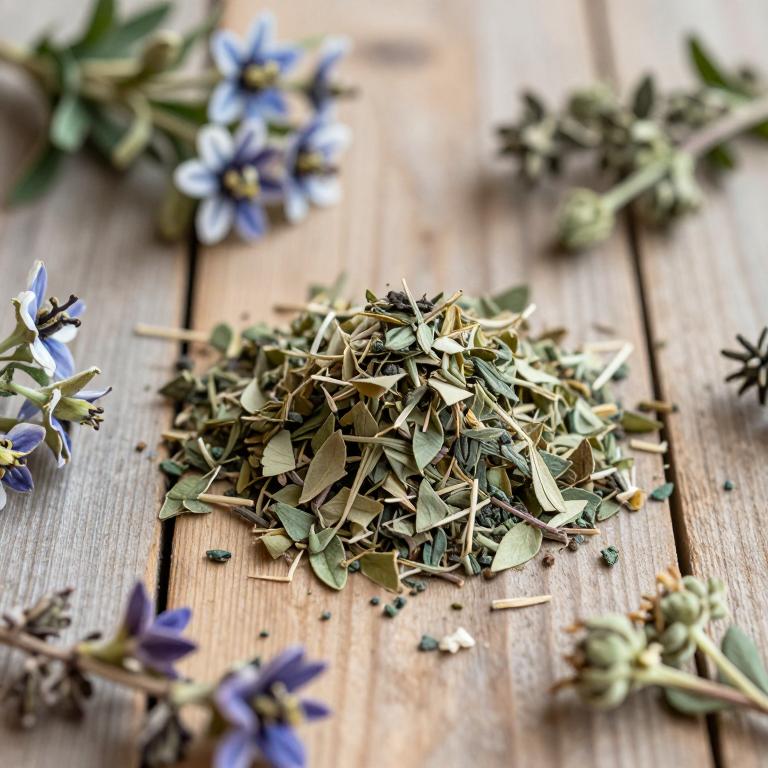
Names and Synonyms
Common Names
- love-in-a-mist
- Devil-in-a-bush
Scientific Names
Accepted name
NigellaSynonyms
- Garidella
- Komaroffia
- Erobathos
- Nigellastrum
Regional and Traditional Names
German:
- Schwarzkümmel
French:
- Nigelle
Sources: Wikidata, Catalogue of Life
Taxonomical Classification
This plant belongs to the kingdom Plantae and is classified under the phylum Streptophyta and the class Equisetopsida. Within the subclass Magnoliidae, it is organized under the order Ranunculales and the family Ranunculaceae. It is specifically identified by the genus Nigella.
| Rank | Classification |
|---|---|
| Kingdom | Plantae |
| Phylum | Streptophyta |
| Class | Equisetopsida |
| Subclass | Magnoliidae |
| Order | Ranunculales |
| Family | Ranunculaceae |
| Genus | Nigella |
Sources: The World Checklist of Vascular Plants (WCVP)
Distribution
This plant, known as Nigella, exhibits a specific distribution across several northern European regions. It can be found growing naturally within the borders of Denmark. Furthermore, its presence extends to the northern territories of Finland. The species is also well-established throughout Great Britain and Ireland. Finally, its geographical range includes the scenic landscapes of Norway.
| Region | Area |
|---|---|
| Northern Europe | Denmark |
| Northern Europe | Finland |
| Northern Europe | Great Britain |
| Northern Europe | Ireland |
| Northern Europe | Norway |
| Northern Europe | Sweden |
| Middle Europe | Austria |
| Middle Europe | Belgium |
| Middle Europe | Czechia-Slovakia |
| Middle Europe | Germany |
Sources: The World Checklist of Vascular Plants (WCVP)
Plant Parts
Nigella has 1 reported plant parts identified across 1 scientific publications and several other databases that are studied for medicinal purposes. The most consistently reported plant part include seed.
| Plant part | Supporting sources | Consensus |
|---|---|---|
| Seed | 1 supporting sources | ★☆☆☆☆ |
Seed
- British journal of pharmacology
Chemicals
Nigella has 3 reported phytochemicals identified across 1 scientific publications and several other databases. The most consistently reported chemicals include Nigeglanine, Nigellicine, Nigellidine.
| Chemical | Supporting sources | Consensus |
|---|---|---|
| Nigeglanine | 1 supporting sources | ★☆☆☆☆ |
| Nigellicine | 1 supporting sources | ★☆☆☆☆ |
| Nigellidine | 1 supporting sources | ★☆☆☆☆ |
Nigeglanine
- Drug development research
Nigellicine
- Drug development research
Nigellidine
- Drug development research
Preparations
Nigella has 1 reported preparations identified across 1 scientific publications and several other databases. The most consistently reported preparations include water extract.
| Preparation | Supporting sources | Consensus |
|---|---|---|
| Water extract | 1 supporting sources | ★☆☆☆☆ |
Water extract
- Journal, genetic engineering & biotechnology