Nigella segetalis
Nigella segetalis · Accepted scientific name
Scientific literature: Very Sparse (4 studies) · ★☆☆☆☆
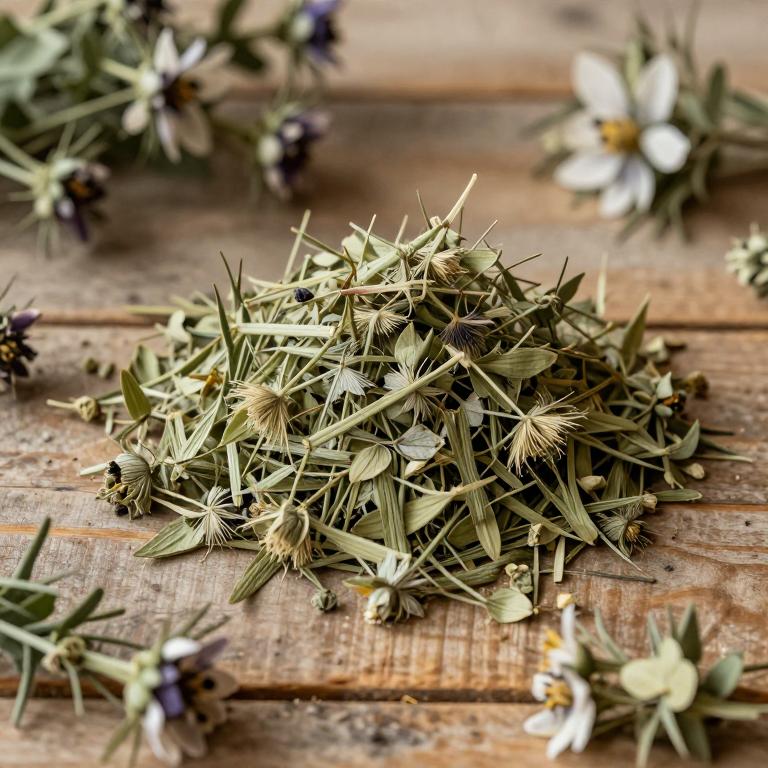
, scientifically known as Nigella segetalis, is a distinctive medicinal plant valued for its unique therapeutic properties. Often found in specific ecological niches, it is utilized in traditional medicine to address various ailments. Understanding its chemical composition and bioactive compounds is essential for exploring its potential in modern pharmacology.
- Family
- Ranunculaceae
- Native range
- Europe
- Parts used
- Not available
- Common names
- Not available
- Scientific synonyms
- Nigella Armena · Nigella Bicolor · 2 more
Names and Synonyms
Scientific Names
Accepted name
Nigella segetalisSynonyms
- Nigella armena
- Nigella bicolor
- Nigella verrucosa
- Nigella segetalis var. armena
Sources: Wikidata, Catalogue of Life
Taxonomical Classification
This plant, known scientifically as Nigella segetalis, belongs to the kingdom Plantae and the phylum Streptophyta. Within the class Equisetopsida and subclass Magnoliidae, it is classified under the order Ranunculales and the family Ranunculaceae. Ultimately, its taxonomic identity is defined by its placement within the genus Nigella.
| Rank | Classification |
|---|---|
| Kingdom | Plantae |
| Phylum | Streptophyta |
| Class | Equisetopsida |
| Subclass | Magnoliidae |
| Order | Ranunculales |
| Family | Ranunculaceae |
| Genus | Nigella |
Sources: The World Checklist of Vascular Plants (WCVP)
Distribution
This plant exhibits a broad geographical distribution spanning several distinct regions across Eurasia. In Eastern Europe, its presence is documented throughout Ukraine and the South European Russia region. It can also be found specifically within the Krym area of Eastern Europe. Moving toward the Caucasus, the species is distributed across the Transcaucasus territory. Finally, its range extends into Western Asia, where it is located in Iran.
| Region | Area |
|---|---|
| Eastern Europe | Krym |
| Eastern Europe | South European Russia |
| Eastern Europe | Ukraine |
| Caucasus | Transcaucasus |
| Western Asia | Iran |
| Western Asia | Türkiye |
Sources: The World Checklist of Vascular Plants (WCVP)
Botanical Identification
Ecology
The ecology of Nigella segetalis is characterized by its broad adaptability across diverse terrestrial landscapes, ranging from disturbed human environments to more rugged natural terrains. It frequently colonizes anthropogenic habitats such as crop fields and inhabited places, where it thrives in the disturbed soils often associated with agricultural activity and human settlement. Beyond these cultivated areas, the species also occupies more naturalistic environments, including the expansive, open reaches of the steppe and the varying elevations of mountain regions. This wide distribution suggests a resilient ecological strategy that allows the plant to exploit both nutrient-rich disturbed sites and the more competitive, stable ecosystems of open grasslands and montane habitats.
- Habitat :
- crop fields, inhabited places, mountains, steppe
Life history
The life history of Nigella segetalis is characterized by an annual lifecycle, meaning the plant completes its entire biological progression—from germination and vegetative growth to flowering and seed production—within a single growing season. As an annual species, it does not attempt to survive through dormant periods as a mature individual but instead focuses its energy on rapid development and prolific reproductive output to ensure the continuity of its lineage. Following the initial germination triggered by favorable environmental conditions, the plant undergoes a period of foliage expansion before transitioning into its reproductive phase. This cycle culminates in the production of seeds, which remain in the soil to await the next seasonal cycle, effectively bypassing the need for biennial or perennial survival strategies.
- Lifecycle :
- annual
Morphology
The morphology of Nigella segetalis is characterized by its growth form as a herb, presenting a non-woody structure throughout its development. This plant functions as an independent organism, neither relying on a host for nutrients as an obligate or facultative parasite. In terms of its ecological habitat and physical orientation, it exhibits a versatile existence that ranges from terrestrial environments to semiaquatic and aquatic settings.
- Aquatic :
- terrestrial
- Growth form :
- herb
- Parasite :
- independent
- Woodiness :
- non-woody
Reproduction
The reproduction of Nigella segetalis is characterized by a specific seasonal flowering cycle that dictates its reproductive success. The flowering period begins in June and extends through July, marking the window during which the plant produces its blossoms for pollination. This concentrated period of floral development is essential for the plant's life cycle, facilitating the transition from flowering to seed production within these specific months.
- Flowering time :
- Jun
- Flowering time :
- Jul
Sources: Global Inventory of Floras and Traits (GIFT)
Chemicals
Nigella segetalis has 4 reported phytochemicals identified across 0 scientific publications and several other databases. The most consistently reported chemicals include AlP, Albumin, FIBRINOGEN, MCV.
| Chemical | Supporting sources | Consensus |
|---|---|---|
| AlP | 1 supporting sources | ★☆☆☆☆ |
| Albumin | 1 supporting sources | ★☆☆☆☆ |
| FIBRINOGEN | 1 supporting sources | ★☆☆☆☆ |
| MCV | 1 supporting sources | ★☆☆☆☆ |
AlP
- Phytotherapy research : PTR
Albumin
- Phytotherapy research : PTR
FIBRINOGEN
- Phytotherapy research : PTR
MCV
- Phytotherapy research : PTR