Nicoteba betonica
Nicoteba betonica · Accepted scientific name
Scientific literature: Very Sparse (13 studies) · ★☆☆☆☆
, scientifically known as Nicotiana betonica, is a unique medicinal plant valued in traditional healing practices. Often recognized by its distinct foliage, it is utilized for its diverse therapeutic properties. Researchers study its phytochemical composition to explore potential applications in treating various ailments, highlighting its significant importance in ethnobotany.
- Family
- Acanthaceae
- Native range
- Africa
- Parts used
- Not available
- Common names
- Not available
- Scientific synonyms
- Justicia Cheiranthifolia · Justicia Pallidior · 20 more
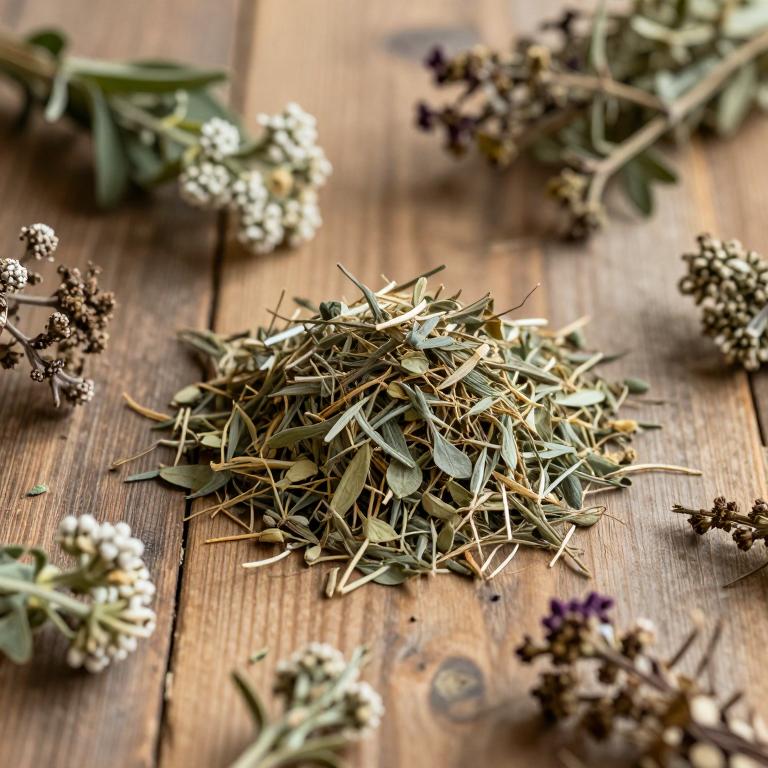
Names and Synonyms
Scientific Names
Accepted name
Nicoteba betonicaSynonyms
- Justicia cheiranthifolia
- Justicia pallidior
- Adhatoda betonica
- Gendarussa ramosissima
- Justicia betonica var. villosa
- Justicia pallidior var. cooperi
- Gendarussa arenaria
- Gendarussa trinervia
- Dicliptera lupulina
- Adhatoda cheiranthifolia
- Adhatoda lupulina
- Adhatoda ramosissima
- Justicia uninervis
- Justicia antidota
- Justicia betonica
- Justicia betonicifolia
- Justicia pseudobetonica
- Justicia ramosissima
- Dicliptera trinervia
- Adhatoda variegata
- Adhatoda variegata var. pallidior
- Ecbolium betonica
Regional and Traditional Names
Spanish:
- Pavoncillo
Sources: Wikidata, Catalogue of Life
Taxonomical Classification
This plant, Nicotiana betonica, belongs to the kingdom Plantae and the phylum Streptophyta. It is classified under the class Equisetopsida and the subclass Magnoliidae, falling within the order Lamiales. Finally, it is a member of the family Acanthaceae and is placed in the genus Nicotiana.
| Rank | Classification |
|---|---|
| Kingdom | Plantae |
| Phylum | Streptophyta |
| Class | Equisetopsida |
| Subclass | Magnoliidae |
| Order | Lamiales |
| Family | Acanthaceae |
| Genus | Nicoteba |
Sources: The World Checklist of Vascular Plants (WCVP)
Distribution
This plant exhibits a broad presence across various regions of the African continent. In West Tropical Africa, its distribution includes the nations of Mali and Senegal. Moving toward the center, it can also be found within West-Central Tropical Africa, specifically in the DR Congo. The species extends into Northeast Tropical Africa, where it is documented in Ethiopia. Finally, its range reaches into the Northeast Tropical Africa region of Sudan and South Sudan.
| Region | Area |
|---|---|
| West Tropical Africa | Mali |
| West Tropical Africa | Senegal |
| West-Central Tropical Africa | DR Congo |
| Northeast Tropical Africa | Ethiopia |
| Northeast Tropical Africa | Sudan-South Sudan |
| East Tropical Africa | Kenya |
| East Tropical Africa | Tanzania |
| East Tropical Africa | Uganda |
| South Tropical Africa | Angola |
| South Tropical Africa | Malawi |
Sources: The World Checklist of Vascular Plants (WCVP)
Botanical Identification
Ecology
The ecology of Nicoleba betonica is characterized by a broad altitudinal distribution, ranging from sea level at 0 m AMSL up to an elevation of 1830 m AMSL. In its native or introduced environments, specifically within Hawaii, the species exhibits highly adaptive colonization patterns; it frequently escapes cultivation and establishes itself in the wild, forming expansive, dense stands across several islands, including Kauai, Oahu, Molokai, Lanai, Maui, and Hawaii.
- Elevational range max:
- 1830 m AMSL
- Elevational range min:
- 0 m AMSL
- Habitat :
- In Hawaii often escaping cultivation and forming large stands on Kauai, Oahu, Molokai, Lanai, Maui, and HawaiI
Genetics
The genetics of Nicotiana betonica are characterized by specific cytogenetic profiles that define its reproductive and evolutionary complexity. The plant exhibits variability in its chromosomal makeup, with recorded chromosome numbers of 28 and 34. These varying counts suggest a dynamic genomic structure within the species. Furthermore, the species is identified as having a ploidy level of 2, indicating that it is a diploid organism, which serves as the foundational genetic state for its hereditary transmission and phenotypic expression.
- Chromosome number :
- 28, 34
- Ploidy :
- 2
Life history
The life history of Nicotiana betonica is characterized by its status as a perennial plant, meaning it maintains its vegetative structures and continues to live through multiple growing seasons rather than completing a single reproductive cycle. As a perennial species, it demonstrates a sustained life cycle that allows the plant to establish a robust root system and accumulate resources over time, facilitating repeated flowering and seed production across different years. This longevity enables the plant to persist in its habitat, navigating seasonal shifts and environmental fluctuations while maintaining its physiological functions throughout its extended lifespan.
- Lifecycle :
- perennial
Morphology
The morphology of Nicoleba betonica is characterized by its growth form as a woody herb or forb. It typically functions as a self-supporting plant rather than a liana or vine, and it grows as an independent organism without parasitic tendencies. The plant is terrestrial in its habitat, neither aquatic nor epiphytic. In terms of stature, it exhibits significant variability in height, with measurements ranging from a minimum of 0.1 m to a maximum of 2.5 m, maintaining an average plant height of approximately 0.675 m.
- Aquatic :
- terrestrial
- Climber :
- self-supporting
- Epiphyte :
- terrestrial
- Growth form :
- herb
- Growth form :
- forb
- Parasite :
- independent
- Plant height max:
- 2.5 m
- Plant height mean:
- 0.675 m
- Plant height min:
- 0.1 m
- Woodiness :
- woody
Physiology
The physiological profile of Nicotiana betonica is characterized by significant morphological variability in its foliage, which plays a critical role in its photosynthetic capacity and metabolic regulation. The leaf dimensions exhibit a broad range, with leaf lengths typically measuring between a minimum of 9 cm and a maximum of 22 cm. Complementing this longitudinal variation, the leaf width fluctuates between a minimum of 3.5 cm and a maximum of 14 cm, indicating a highly adaptable leaf architecture that can optimize light interception and gas exchange depending on environmental conditions. This range in surface area suggests a dynamic physiological response to resource availability, allowing the plant to manage transpiration rates and nutrient uptake effectively through its expansive laminar structures.
- Leaf length max:
- 22 cm
- Leaf length min:
- 9 cm
- Leaf width max:
- 14 cm
- Leaf width min:
- 3.5 cm
Reproduction
The reproduction of Nicotiana betonica is characterized by specific floral and fruit morphologies that facilitate its life cycle. The flowering stage produces blossoms with a maximum width of 1 cm, distinguished by a vibrant violet colour. Following pollination, the plant develops fruit in the form of a capsule, which typically measures between 1.3 cm and a maximum of 2 cm in length. These fruits are classified as dehiscence-type, meaning they are dehiscent and split open to release their contents. The seeds produced within these capsules are notably fine, maintaining a consistent mass of 0.00529 g, which serves as both the minimum and maximum recorded seed weight for the species.
- Dehiscence :
- dehiscent
- Flower colour :
- violet
- Flower width max:
- 1 cm
- Fruit length max:
- 2 cm
- Fruit length min:
- 1.3 cm
- Fruit type :
- capsule
- Seed mass mean:
- 0.00529 g
Sources: Global Inventory of Floras and Traits (GIFT)
Chemicals
Nicoteba betonica has 12 reported phytochemicals identified across 0 scientific publications and several other databases. The most consistently reported chemicals include Asiatic acid, Flavonoids, Kaempferol-3-O-rutinoside, Katononic acid, Monoterpenes.
| Chemical | Supporting sources | Consensus |
|---|---|---|
| Asiatic acid | 1 supporting sources | ★☆☆☆☆ |
| Flavonoids | 1 supporting sources | ★☆☆☆☆ |
| Kaempferol-3-O-rutinoside | 1 supporting sources | ★☆☆☆☆ |
| Katononic acid | 1 supporting sources | ★☆☆☆☆ |
| Monoterpenes | 1 supporting sources | ★☆☆☆☆ |
| Sesquiterpenes | 1 supporting sources | ★☆☆☆☆ |
| Steroids | 1 supporting sources | ★☆☆☆☆ |
| Terpenoids | 1 supporting sources | ★☆☆☆☆ |
| Verbascoside | 1 supporting sources | ★☆☆☆☆ |
| isoverbascoside | 1 supporting sources | ★☆☆☆☆ |
Asiatic acid
- Chemistry & biodiversity
Flavonoids
- Chemistry & biodiversity
Kaempferol-3-O-rutinoside
- Chemistry & biodiversity
Katononic acid
- Chemistry & biodiversity
Monoterpenes
- Chemistry & biodiversity
Sesquiterpenes
- Chemistry & biodiversity
Steroids
- Chemistry & biodiversity
Terpenoids
- Chemistry & biodiversity
Verbascoside
- Heliyon
isoverbascoside
- Heliyon
Activities
Nicoteba betonica has 1 reported activities identified across 0 scientific publications and several other databases. The most consistently reported activities include Antiplasmodial.
| Activity | Supporting sources | Consensus |
|---|---|---|
| Antiplasmodial | 1 supporting sources | ★☆☆☆☆ |
Antiplasmodial
- Journal of ethnopharmacology