creeping thorn-rose
Neurada procumbens · Accepted scientific name
Scientific literature: Very Sparse (11 studies) · ★☆☆☆☆
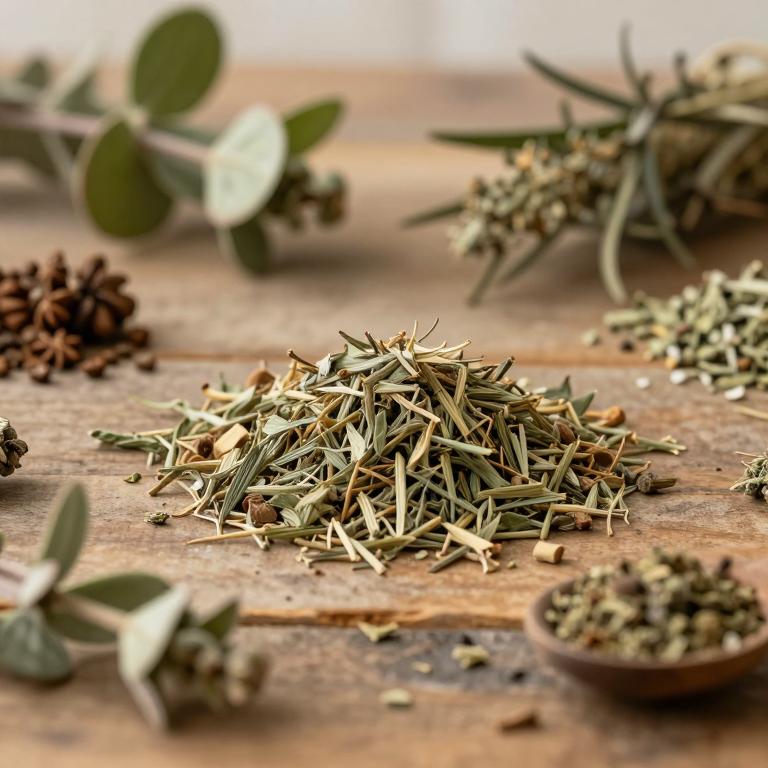
Creeping thorn-rose, scientifically known as Neurada procumbens, is a resilient, prostrate shrub native to tropical regions. Characterized by its woody, thorny stems and delicate yellow flowers, this plant is highly valued in traditional medicine. It is frequently utilized for its diverse therapeutic properties, particularly in treating various skin ailments.
Names and Synonyms
Common Names
- creeping thorn-rose
- sa'dan
- sadan
- sand button
- saydan
Scientific Names
Accepted name
Neurada procumbensSynonyms
- Neurada procumbens var. orbicularis
- Neurada procumbens var. pentagona
- Figaraea aegyptiaca
- Neurada procumbens var. stellata
Regional and Traditional Names
German:
- Kameltritt
- Kameltritt
Sources: Wikidata, Catalogue of Life
Taxonomical Classification
This plant belongs to the kingdom Plantae within the phylum Streptophyta and the class Equisetopsida. It is further classified under the subclass Magnoliidae and the order Malvales. Finally, it is a member of the family Neuradaeae and falls under the genus Neurada.
| Rank | Classification |
|---|---|
| Kingdom | Plantae |
| Phylum | Streptophyta |
| Class | Equisetopsida |
| Subclass | Magnoliidae |
| Order | Malvales |
| Family | Neuradaceae |
| Genus | Neurada |
Sources: The World Checklist of Vascular Plants (WCVP)
Distribution
This plant, Neurada procumbens, exhibits a specific geographical distribution across the Northern African region. It can be found growing within the territories of Algeria and Egypt. Furthermore, its presence extends to the landscapes of Libya and Morocco. The species is also documented to inhabit the country of Tunisia. Collectively, these locations highlight the plant's regional range across the North African continent.
| Region | Area |
|---|---|
| Northern Africa | Algeria |
| Northern Africa | Egypt |
| Northern Africa | Libya |
| Northern Africa | Morocco |
| Northern Africa | Tunisia |
| Northern Africa | Western Sahara |
| Macaronesia | Canary Is. |
| West Tropical Africa | Mali |
| West Tropical Africa | Mauritania |
| West Tropical Africa | Niger |
Sources: The World Checklist of Vascular Plants (WCVP)
Botanical Identification
Ecology
The ecology of Neurada procumbens is characterized by its adaptation to specific altitudinal gradients, primarily thriving within an elevational range that spans from a minimum of 500 m to a maximum of 1000 m AMSL. This vertical distribution suggests a preference for mid-elevation habitats where environmental conditions such as temperature and moisture levels remain within its physiological tolerance limits. Furthermore, the species exhibits distinct biological strategies for survival within its niche, as evidenced by the presence of active defense mechanisms. This ability to deploy chemical or physical defenses allows the plant to mitigate herbivory and compete effectively for resources within its specialized ecological zone.
- Defense :
- yes
- Elevational range max:
- 1000 m AMSL
- Elevational range min:
- 500 m AMSL
Life history
The life history of Neurada procumbens is characterized by its classification as an annual plant, meaning it completes its entire developmental cycle—from germination to seed production—within a single growing season. In terms of its ecological life form, the species functions as a therophyte, a strategy defined by plants that survive the unfavorable seasons as ephemeral seeds, only emerging to grow rapidly when environmental conditions are optimal. This therophytic nature is consistent across its structural classifications, as it lacks persistent above-ground woody or herbaceous stems during dormant periods, instead relying on its seed bank to ensure continuity through successive generations.
- Life form :
- therophyte
- Lifecycle :
- annual
Morphology
The morphology of Neurada procumbens is characterized by its growth form as a non-woody herb, specifically categorized as a forb or herbaceous plant. It exhibits a prostrate shoot orientation, spreading along the ground rather than growing upright. As a self-supporting plant, it does not function as a climber or a parasite, maintaining an independent biological existence. The plant is primarily terrestrial in its habitat, though it can be found in various environments. In terms of size, it is a low-growing species, with a plant height ranging from a minimum of 0.05 m to a maximum of 0.15 m.
- Aquatic :
- terrestrial
- Climber :
- self-supporting
- Growth form :
- herb
- Parasite :
- independent
- Plant height max:
- 0.15 m
- Plant height min:
- 0.05 m
- Shoot orientation :
- prostrate
- Woodiness :
- non-woody
Physiology
The physiology of Neurada procumbens is characterized by a C3 photosynthetic pathway, a metabolic strategy typical of many temperate and tropical herbaceous species that facilitates carbon fixation through the direct carboxylation of ribulose-1,5-bisphosphate by the enzyme RuBisCO. This carbon assimilation process is supported by a specialized leaf morphology, where the foliage exhibits a lobed leaf form, providing a specific surface area-to-volume ratio that influences gas exchange and transpiration rates. These morphological and metabolic traits work in tandem to regulate the plant's energy production and water-use efficiency within its ecological niche.
- Leaf form :
- lobed
- Photosynthetic pathway :
- C3
Reproduction
The reproduction of Neurada procumbens is characterized by a specific flowering phenology and distinct fruit morphology. The flowering period typically commences in February and concludes in April, though the timing can be variable depending on environmental conditions. During this reproductive phase, the plant produces flowers that are white in colour. Following successful pollination, the plant develops fruits that maintain a consistent length of approximately 2 cm, with both the minimum and maximum fruit length measurements recorded at this value. The dispersal of these fruits follows a zoochorous syndrome, meaning they rely on animals for seed dispersal to propagate the species.
- Dispersal syndrome :
- zoochorous
- Flower colour :
- white
- Flowering time :
- Feb
- Flowering time :
- Apr
- Fruit length max:
- 2 cm
Sources: Global Inventory of Floras and Traits (GIFT)
Chemicals
Neurada procumbens has 7 reported phytochemicals identified across 0 scientific publications and several other databases. The most consistently reported chemicals include 3-OH benzoic acid, CAMPESTEROL, Caryophyllene, Epicatechin, STIGMASTEROL.
| Chemical | Supporting sources | Consensus |
|---|---|---|
| 3-OH benzoic acid | 1 supporting sources | ★☆☆☆☆ |
| CAMPESTEROL | 1 supporting sources | ★☆☆☆☆ |
| Caryophyllene | 1 supporting sources | ★☆☆☆☆ |
| Epicatechin | 1 supporting sources | ★☆☆☆☆ |
| STIGMASTEROL | 1 supporting sources | ★☆☆☆☆ |
| SYRINGIC ACID | 1 supporting sources | ★☆☆☆☆ |
| naringin | 1 supporting sources | ★☆☆☆☆ |
3-OH benzoic acid
- Molecules (Basel, Switzerland)
CAMPESTEROL
- Molecules (Basel, Switzerland)
Caryophyllene
- Molecules (Basel, Switzerland)
Epicatechin
- Molecules (Basel, Switzerland)
STIGMASTEROL
- Molecules (Basel, Switzerland)
SYRINGIC ACID
- Molecules (Basel, Switzerland)
naringin
- Molecules (Basel, Switzerland)
Activities
Neurada procumbens has 2 reported activities identified across 0 scientific publications and several other databases. The most consistently reported activities include Anticonvulsant, Antioxidant.
| Activity | Supporting sources | Consensus |
|---|---|---|
| Anticonvulsant | 1 supporting sources | ★☆☆☆☆ |
| Antioxidant | 1 supporting sources | ★☆☆☆☆ |
Anticonvulsant
- Pakistan journal of pharmaceutical sciences
Antioxidant
- Molecules (Basel, Switzerland)
Conditions
Neurada procumbens has 2 reported investigations on conditions identified across 0 scientific publications and several other databases. The most consistently reported conditions include blood pressure, epilepsy.
| Condition | Supporting sources | Consensus |
|---|---|---|
| Blood pressure | 1 supporting sources | ★☆☆☆☆ |
| Epilepsy | 1 supporting sources | ★☆☆☆☆ |
Blood pressure
- Journal of ethnopharmacology
Epilepsy
- Pakistan journal of pharmaceutical sciences
Preparations
Neurada procumbens has 2 reported preparations identified across 0 scientific publications and several other databases. The most consistently reported preparations include aqueous ethanolic extracts, aqueous extract.
| Preparation | Supporting sources | Consensus |
|---|---|---|
| Aqueous ethanolic extracts | 1 supporting sources | ★☆☆☆☆ |
| Aqueous extract | 1 supporting sources | ★☆☆☆☆ |
Aqueous ethanolic extracts
- Pakistan journal of pharmaceutical sciences
Aqueous extract
- Journal of ethnopharmacology