queen coralbead
Nephroia orbiculata · Accepted scientific name
Scientific literature: Very Sparse (31 studies) · ★☆☆☆☆
Queen coralbead, scientifically known as Nephroia orbiculata, is a rare medicinal treasure valued for its potent therapeutic properties. Renowned for its unique bioactive compounds, this plant plays a vital role in traditional healing practices. Understanding its botanical characteristics and medicinal applications is essential for unlocking its full restorative potential.
- Family
- Menispermaceae
- Native range
- Africa
- Parts used
- Root · Flower
- Common names
- Queen Coralbead
- Scientific synonyms
- Menispermum Triflorum · Menispermum Hexagynum · 54 more
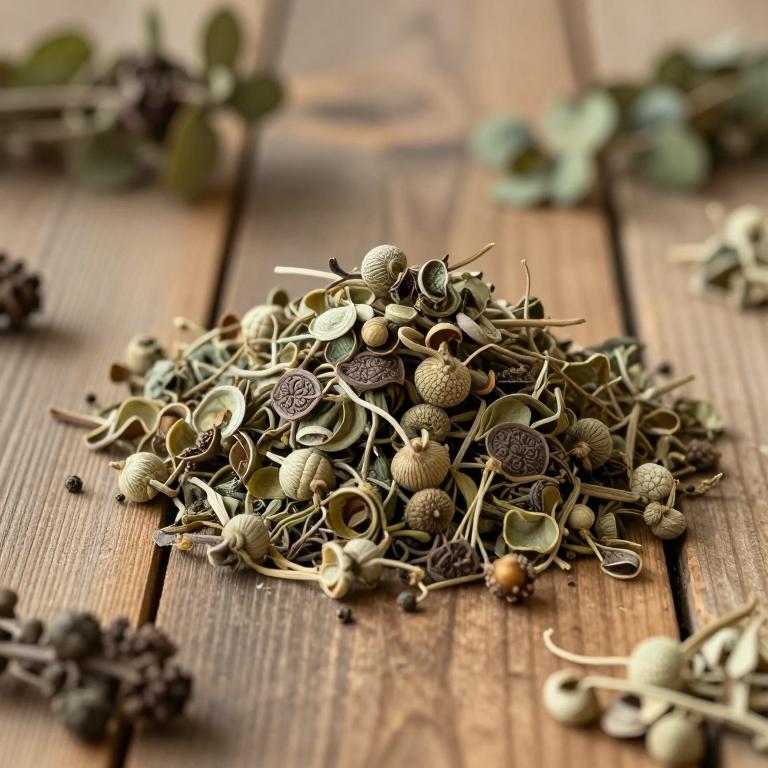
Names and Synonyms
Common Names
- queen coralbead
Scientific Names
Accepted name
Nephroia orbiculataSynonyms
- Menispermum triflorum
- Menispermum hexagynum
- Cebatha integra
- Cebatha virgata
- Cocculus sarmentosus
- Cebatha mollis
- Cocculus orbiculatus var. mollis
- Cocculus mollis
- Holopeira lonchophylla
- Holopeira fecunda
- Ferrandia oleifera
- Cebatha ferrandiana
- Cebatha orbiculata
- Cebatha lonchophylla
- Cocculus sarmentosus var. stenophyllus
- Cissampelos pareira var. orbiculata
- Nephroia sarmentosa
- Nephroia cuneifolia
- Nephroia hastata
- Nephroia ferrandiana
- Nephroia elegans
- Nephroia dilatata
- Nephroia dianthera
- Nephroia ovalifolius
- Cocculus trilobus
- Cocculus orbiculatus
- Cocculus ovalifolius
- Cocculus lonchophyllus
- Cocculus elegans
- Cissampelos orbiculata
- Cebatha cuneifolia
- Cocculus sarmentosus var. linearis
- Cocculus sarmentosus var. pauciflorus
- Menispermum trilobum
- Menispermum ovalifolium
- Menispermum orbiculatum
- Menispermum reniforme
- Cocculus cuneatus
- Cocculus cynanchoides
- Cocculus diantherus
- Cocculus dichopetalus
- Cocculus ferrandianus
- Cocculus hexagynus
- Cocculus integer
- Cocculus lenissimus
- Cocculus mokiangensis
- Cocculus thunbergii
- Cocculus triflorus
- Cocculus virgatus
- Nephroia cynanchoides
- Nephroia mollis
- Nephroia hexagyna
- Nephroia triloba
- Nephroia thunbergii
- Nephroia pubinervis
- Limacia kunstleri
Regional and Traditional Names
French:
- liane d'amarrage
Sources: Wikidata, Catalogue of Life
Taxonomical Classification
This plant belongs to the kingdom Plantae and the phylum Streptophyta, falling under the class Equisetopsida and subclass Magnoliidae. Within the order Ranunculales, it is classified under the family Menispermaceae. Ultimately, its taxonomic identity is defined by its placement within the genus Nephroia.
| Rank | Classification |
|---|---|
| Kingdom | Plantae |
| Phylum | Streptophyta |
| Class | Equisetopsida |
| Subclass | Magnoliidae |
| Order | Ranunculales |
| Family | Menispermaceae |
| Genus | Nephroia |
Sources: The World Checklist of Vascular Plants (WCVP)
Distribution
This plant exhibits a diverse geographical distribution spanning both the Indian Ocean and various regions of East Asia. Within the Western Indian Ocean, its presence is specifically noted on the island of Réunion. In the vast territory of China, it can be found across multiple distinct climatic zones. Specifically, its range includes the South-Central, North-Central, and Southeast regions of the country. Additionally, the species is documented to grow on the tropical island of Hainan.
| Region | Area |
|---|---|
| Western Indian Ocean | Réunion |
| China | China South-Central |
| China | Hainan |
| China | China North-Central |
| China | China Southeast |
| Eastern Asia | Japan |
| Eastern Asia | Korea |
| Eastern Asia | Nansei-shoto |
| Eastern Asia | Taiwan |
| Indian Subcontinent | Assam |
Sources: The World Checklist of Vascular Plants (WCVP)
Plant Parts
Nephroia orbiculata has 6 reported plant parts identified across 7 scientific publications and several other databases that are studied for medicinal purposes. The most consistently reported plant part include root, flower, fruit, leaf, rhizome.
| Plant part | Supporting sources | Consensus |
|---|---|---|
| Root | 2 supporting sources | ★☆☆☆☆ |
| Flower | 1 supporting sources | ★☆☆☆☆ |
| Fruit | 1 supporting sources | ★☆☆☆☆ |
| Leaf | 1 supporting sources | ★☆☆☆☆ |
| Rhizome | 1 supporting sources | ★☆☆☆☆ |
| Stem | 1 supporting sources | ★☆☆☆☆ |
Root
- Zhong yao cai = Zhongyaocai = Journal of Chinese medicinal materials
- Analytical methods : advancing methods and applications
Flower
- Analytical methods : advancing methods and applications
Fruit
- Analytical methods : advancing methods and applications
Leaf
- Analytical methods : advancing methods and applications
Rhizome
- Bioscience, biotechnology, and biochemistry
Stem
- Analytical methods : advancing methods and applications
Chemicals
Nephroia orbiculata has 14 reported phytochemicals identified across 7 scientific publications and several other databases. The most consistently reported chemicals include (+)-10-Hydroxyisotrilobine, (+)-Coccuorbiculatine A, (+)-Cocsoline, (+)-cocsuline, (-)-4-methoxy-13,14-dihydrooxypalmatine.
| Chemical | Supporting sources | Consensus |
|---|---|---|
| (+)-10-Hydroxyisotrilobine | 1 supporting sources | ★☆☆☆☆ |
| (+)-Coccuorbiculatine A | 1 supporting sources | ★☆☆☆☆ |
| (+)-Cocsoline | 1 supporting sources | ★☆☆☆☆ |
| (+)-cocsuline | 1 supporting sources | ★☆☆☆☆ |
| (-)-4-methoxy-13,14-dihydrooxypalmatine | 1 supporting sources | ★☆☆☆☆ |
| (-)-Coclaurine | 1 supporting sources | ★☆☆☆☆ |
| (-)-Sinococuline | 1 supporting sources | ★☆☆☆☆ |
| Aporphine alkaloid | 1 supporting sources | ★☆☆☆☆ |
| BETA-SITOSTEROL | 1 supporting sources | ★☆☆☆☆ |
| Daucosterol | 1 supporting sources | ★☆☆☆☆ |
(+)-10-Hydroxyisotrilobine
- Journal of natural products
(+)-Coccuorbiculatine A
- Journal of natural products
(+)-Cocsoline
- Zhong yao cai = Zhongyaocai = Journal of Chinese medicinal materials
(+)-cocsuline
- Zhong yao cai = Zhongyaocai = Journal of Chinese medicinal materials
(-)-4-methoxy-13,14-dihydrooxypalmatine
- Journal of natural products
(-)-Coclaurine
- Zhong yao cai = Zhongyaocai = Journal of Chinese medicinal materials
(-)-Sinococuline
- Journal of natural products
Aporphine alkaloid
- Molecules (Basel, Switzerland)
BETA-SITOSTEROL
- Zhong yao cai = Zhongyaocai = Journal of Chinese medicinal materials
Daucosterol
- Zhong yao cai = Zhongyaocai = Journal of Chinese medicinal materials
Activities
Nephroia orbiculata has 2 reported activities identified across 7 scientific publications and several other databases. The most consistently reported activities include Analgesic, Diuretic.
| Activity | Supporting sources | Consensus |
|---|---|---|
| Analgesic | 1 supporting sources | ★☆☆☆☆ |
| Diuretic | 1 supporting sources | ★☆☆☆☆ |
Analgesic
- Analytical methods : advancing methods and applications
Diuretic
- Analytical methods : advancing methods and applications
Preparations
Nephroia orbiculata has 2 reported preparations identified across 7 scientific publications and several other databases. The most consistently reported preparations include dried roots, ethyl acetate fraction derived from the rhizome.
| Preparation | Supporting sources | Consensus |
|---|---|---|
| Dried roots | 1 supporting sources | ★☆☆☆☆ |
| Ethyl acetate fraction derived from the rhizome | 1 supporting sources | ★☆☆☆☆ |
Dried roots
- Analytical methods : advancing methods and applications
Ethyl acetate fraction derived from the rhizome
- Bioscience, biotechnology, and biochemistry