dwarf catnip
Nepeta racemosa · Accepted scientific name
Scientific literature: Very Extensive (322 studies) · ★★★★★
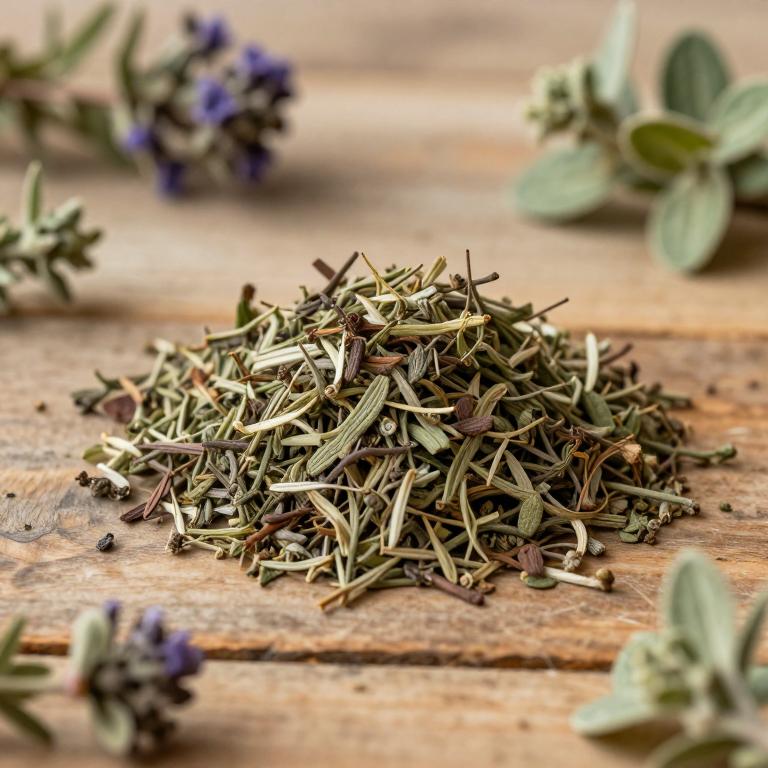
Dwarf catnip, scientifically known as Nepeta racemosa, is a hardy, low-growing perennial prized in both ornamental gardens and traditional herbalism. Characterized by its cascading lavender blooms and aromatic foliage, this resilient plant thrives in sunny conditions, offering pollinator benefits and mild therapeutic properties used in various medicinal preparations.
- Family
- Lamiaceae
- Native range
- Europe
- Parts used
- Not available
- Common names
- Eastern Cat-Mint · Eastern Catmint · 1 more
- Scientific synonyms
- Nepeta Grandiflora Var. Racemosa · Glechoma Racemosa
Names and Synonyms
Common Names
- Eastern Cat-mint
- eastern catmint
- raceme catnip
Scientific Names
Accepted name
Nepeta racemosaSynonyms
- Nepeta grandiflora var. racemosa
- Glechoma racemosa
Regional and Traditional Names
German:
- Trauben-Katzenminze
- traubige Katzenminze
- Blaue Katzenminze
- Trauben-Katzenminze
French:
- Nepeta a grappes
- Chataire
- Herbe à chat
- Herbe-aux-chats
- Menthe des chats
- Népète de Mussin
- Népète de Mussin-Pouchkine
- Népéta de Mussin
Sources: Wikidata, Catalogue of Life
Taxonomical Classification
This plant belongs to the kingdom Plantae within the phylum Streptophyta and the class Equisetopsida. Classified under the subclass Magnoliidae and the order Lamiales, it is a member of the Lamiaceae family. Finally, its taxonomic identity is defined by its placement in the genus Nepeta.
| Rank | Classification |
|---|---|
| Kingdom | Plantae |
| Phylum | Streptophyta |
| Class | Equisetopsida |
| Subclass | Magnoliidae |
| Order | Lamiales |
| Family | Lamiaceae |
| Genus | Nepeta |
Sources: The World Checklist of Vascular Plants (WCVP)
Distribution
This plant exhibits a diverse geographical range across several regions of Europe. In Northern Europe, its presence can be documented within Great Britain. Its distribution continues through Middle Europe, where it is found in Austria, Germany, and the Czechia-Slovakia region. Additionally, the species extends into Southwestern Europe, specifically inhabiting parts of Spain. These various locations highlight the widespread natural occurrence of Nepeta racemosa across the continent.
| Region | Area |
|---|---|
| Northern Europe | Great Britain |
| Middle Europe | Austria |
| Middle Europe | Czechia-Slovakia |
| Middle Europe | Germany |
| Southwestern Europe | Spain |
| Caucasus | Transcaucasus |
| Western Asia | Iran |
| Western Asia | Iraq |
| Western Asia | Türkiye |
| New Zealand | New Zealand South |
Sources: The World Checklist of Vascular Plants (WCVP)
Botanical Identification
Ecology
The ecology of Nepeta racemosa is characterized by its preference for lowland habitats, where it thrives in specific environmental niches. It is found within an elevational range that begins at a minimum of 1000 m AMSL, positioning it within distinct altitudinal zones that influence its growth patterns and community interactions. This plant occupies landscape positions that support its physiological requirements, integrating into the local biodiversity of its specific lowland ecosystems.
- Elevational range min:
- 1000 m AMSL
- Habitat :
- Lowland
Life history
The life history of Nepeta racemosa is characterized by its status as a perennial plant, ensuring its persistence across multiple growing seasons. In terms of its growth architecture and survival strategy, it is classified as a hemicryptophyte, meaning its perennial buds are located at or just below the soil surface, protected by leaf litter or ground cover during unfavorable periods. This life form, consistent with its hemicryptophyte designation, allows the species to endure seasonal environmental fluctuations while maintaining a stable presence within its ecological niche.
- Life form :
- hemicryptophyte
- Lifecycle :
- perennial
Morphology
The morphology of Nepeta racemosa is characterized by its growth form as a non-woody herb and forb. It is a self-supporting plant that does not function as a climber or a parasite, maintaining an independent lifestyle. Primarily terrestrial in its habitat, it is neither aquatic nor an epiphyte. The plant exhibits an ascending shoot orientation, with a relatively low stature, reaching a minimum height of 0.1 m and a maximum height of 0.9 m.
- Aquatic :
- terrestrial
- Climber :
- self-supporting
- Epiphyte :
- terrestrial
- Growth form :
- herb
- Growth form :
- forb
- Parasite :
- independent
- Plant height max:
- 0.9 m
- Plant height min:
- 0.1 m
- Shoot orientation :
- ascending
- Woodiness :
- non-woody
Physiology
The physiology of Nepeta racemosa is characterized by a C3 photosynthetic pathway, which dictates its metabolic efficiency and carbon fixation processes under typical environmental conditions. The vegetative morphology is defined by specific foliar dimensions, where the leaves exhibit a consistent leaf width of 1.3 cm, showing no variation between its minimum, mean, and maximum recorded values. In terms of longitudinal development, the leaves reach a maximum length of 3.5 cm, providing a structural framework that supports the plant's overall energy production and gas exchange capabilities.
- Leaf length max:
- 3.5 cm
- Leaf width mean:
- 1.3 cm
- Photosynthetic pathway :
- C3
Reproduction
The reproduction of Nepeta racemosa is characterized by a seasonal flowering period that typically begins in April and concludes in August, though the timing can be variable. The plant produces small fruits with an average length of 0.2 cm. Its seeds are extremely lightweight, maintaining a consistent mass across minimum, mean, and maximum measurements of approximately 8e-04 g. Regarding its dispersal strategy, the species exhibits an unspecialized dispersal syndrome, utilizing a non-specific approach that does not rely on a single specialized mechanism for propagation.
- Dispersal syndrome :
- unspecialized
- Flowering time :
- Apr
- Flowering time :
- Aug
- Fruit length mean:
- 0.2 cm
- Seed mass mean:
- 8e-04 g
Sources: Global Inventory of Floras and Traits (GIFT)
Chemicals
Nepeta racemosa has 73 reported phytochemicals identified across 0 scientific publications and several other databases. The most consistently reported chemicals include (E)-2-HEXENAL, (E)-3-Hexenal, (Z)-3-HEXENOL, (Z)-BETA-OCIMENE, 1,8-Cineole.
| Chemical | Supporting sources | Consensus |
|---|---|---|
| (E)-2-HEXENAL | 1 supporting sources | ★☆☆☆☆ |
| (E)-3-Hexenal | 1 supporting sources | ★☆☆☆☆ |
| (Z)-3-HEXENOL | 1 supporting sources | ★☆☆☆☆ |
| (Z)-BETA-OCIMENE | 1 supporting sources | ★☆☆☆☆ |
| 1,8-Cineole | 1 supporting sources | ★☆☆☆☆ |
| 2-Butanone | 1 supporting sources | ★☆☆☆☆ |
| 5-METHYL-3-HEPTANONE | 1 supporting sources | ★☆☆☆☆ |
| 6-METHYL-5-HEPTEN-2-ONE | 1 supporting sources | ★☆☆☆☆ |
| 6-Methyl-3-heptanol | 1 supporting sources | ★☆☆☆☆ |
| ACETOPHENONE | 1 supporting sources | ★☆☆☆☆ |
(E)-2-HEXENAL
- Dr. Duke
(E)-3-Hexenal
- Dr. Duke
(Z)-3-HEXENOL
- Dr. Duke
(Z)-BETA-OCIMENE
- Dr. Duke
1,8-Cineole
- Dr. Duke
2-Butanone
- Dr. Duke
5-METHYL-3-HEPTANONE
- Dr. Duke
6-METHYL-5-HEPTEN-2-ONE
- Dr. Duke
6-Methyl-3-heptanol
- Dr. Duke
ACETOPHENONE
- Dr. Duke
Activities
Nepeta racemosa has 240 reported activities identified across 0 scientific publications and several other databases. The most consistently reported activities include Anthelmintic, Antioxidant, (-)-Chronotropic, (-)-Inotropic, ACE-Inhibitor.
| Activity | Supporting sources | Consensus |
|---|---|---|
| Anthelmintic | 2 supporting sources | ★☆☆☆☆ |
| Antioxidant | 2 supporting sources | ★☆☆☆☆ |
| (-)-Chronotropic | 1 supporting sources | ★☆☆☆☆ |
| (-)-Inotropic | 1 supporting sources | ★☆☆☆☆ |
| ACE-Inhibitor | 1 supporting sources | ★☆☆☆☆ |
| AChE-Inhibitor | 1 supporting sources | ★☆☆☆☆ |
| Abortifacient | 1 supporting sources | ★☆☆☆☆ |
| Acaricide | 1 supporting sources | ★☆☆☆☆ |
| Aldose-Reductase-Inhibitor | 1 supporting sources | ★☆☆☆☆ |
| Allelochemic | 1 supporting sources | ★☆☆☆☆ |
Anthelmintic
- Dr. Duke
- Pathogens (Basel, Switzerland)
Antioxidant
- Dr. Duke
- Pathogens (Basel, Switzerland)
(-)-Chronotropic
- Dr. Duke
(-)-Inotropic
- Dr. Duke
ACE-Inhibitor
- Dr. Duke
AChE-Inhibitor
- Dr. Duke
Abortifacient
- Dr. Duke
Acaricide
- Dr. Duke
Aldose-Reductase-Inhibitor
- Dr. Duke
Allelochemic
- Dr. Duke