Hairless Cat-mint
Nepeta nuda · Accepted scientific name
Scientific literature: Very Sparse (41 studies) · ★☆☆☆☆
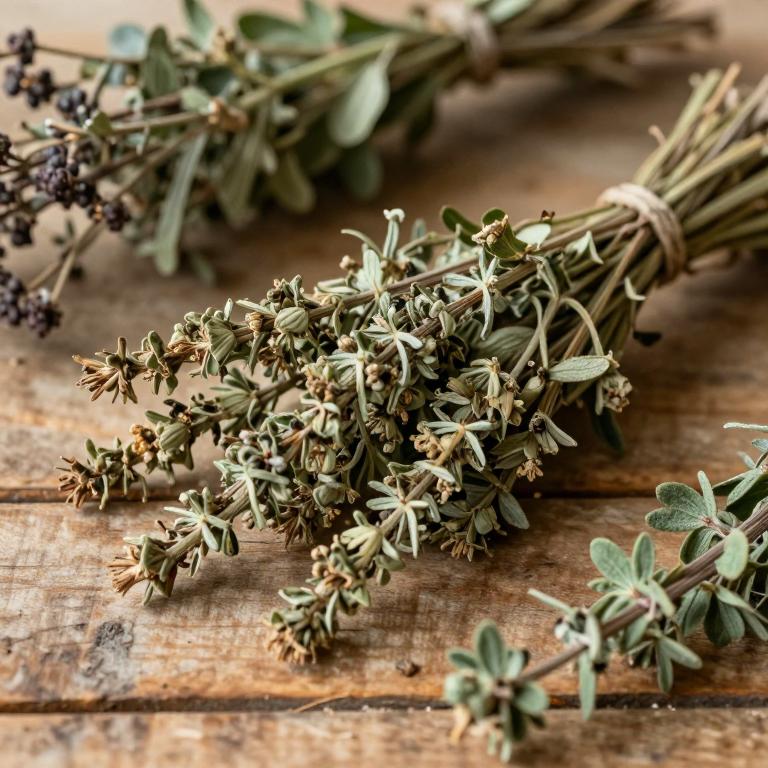
Hairless Cat-mint, scientifically known as Nepeta nuda, is a perennial herb within the Lamiaceae family. Characterized by its smooth, leafless stems and delicate lavender flowers, this plant is prized for its aromatic properties. It serves as both an ornamental garden beauty and a traditional remedy in various medicinal practices.
- Family
- Lamiaceae
- Native range
- Europe
- Parts used
- Flower · Leaf
- Common names
- Hairless Cat-Mint · Hairless Catmint
- Scientific synonyms
- Glechoma Nuda · Cataria Nuda
Names and Synonyms
Common Names
- Hairless Cat-mint
- hairless catmint
Scientific Names
Accepted name
Nepeta nudaSynonyms
- Glechoma nuda
- Cataria nuda
Regional and Traditional Names
German:
- Kahle Katzenminze
- Pannonische Katzenminze
- Nepeta pannonica
- kahle Katzenminze
- pannonische Katzenminze
- Kahler Andorn
French:
- Nepeta glabre
- Népéta glabre
- Népéta nu
Sources: Wikidata, Catalogue of Life
Taxonomical Classification
This plant belongs to the kingdom Plantae within the phylum Streptophyta and is classified under the class Equisetopsida. Following the subclass Magnoliidae, it is organized into the order Lamiales and the family Lamiaceae. Finally, it is identified by the genus Nepeta, specifically as the species Nepeta nudata.
| Rank | Classification |
|---|---|
| Kingdom | Plantae |
| Phylum | Streptophyta |
| Class | Equisetopsida |
| Subclass | Magnoliidae |
| Order | Lamiales |
| Family | Lamiaceae |
| Genus | Nepeta |
Sources: The World Checklist of Vascular Plants (WCVP)
Distribution
This plant is primarily distributed throughout the central regions of the European continent. Specifically, it can be found growing in the landscapes of Middle Europe. Its presence is documented across several countries, including Austria and Germany. It also inhabits the territories of Czechia-Slovakia and Hungary. Finally, the geographical range of this species extends into Poland.
| Region | Area |
|---|---|
| Middle Europe | Austria |
| Middle Europe | Czechia-Slovakia |
| Middle Europe | Germany |
| Middle Europe | Hungary |
| Middle Europe | Poland |
| Middle Europe | Switzerland |
| Southwestern Europe | France |
| Southwestern Europe | Portugal |
| Southwestern Europe | Spain |
| Southeastern Europe | Albania |
Sources: The World Checklist of Vascular Plants (WCVP)
Botanical Identification
Ecology
The ecology of Nepeta nuda is characterized by its preference for specific transitional environments and diverse topographical settings. This species typically flourishes within forest edges, meadows, and mountainous regions, where it can take advantage of varying levels of light availability and soil moisture. By inhabiting the margins of forests and open meadows, the plant occupies ecotones that provide a balance between sheltered woodland conditions and the increased solar exposure found in open grasslands. Its presence in mountainous habitats suggests an adaptability to varying elevations and potentially cooler temperate climates, where the terrain provides the necessary drainage and microclimates essential for its growth and survival.
- Habitat :
- forest edges, meadows, mountains
Life history
The life history of Nepeta nuda is characterized by its classification as a perennial plant, meaning it persists through multiple growing seasons rather than completing its life cycle in a single year. Structurally, the species functions as a hemicryptophyte, a life form where the perennating buds are located at the soil surface, protected by leaf litter or surface debris during unfavorable conditions. This growth strategy allows the plant to re-emerge annually from its base, ensuring long-term survival and establishment within its ecological niche.
- Life form :
- hemicryptophyte
- Lifecycle :
- perennial
Morphology
The morphology of Nepeta nudata is characterized by a non-woody, herbaceous growth form, functioning as a self-supporting herb. It is a terrestrial species that grows independently, rather than acting as a parasite or an epiphyte. In terms of stature, the plant typically reaches a mean height of 0.6 m, though its physical dimensions can range from a minimum of 0.5 m to a maximum height of 1.2 m. As a self-supporting organism, it does not exhibit climbing tendencies such as a liana or vine.
- Aquatic :
- terrestrial
- Climber :
- self-supporting
- Epiphyte :
- terrestrial
- Growth form :
- herb
- Parasite :
- independent
- Plant height max:
- 1.2 m
- Plant height mean:
- 0.6 m
- Plant height min:
- 0.5 m
- Woodiness :
- non-woody
Physiology
The physiology of Nepeta nuda is characterized by a specialized metabolic framework optimized for temperate environments, primarily utilizing a C3 photosynthetic pathway. In this process, carbon dioxide is fixed directly into a three-carbon compound via the enzyme RuBisCO during the Calvin cycle, a mechanism that allows the plant to efficiently manage gas exchange under moderate light and moisture conditions. Beyond its carbon fixation strategy, the plant's physiological processes are heavily driven by the biosynthesis of secondary metabolites, particularly nepetalactones and other terpenoids, which are produced through complex metabolic pathways in the glandular trichomes. These chemical processes are closely integrated with its water-use efficiency and transpiration rates, which are regulated by stomatal conductance to maintain cellular homeostasis and support the energetic demands of its growth cycles.
- Photosynthetic pathway :
- C3
Reproduction
The reproduction of Nepeta nuda is characterized by a sexual process involving bisexual flowers, which facilitates genetic diversity. The flowering period typically commences in June and concludes in August. During this reproductive phase, the plant relies on biotic pollination, specifically utilizing an insect pollination syndrome to ensure successful fertilization; notably, self-fertilization is absent in this species. Once fertilization occurs, the plant produces seeds with a mean mass of approximately 0.00091466675 g, with individual seed masses ranging from a minimum of 0.0004 g to a maximum of 0.00197 g. The dispersal of these seeds follows a zoochorous syndrome, meaning they are spread via animals to facilitate the colonization of new habitats.
- Dispersal syndrome :
- zoochorous
- Flowering time :
- Jun
- Flowering time :
- Aug
- Pollination syndrome :
- insect
- Pollination syndrome :
- biotic
- Reproduction sexual :
- bisexual
- Seed mass max:
- 0.00197 g
- Seed mass mean:
- 0.00091466675 g
- Seed mass min:
- 4e-04 g
- Self fertilization :
- absent
Sources: Global Inventory of Floras and Traits (GIFT)
Plant Parts
Nepeta nuda has 2 reported plant parts identified across 2 scientific publications and several other databases that are studied for medicinal purposes. The most consistently reported plant part include flower, leaf.
| Plant part | Supporting sources | Consensus |
|---|---|---|
| Flower | 1 supporting sources | ★☆☆☆☆ |
| Leaf | 1 supporting sources | ★☆☆☆☆ |
Flower
- Frontiers in plant science
Leaf
- Frontiers in plant science
Chemicals
Nepeta nuda has 19 reported phytochemicals identified across 2 scientific publications and several other databases. The most consistently reported chemicals include Flavonoids, Iridoids, Sugars, rosmarinic acid, 6-Benzylaminopurine.
| Chemical | Supporting sources | Consensus |
|---|---|---|
| Flavonoids | 2 supporting sources | ★☆☆☆☆ |
| Iridoids | 2 supporting sources | ★☆☆☆☆ |
| Sugars | 2 supporting sources | ★☆☆☆☆ |
| rosmarinic acid | 2 supporting sources | ★☆☆☆☆ |
| 6-Benzylaminopurine | 1 supporting sources | ★☆☆☆☆ |
| Alcohols | 1 supporting sources | ★☆☆☆☆ |
| Alkanes | 1 supporting sources | ★☆☆☆☆ |
| CHLOROGENIC ACID | 1 supporting sources | ★☆☆☆☆ |
| Cirsimaritin | 1 supporting sources | ★☆☆☆☆ |
| FA | 1 supporting sources | ★☆☆☆☆ |
Flavonoids
- Frontiers in plant science
- Plants (Basel, Switzerland)
Iridoids
- Frontiers in plant science
- Plant physiology and biochemistry : PPB
Sugars
- Plant physiology and biochemistry : PPB
- Metabolites
rosmarinic acid
- Frontiers in plant science
- Plant physiology and biochemistry : PPB
6-Benzylaminopurine
- Plant physiology and biochemistry : PPB
Alcohols
- Metabolites
Alkanes
- Metabolites
CHLOROGENIC ACID
- Frontiers in plant science
Cirsimaritin
- Frontiers in plant science
FA
- Frontiers in plant science
Activities
Nepeta nuda has 6 reported activities identified across 2 scientific publications and several other databases. The most consistently reported activities include Antioxidant, Antimicrobial, Antiviral, Antibacterial, Antiproliferative.
| Activity | Supporting sources | Consensus |
|---|---|---|
| Antioxidant | 3 supporting sources | ★★☆☆☆ |
| Antimicrobial | 2 supporting sources | ★☆☆☆☆ |
| Antiviral | 2 supporting sources | ★☆☆☆☆ |
| Antibacterial | 1 supporting sources | ★☆☆☆☆ |
| Antiproliferative | 1 supporting sources | ★☆☆☆☆ |
| Antitumor | 1 supporting sources | ★☆☆☆☆ |
Antioxidant
- Frontiers in plant science
- Life (Basel, Switzerland)
- Metabolites
Antimicrobial
- Frontiers in plant science
- Life (Basel, Switzerland)
Antiviral
- Life (Basel, Switzerland)
- Metabolites
Antibacterial
- Metabolites
Antiproliferative
- Life (Basel, Switzerland)
Antitumor
- Life (Basel, Switzerland)
Conditions
Nepeta nuda has 5 reported investigations on conditions identified across 2 scientific publications and several other databases. The most consistently reported conditions include antioxidant, antiviral, breast cancer, colon cancer, liver cancer.
| Condition | Supporting sources | Consensus |
|---|---|---|
| Antioxidant | 1 supporting sources | ★☆☆☆☆ |
| Antiviral | 1 supporting sources | ★☆☆☆☆ |
| Breast cancer | 1 supporting sources | ★☆☆☆☆ |
| Colon cancer | 1 supporting sources | ★☆☆☆☆ |
| Liver cancer | 1 supporting sources | ★☆☆☆☆ |
Antioxidant
- Metabolites
Antiviral
- Metabolites
Breast cancer
- Life (Basel, Switzerland)
Colon cancer
- Life (Basel, Switzerland)
Liver cancer
- Life (Basel, Switzerland)
Preparations
Nepeta nuda has 1 reported preparations identified across 2 scientific publications and several other databases. The most consistently reported preparations include extracts.
| Preparation | Supporting sources | Consensus |
|---|---|---|
| Extracts | 1 supporting sources | ★☆☆☆☆ |
Extracts
- Frontiers in plant science