Nepeta menthoides
Nepeta menthoides · Accepted scientific name
Scientific literature: Very Sparse (15 studies) · ★☆☆☆☆
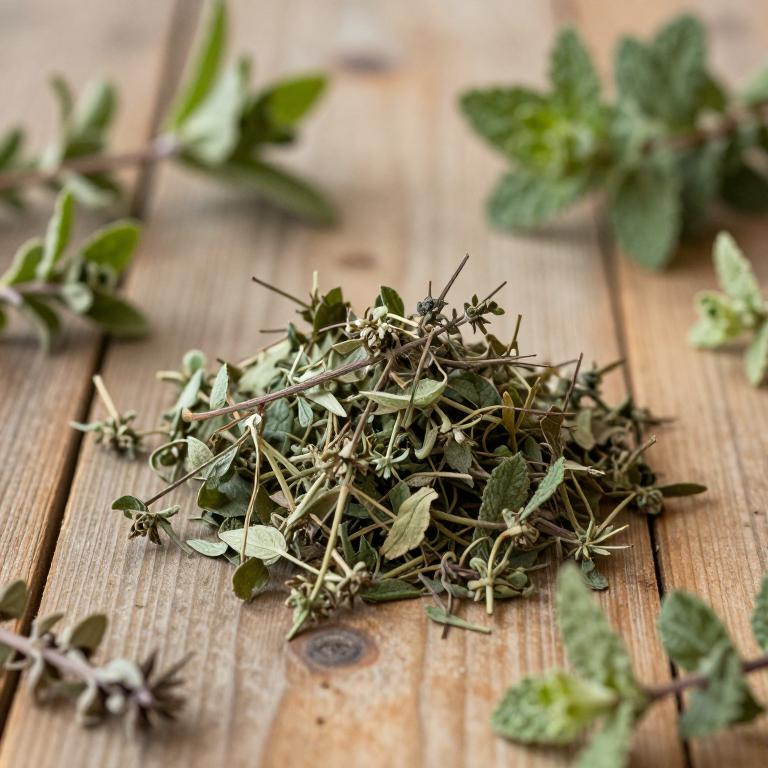
, scientifically known as Nepeta menthoides, is a perennial herb belonging to the Lamiaceae family. Often mistaken for mint, this aromatic plant is valued for its distinctive fragrance and traditional medicinal properties. It is frequently studied for its potential bioactive compounds, offering unique therapeutic possibilities in herbal medicine practices.
- Family
- Lamiaceae
- Native range
- Asia-Temperate
- Parts used
- Flower
- Common names
- Not available
- Scientific synonyms
- Not available
Names and Synonyms
Scientific Names
Accepted name
Nepeta menthoidesSources: Wikidata
Taxonomical Classification
This plant belongs to the kingdom Plantae and the phylum Streptophyta, placing it within the class Equisetopsida and subclass Magnoliidae. It is further classified under the order Lamiales and the family Lamiaceae. Finally, it is categorized under the genus Nepeta.
| Rank | Classification |
|---|---|
| Kingdom | Plantae |
| Phylum | Streptophyta |
| Class | Equisetopsida |
| Subclass | Magnoliidae |
| Order | Lamiales |
| Family | Lamiaceae |
| Genus | Nepeta |
Sources: The World Checklist of Vascular Plants (WCVP)
Distribution
This plant exhibits a specific geographical distribution concentrated within the region of Western Asia. Its presence is documented in the country of Iran, where it grows naturally in the local landscape. Additionally, the species can be found extending into the neighboring territory of Iraq. These two nations represent the primary areas where its wild populations are identified. Consequently, the known range of this medicinal species is limited to these specific parts of Western Asia.
| Region | Area |
|---|---|
| Western Asia | Iran |
| Western Asia | Iraq |
Sources: The World Checklist of Vascular Plants (WCVP)
Botanical Identification
Life history
The life history of Nepeta menthoides is characterized by its classification as a hemicryptophyte, a life form that allows it to survive unfavorable seasons by protecting its perennating buds at the soil surface level. This survival strategy is consistent across its developmental stages, as it maintains a hemicryptophyte status throughout its life cycle, ensuring its persistence in its natural habitat. By positioning its regenerative buds at the soil-atmosphere interface, the plant can effectively withstand environmental stressors such as temperature fluctuations or seasonal changes, facilitating its perennial growth pattern.
- Life form :
- hemicryptophyte
Morphology
The morphology of Nepeta menthoides is characterized by its growth habit as a self-supporting plant, meaning it does not require external structures to climb and functions as an obligatory self-supporting organism. It is an independent species that does not exhibit parasitic behavior, operating entirely as an independent entity without relying on a host for nutrients. Furthermore, the plant is strictly terrestrial in its ecological niche, functioning as a terrestrial organism rather than an epiphyte, establishing its root systems and structure within the soil.
- Climber :
- self-supporting
- Epiphyte :
- terrestrial
- Parasite :
- independent
Sources: Global Inventory of Floras and Traits (GIFT)
Plant Parts
Nepeta menthoides has 1 reported plant parts identified across 1 scientific publications and several other databases that are studied for medicinal purposes. The most consistently reported plant part include flower.
| Plant part | Supporting sources | Consensus |
|---|---|---|
| Flower | 1 supporting sources | ★☆☆☆☆ |
Flower
- Natural product communications
Chemicals
Nepeta menthoides has 5 reported phytochemicals identified across 1 scientific publications and several other databases. The most consistently reported chemicals include 1,8-Cineole, Flavonoid, NO, caffeic acid, rosmarinic acid.
| Chemical | Supporting sources | Consensus |
|---|---|---|
| 1,8-Cineole | 1 supporting sources | ★☆☆☆☆ |
| Flavonoid | 1 supporting sources | ★☆☆☆☆ |
| NO | 1 supporting sources | ★☆☆☆☆ |
| caffeic acid | 1 supporting sources | ★☆☆☆☆ |
| rosmarinic acid | 1 supporting sources | ★☆☆☆☆ |
1,8-Cineole
- Natural product communications
Flavonoid
- Iranian journal of medical sciences
NO
- Heliyon
caffeic acid
- Pakistan journal of biological sciences : PJBS
rosmarinic acid
- Pakistan journal of biological sciences : PJBS
Activities
Nepeta menthoides has 3 reported activities identified across 1 scientific publications and several other databases. The most consistently reported activities include Antifungal, Antimicrobial, Cytotoxic.
| Activity | Supporting sources | Consensus |
|---|---|---|
| Antifungal | 1 supporting sources | ★☆☆☆☆ |
| Antimicrobial | 1 supporting sources | ★☆☆☆☆ |
| Cytotoxic | 1 supporting sources | ★☆☆☆☆ |
Antifungal
- Cellular and molecular biology (Noisy-le-Grand, France)
Antimicrobial
- Natural product research
Cytotoxic
- Natural product research
Conditions
Nepeta menthoides has 5 reported investigations on conditions identified across 1 scientific publications and several other databases. The most consistently reported conditions include depression, anxiety, breast cancer, epilepsy, seizures.
| Condition | Supporting sources | Consensus |
|---|---|---|
| Depression | 2 supporting sources | ★☆☆☆☆ |
| Anxiety | 1 supporting sources | ★☆☆☆☆ |
| Breast cancer | 1 supporting sources | ★☆☆☆☆ |
| Epilepsy | 1 supporting sources | ★☆☆☆☆ |
| Seizures | 1 supporting sources | ★☆☆☆☆ |
Depression
- Iranian journal of medical sciences
- Heliyon
Anxiety
- Iranian journal of medical sciences
Breast cancer
- Natural product research
Epilepsy
- Heliyon
Seizures
- Heliyon
Preparations
Nepeta menthoides has 7 reported preparations identified across 1 scientific publications and several other databases. The most consistently reported preparations include Nepeta menthoides capsules, Pharmaceutical capsules, aqueous extract, essential oil, extract.
| Preparation | Supporting sources | Consensus |
|---|---|---|
| Nepeta menthoides capsules | 1 supporting sources | ★☆☆☆☆ |
| Pharmaceutical capsules | 1 supporting sources | ★☆☆☆☆ |
| Aqueous extract | 1 supporting sources | ★☆☆☆☆ |
| Essential oil | 1 supporting sources | ★☆☆☆☆ |
| Extract | 1 supporting sources | ★☆☆☆☆ |
| Freeze-dried aqueous extract | 1 supporting sources | ★☆☆☆☆ |
| Hydro alcoholic extract | 1 supporting sources | ★☆☆☆☆ |
Nepeta menthoides capsules
- Journal of evidence-based complementary & alternative medicine
Pharmaceutical capsules
- Journal of evidence-based complementary & alternative medicine
Aqueous extract
- Pakistan journal of biological sciences : PJBS
Essential oil
- Natural product communications
Extract
- Pakistan journal of biological sciences : PJBS
Freeze-dried aqueous extract
- Iranian journal of medical sciences
Hydro alcoholic extract
- Heliyon