Nepeta deflersiana
Nepeta deflersiana · Accepted scientific name
Scientific literature: Very Sparse (8 studies) · ★☆☆☆☆
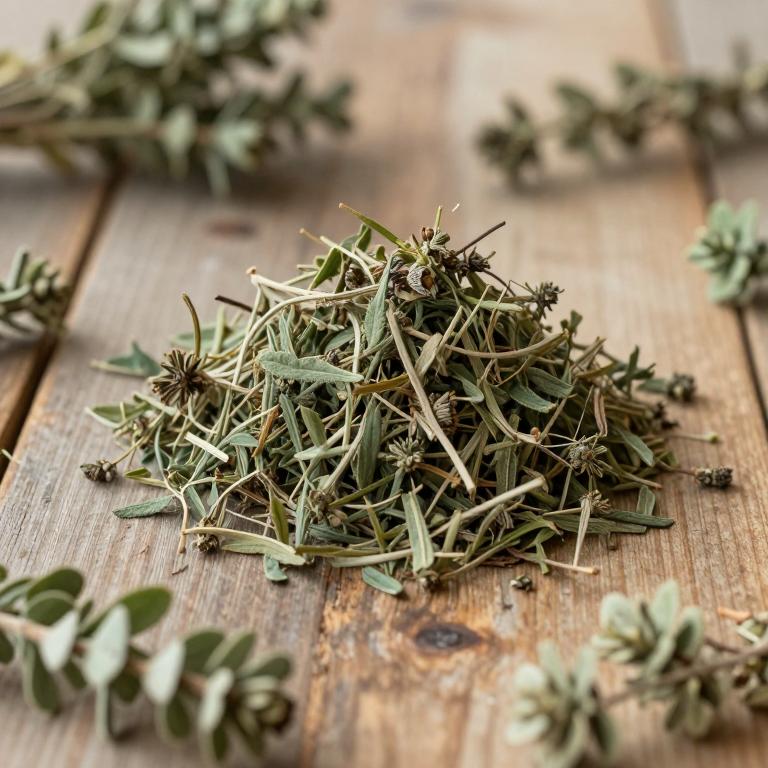
, scientifically known as Nepeta deflersiana, is a captivating perennial herb belonging to the Lamiaceae family. Native to specific mountainous regions, this plant is distinguished by its aromatic foliage and delicate blooms. Renowned in traditional herbalism, it offers unique therapeutic potential, making it a fascinating subject for botanical study.
- Family
- Lamiaceae
- Native range
- Asia-Temperate
- Parts used
- Not available
- Common names
- Not available
- Scientific synonyms
- Not available
Names and Synonyms
Scientific Names
Accepted name
Nepeta deflersianaSources: Wikidata
Taxonomical Classification
This plant belongs to the kingdom Plantae within the phylum Streptophyta and the class Equisetopsida. It is further classified under the subclass Magnoliidae in the order Lamiales and the family Lamiaceae. Finally, it is identified as a member of the genus Nepeta.
| Rank | Classification |
|---|---|
| Kingdom | Plantae |
| Phylum | Streptophyta |
| Class | Equisetopsida |
| Subclass | Magnoliidae |
| Order | Lamiales |
| Family | Lamiaceae |
| Genus | Nepeta |
Sources: The World Checklist of Vascular Plants (WCVP)
Distribution
This plant, known scientifically as Nepeta deflersiana, exhibits a specific geographical range within the Middle East. Its distribution is primarily concentrated within the unique landscapes of the Arabian Peninsula. Specifically, this medicinal species can be found growing in the country of Saudi Arabia. Additionally, its natural habitat extends into the neighboring territory of Yemen. Consequently, its presence is limited to these particular regions of the Arabian Peninsula.
| Region | Area |
|---|---|
| Arabian Peninsula | Saudi Arabia |
| Arabian Peninsula | Yemen |
Sources: The World Checklist of Vascular Plants (WCVP)
Botanical Identification
Life history
The life history of Nepeta deflersiana is characterized by its specific survival strategies and growth forms adapted to its environment. It exhibits a dual classification of life forms, functioning primarily as a chamaephyte, where its perennating buds are located close to the ground surface, often protected by a layer of organic matter or soil. Additionally, its life history can be described through the lens of a hemicryptophyte, indicating that its overwintering buds are positioned at the soil surface, allowing the plant to endure seasonal changes by protecting its regenerative tissues. These traits collectively define its perennial nature and its ability to persist through varying climatic conditions by maintaining low-profile growth structures.
- Life form :
- hemicryptophyte
- Life form :
- chamaephyte
Morphology
The morphology of Nepeta deflersiana is characterized by its growth form as a herb, exhibiting a non-woody structure throughout its development. It functions as an independent organism, meaning it is not a parasite, and maintains a terrestrial habit rather than being an epiphyte. While it possesses a self-supporting climbing mechanism, it does not rely on other structures for its primary upright posture.
- Climber :
- self-supporting
- Epiphyte :
- terrestrial
- Growth form :
- herb
- Parasite :
- independent
- Woodiness :
- non-woody
Reproduction
Reproduction in Nepeta deflersiana is facilitated through the production of specialized seeds that exhibit highly consistent physical characteristics. The reproductive output is characterized by a uniform seed mass, with a recorded mean value of 0.00041 g. This consistency is further evidenced by the fact that both the maximum and minimum seed mass measurements are identical at 0.00041 g, indicating a very low degree of variance in the weight of the individual seeds produced during the reproductive cycle.
- Seed mass mean:
- 0.00041 g
Sources: Global Inventory of Floras and Traits (GIFT)
Chemicals
Nepeta deflersiana has 1 reported phytochemicals identified across 0 scientific publications and several other databases. The most consistently reported chemicals include Ursolic acid.
| Chemical | Supporting sources | Consensus |
|---|---|---|
| Ursolic acid | 1 supporting sources | ★☆☆☆☆ |
Ursolic acid
- Evidence-based complementary and alternative medicine : eCAM
Activities
Nepeta deflersiana has 4 reported activities identified across 0 scientific publications and several other databases. The most consistently reported activities include Antioxidant, Antirheumatic, Carminative, Cytotoxic.
| Activity | Supporting sources | Consensus |
|---|---|---|
| Antioxidant | 1 supporting sources | ★☆☆☆☆ |
| Antirheumatic | 1 supporting sources | ★☆☆☆☆ |
| Carminative | 1 supporting sources | ★☆☆☆☆ |
| Cytotoxic | 1 supporting sources | ★☆☆☆☆ |
Antioxidant
- Evidence-based complementary and alternative medicine : eCAM
Antirheumatic
- Evidence-based complementary and alternative medicine : eCAM
Carminative
- Evidence-based complementary and alternative medicine : eCAM
Cytotoxic
- Evidence-based complementary and alternative medicine : eCAM
Conditions
Nepeta deflersiana has 2 reported investigations on conditions identified across 0 scientific publications and several other databases. The most consistently reported conditions include Gram-positive bacteria, oxidative stress.
| Condition | Supporting sources | Consensus |
|---|---|---|
| Gram-positive bacteria | 1 supporting sources | ★☆☆☆☆ |
| Oxidative stress | 1 supporting sources | ★☆☆☆☆ |
Gram-positive bacteria
- Die Pharmazie
Oxidative stress
- Evidence-based complementary and alternative medicine : eCAM
Preparations
Nepeta deflersiana has 4 reported preparations identified across 0 scientific publications and several other databases. The most consistently reported preparations include chloroform, ethyl acetate, n-butanol extracts, petroleum ether.
| Preparation | Supporting sources | Consensus |
|---|---|---|
| Chloroform | 1 supporting sources | ★☆☆☆☆ |
| Ethyl acetate | 1 supporting sources | ★☆☆☆☆ |
| N-butanol extracts | 1 supporting sources | ★☆☆☆☆ |
| Petroleum ether | 1 supporting sources | ★☆☆☆☆ |
Chloroform
- Evidence-based complementary and alternative medicine : eCAM
Ethyl acetate
- Evidence-based complementary and alternative medicine : eCAM
N-butanol extracts
- Evidence-based complementary and alternative medicine : eCAM
Petroleum ether
- Evidence-based complementary and alternative medicine : eCAM