Syrian catnip
Nepeta curviflora · Accepted scientific name
Scientific literature: Very Sparse (13 studies) · ★☆☆☆☆
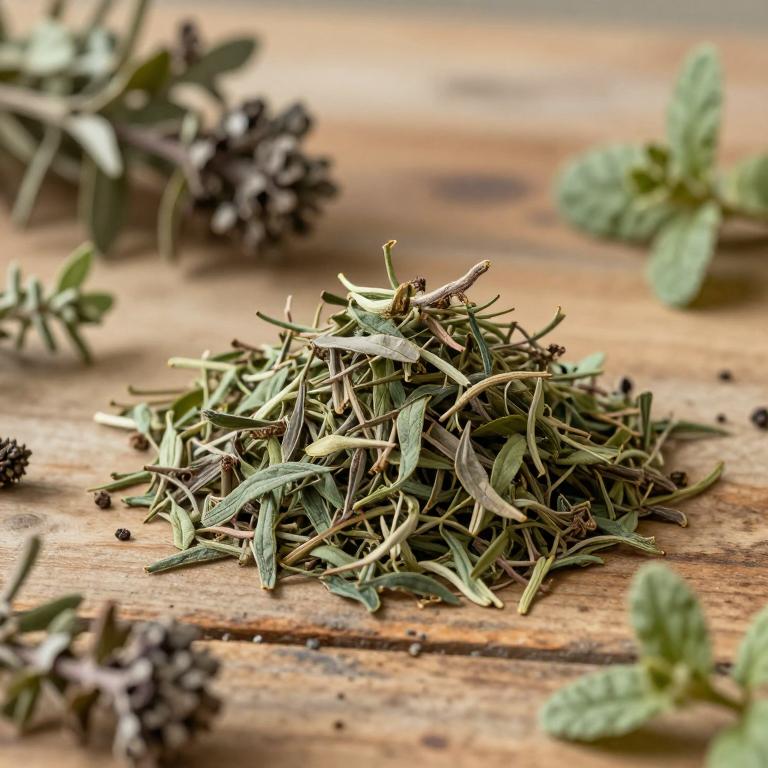
Syrian catnip, scientifically known as Nepeta curviflora, is a distinctive perennial herb native to the Mediterranean region. Renowned for its aromatic foliage and delicate, curved flowers, it belongs to the mint family. This plant is valued in traditional herbalism for its calming properties and its unique attraction to felids.
- Family
- Lamiaceae
- Native range
- Asia-Temperate
- Parts used
- Flower · Leaf
- Common names
- Syrian Catnip
- Scientific synonyms
- Glechoma Curviflora
Names and Synonyms
Common Names
- Syrian catnip
Scientific Names
Accepted name
Nepeta curvifloraSynonyms
- Glechoma curviflora
Sources: Wikidata, Catalogue of Life
Taxonomical Classification
This plant belongs to the kingdom Plantae and is classified under the phylum Streptophyta within the class Equisetopsida. Following its placement in the subclass Magnoliidae and the order Lamiales, it is a member of the family Lamiaceae. Ultimately, it is categorized under the genus Nepeta.
| Rank | Classification |
|---|---|
| Kingdom | Plantae |
| Phylum | Streptophyta |
| Class | Equisetopsida |
| Subclass | Magnoliidae |
| Order | Lamiales |
| Family | Lamiaceae |
| Genus | Nepeta |
Sources: The World Checklist of Vascular Plants (WCVP)
Distribution
This plant exhibits a specific geographical range within the Western Asian region. Its distribution is notably concentrated in the Levant area. Specifically, it can be found growing in the territories of Lebanon and Syria. Additionally, the species is documented to inhabit parts of Palestine. These locations define the primary natural habitat for Nepeta curviflora.
| Region | Area |
|---|---|
| Western Asia | Lebanon-Syria |
| Western Asia | Palestine |
Sources: The World Checklist of Vascular Plants (WCVP)
Botanical Identification
Morphology
The morphology of Nepeta curviflora is characterized by a growth form that transitions between a herb and a subshrub, exhibiting a non-woody structure throughout its development. As an independent organism, it does not function as a parasite, maintaining its own nutritional processes without reliance on a host. Regarding its ecological habitat and moisture preference, the plant is primarily terrestrial, though it can be categorized within the broader spectrum of aquactic, semiaquatic, or terrestrial environments depending on specific local conditions.
- Aquatic :
- terrestrial
- Growth form :
- shrub
- Growth form :
- subshrub
- Parasite :
- independent
- Woodiness :
- non-woody
Reproduction
The reproduction of Nepeta curviflora is characterized by the production of minute seeds that play a critical role in its propagation and survival. Detailed morphometric analysis of these seeds reveals a highly consistent size distribution, with a recorded mean seed mass of 0.000716 g. The variability within the seed population is relatively narrow, ranging from a minimum seed mass of 0.00061 g to a maximum seed mass of 0.00081 g. This lightweight seed profile suggests a reproductive strategy optimized for efficient dispersal, allowing the plant to colonize suitable habitats through subtle environmental movements.
- Seed mass max:
- 0.00081 g
- Seed mass mean:
- 0.000716 g
- Seed mass min:
- 0.00061 g
Sources: Global Inventory of Floras and Traits (GIFT)
Plant Parts
Nepeta curviflora has 2 reported plant parts identified across 2 scientific publications and several other databases that are studied for medicinal purposes. The most consistently reported plant part include flower, leaf.
| Plant part | Supporting sources | Consensus |
|---|---|---|
| Flower | 1 supporting sources | ★☆☆☆☆ |
| Leaf | 1 supporting sources | ★☆☆☆☆ |
Flower
- Evidence-based complementary and alternative medicine : eCAM
Leaf
- Evidence-based complementary and alternative medicine : eCAM
Chemicals
Nepeta curviflora has 4 reported phytochemicals identified across 2 scientific publications and several other databases. The most consistently reported chemicals include Caryophyllene oxide, apigenin, caffeic acid, rosmarinic acid.
| Chemical | Supporting sources | Consensus |
|---|---|---|
| Caryophyllene oxide | 1 supporting sources | ★☆☆☆☆ |
| apigenin | 1 supporting sources | ★☆☆☆☆ |
| caffeic acid | 1 supporting sources | ★☆☆☆☆ |
| rosmarinic acid | 1 supporting sources | ★☆☆☆☆ |
Caryophyllene oxide
- Evidence-based complementary and alternative medicine : eCAM
apigenin
- Molecules (Basel, Switzerland)
caffeic acid
- Molecules (Basel, Switzerland)
rosmarinic acid
- Molecules (Basel, Switzerland)
Activities
Nepeta curviflora has 4 reported activities identified across 2 scientific publications and several other databases. The most consistently reported activities include Antibacterial, Antifungal, Antimicrobial, Neuroprotective.
| Activity | Supporting sources | Consensus |
|---|---|---|
| Antibacterial | 1 supporting sources | ★☆☆☆☆ |
| Antifungal | 1 supporting sources | ★☆☆☆☆ |
| Antimicrobial | 1 supporting sources | ★☆☆☆☆ |
| Neuroprotective | 1 supporting sources | ★☆☆☆☆ |
Antibacterial
- Evidence-based complementary and alternative medicine : eCAM
Antifungal
- Evidence-based complementary and alternative medicine : eCAM
Antimicrobial
- Evidence-based complementary and alternative medicine : eCAM
Neuroprotective
- Evidence-based complementary and alternative medicine : eCAM
Conditions
Nepeta curviflora has 1 reported investigations on conditions identified across 2 scientific publications and several other databases. The most consistently reported conditions include high blood pressure.
| Condition | Supporting sources | Consensus |
|---|---|---|
| High blood pressure | 1 supporting sources | ★☆☆☆☆ |
High blood pressure
- Molecules (Basel, Switzerland)