Nepeta clarkei
Nepeta clarkei · Accepted scientific name
Scientific literature: Very Sparse (3 studies) · ★☆☆☆☆
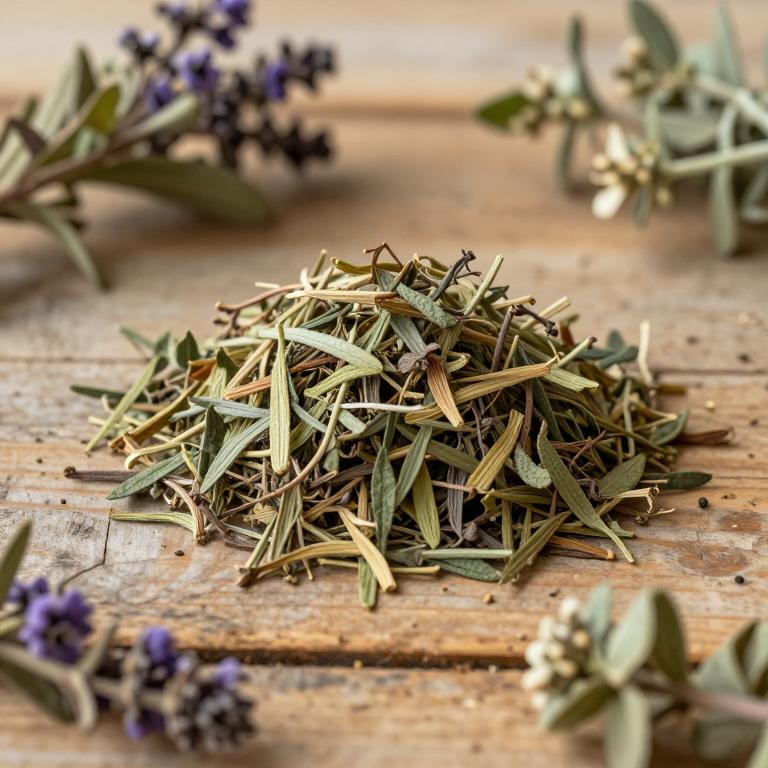
, scientifically known as Nepeta clarkei, is a perennial herb belonging to the Lamiaceae family. Commonly referred to as Catmint, this plant is celebrated for its aromatic foliage and delicate lavender blooms. Renowned in traditional medicine, it is often utilized for its calming properties and ability to soothe various ailments.
- Family
- Lamiaceae
- Native range
- Asia-Temperate
- Parts used
- Not available
- Common names
- Not available
- Scientific synonyms
- Glechoma Clarkei
Names and Synonyms
Scientific Names
Accepted name
Nepeta clarkeiSynonyms
- Glechoma clarkei
Sources: Wikidata, Catalogue of Life
Taxonomical Classification
This plant belongs to the kingdom Plantae and the phylum Streptophyta within the class Equisetopsida. It is further classified under the subclass Magnoliidae and the order Lamiales, falling into the family Lamiaceae. Finally, it is categorized under the genus Nepeta.
| Rank | Classification |
|---|---|
| Kingdom | Plantae |
| Phylum | Streptophyta |
| Class | Equisetopsida |
| Subclass | Magnoliidae |
| Order | Lamiales |
| Family | Lamiaceae |
| Genus | Nepeta |
Sources: The World Checklist of Vascular Plants (WCVP)
Distribution
This plant exhibits a specific geographical range across several mountainous regions of Asia. Within Western Asia, it can be found growing in the terrain of Afghanistan. Its distribution extends into China, where it is specifically located in the Tibet region. In the Indian Subcontinent, the species is native to both Pakistan and the West Himalaya. Consequently, these diverse locations define the natural habitat of Nepeta clarkei.
| Region | Area |
|---|---|
| Western Asia | Afghanistan |
| China | Tibet |
| Indian Subcontinent | Pakistan |
| Indian Subcontinent | West Himalaya |
Sources: The World Checklist of Vascular Plants (WCVP)
Botanical Identification
Ecology
The ecology of Nepeta clarkei is characterized by its preference for high-altitude montane environments, where it thrives within a specific altitudinal niche. This species is primarily distributed across mountain ranges at elevations ranging from a minimum of 1600 m AMSL to a maximum of 3000 m AMSL. Within this vertical gradient, the plant occupies various microhabitats that provide the necessary moisture and light conditions required for its growth. Its presence in these mid-to-high elevation zones suggests an adaptation to cooler temperate climates and specific soil compositions typical of alpine or sub-alpine meadow ecosystems.
- Elevational range max:
- 3000 m AMSL
- Elevational range min:
- 1600 m AMSL
Life history
The life history of Nepeta clarkei is characterized by a perennial growth pattern, specifically classified as a hemicryptophyte. This life form indicates that its perennating buds are located at or just below the soil surface, protected by leaf litter or the substrate during unfavorable periods. As a hemicryptophyte, the plant maintains its survival through seasonal transitions by sheltering its regenerative structures at the ground level, allowing it to re-emerge vigorously during the growing season. This biological strategy enables the species to persist in its native habitats, navigating environmental fluctuations through its specialized survival mechanism at the soil-atmosphere interface.
- Life form :
- hemicryptophyte
Morphology
The morphology of Nepeta clarkei is characterized by a growth habit that is strictly terrestrial, lacking any epiphytic tendencies. As a non-climbing species, it does not exhibit any climbing behavior, being neither obligatory, facultative, nor self-supporting in a climbing capacity. Furthermore, the plant functions as an independent organism, showing no parasitic characteristics as it is neither an obligatory, facultative, nor independent parasite.
- Climber :
- self-supporting
- Epiphyte :
- terrestrial
- Parasite :
- independent
Sources: Global Inventory of Floras and Traits (GIFT)
Chemicals
Nepeta clarkei has 1 reported phytochemicals identified across 0 scientific publications and several other databases. The most consistently reported chemicals include Actinidine.
| Chemical | Supporting sources | Consensus |
|---|---|---|
| Actinidine | 1 supporting sources | ★☆☆☆☆ |
Actinidine
- Applied and environmental microbiology
Conditions
Nepeta clarkei has 2 reported investigations on conditions identified across 0 scientific publications and several other databases. The most consistently reported conditions include Aspergillus flavus, Aspergillus ochraceus.
| Condition | Supporting sources | Consensus |
|---|---|---|
| Aspergillus flavus | 1 supporting sources | ★☆☆☆☆ |
| Aspergillus ochraceus | 1 supporting sources | ★☆☆☆☆ |
Aspergillus flavus
- Applied and environmental microbiology
Aspergillus ochraceus
- Applied and environmental microbiology